Get Full Government Meeting Transcripts, Videos, & Alerts Forever!
Get email alerts on the Sanitary Sewer Moratorium topic
No spam. Unsubscribe anytime.
Junction City council adopts temporary sanitary-sewer connection moratorium tied to DEQ order
Summary
The city adopted a temporary moratorium on new sanitary-sewer connections after staff said a DEQ Mutual Agreement and Order would otherwise impose limits; council altered the proposed allocation to reserve 95% of available EDUs for residential use and approved a two-week follow-up and additional staff actions.
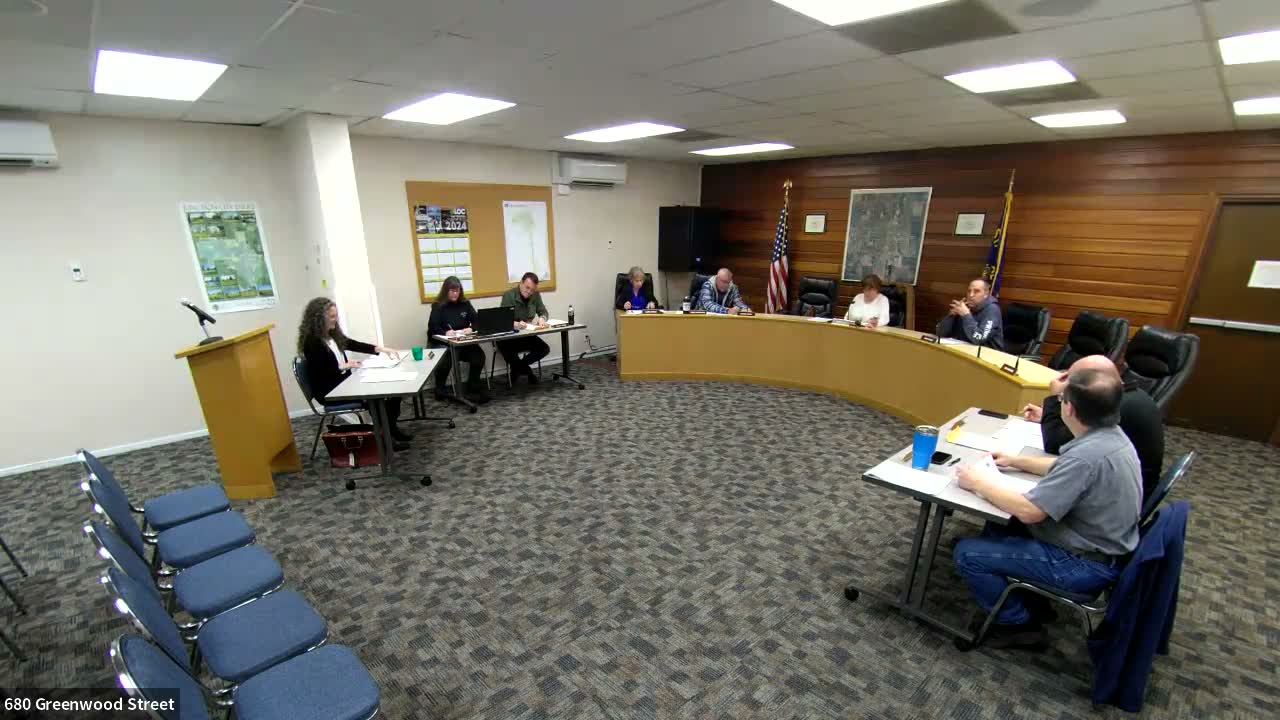
Junction City’s City Council voted unanimously on Tuesday to adopt a temporary moratorium on new sanitary-sewer connections tied to a Department of Environmental Quality (DEQ) Mutual Agreement and Order (MAO), and changed the draft allocation so 95% of available equivalent dwelling units (EDUs) go to residential uses and 5% to nonresidential uses.
City Attorney Carrie Conley told the council the MAO issued in May 2024 adds a cap on sewer connections as part of efforts to keep the city in compliance with its National Pollutant Discharge Elimination System (NPDES) permit. Conley recommended the moratorium as the legal tool available under state land-use law to limit connections while the city negotiates and implements the MAO.
Developers who have already received city approvals urged the council to avoid blocking their projects. Dale Drake, project manager for City National Development, said approved work and prior investments amount to “almost 430 units” and warned the moratorium could be “a death sentence” for projects ready to proceed. Keenan Orton Bicalian, an attorney representing Westland Corporate Park LLC, told the council his clients have vested rights based on preliminary subdivision approvals and argued the moratorium would prevent completion of projects and could expose the city to liability.
Council and staff discussed exceptions for properties holding prior DEQ approvals, a proposed legislative code amendment to extend approval deadlines for affected projects, and the draft allocation in the staff packet that initially proposed an 80% residential / 20% nonresidential split. Public-works staff described a list of capital and compliance tasks tied to the MAO; staff said completing an internal 30-item list would substantially reduce the city’s compliance risk.
After debate, an unidentified council member moved to approve resolution number 1 with a change to section 3(b) so that 95% of EDUs available under the MAO be used for residential purposes and 5% for nonresidential purposes. Councilor Leach seconded. The motion passed by recorded voice vote with councilors present voting yes.
Staff said they will continue working with the city engineer, provide another notice to the Department of Land Conservation and Development in two months, return with a correction program and a finalized MAO for council consideration, and prepare a legislative amendment that could allow extensions for already-approved projects.
The move preserves staff and council control over how limited connections are allocated while the city pursues longer-term plant upgrades the MAO requires. The council set follow-up work for the next regular meeting and asked staff to bring a clean MAO back in two weeks for authorization to sign.