Get Full Government Meeting Transcripts, Videos, & Alerts Forever!
Get email alerts on the Local Public Safety topic
No spam. Unsubscribe anytime.
Council opens broad ordinance review, flags dogs-at-large, panhandling, abandoned vehicles and camping enforcement
Summary
At a Sept. 24 work session, councilors and public safety staff reviewed multiple code sections — dogs at large, barking complaints, abandoned vehicles and panhandling — and directed staff to draft clearer, enforceable language for committee review; several items may be routed to public safety or community services committees.
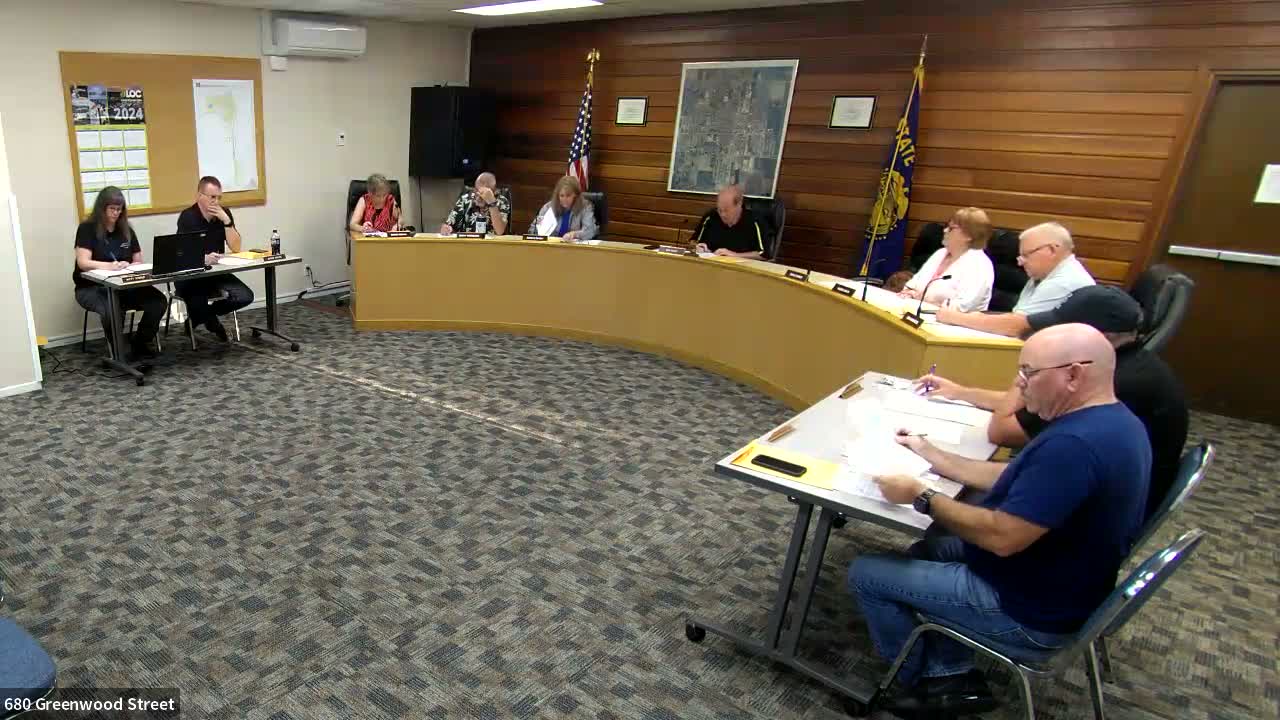
At a work session immediately following the regular meeting on Sept. 24, Junction City councilors opened a broad review of city ordinances focused on public-safety and nuisance issues, including animals at large, barking-dog rules, abandoned vehicles and panhandling.
Administrator Kendall introduced the item as a council-requested review and said staff and the chief were asked to participate. Police staff (Speaker 6) said the animal-at-large and abandoned-dog ordinances were updated in February 2017 and described the standard as requiring that dogs be on leash and under an owner’s control. The officer noted enforcement aims for compliance and cited escalation to citations for repeat offenders.
On barking-dog complaints, police staff said the code contains two conflicting provisions: one requiring complaints from two separate residences, and another allowing enforcement when an officer determines barking is unreasonable. "If I showed up on scene and I could hear the dog barking … if it's unreasonable, I think that's substantial," Speaker 6 said, urging removal of the two-complainant requirement so officers can act on audible unreasonable barking.
Councilors raised outreach ideas such as pop-up licensing drives to increase compliance and goodwill between residents and enforcement staff. Administrator Kendall and council members supported routing ordinance changes through the public-safety committee and coordinating with department heads and legal counsel before any code amendments.
Police staff also addressed allegations of prostitution in town, saying state criminal statutes govern conduct and the department will investigate when evidence is presented but currently lacks resources for undercover operations. Regarding panhandling, staff said the city’s existing panhandling ordinance is weak and that staff rely on state trespass statutes and private-property enforcement when businesses ask people to leave.
On abandoned vehicles and RV storage, staff recommended drafting clearer language (drawing on neighboring-city examples such as a 600-foot relocation rule) for the public-safety committee to consider; staff emphasized that some language used by other cities still needs legal vetting to ensure enforceability. Councilors also discussed keeping homelessness issues legally separate from nuisance enforcement and exploring options such as monitored RV spaces at Lyle Day Park (the idea remains under research committee review).
Councilors and staff agreed to continue the ordinance review in committee, have legal refine draft language, and return proposals to the council for deliberation.