Get Full Government Meeting Transcripts, Videos, & Alerts Forever!
Get email alerts on the Infrastructure Sewer topic
No spam. Unsubscribe anytime.
Junction City council starts process for sewer‑connection moratorium as DEQ negotiates MAO
Summary
After a lengthy staff presentation and council Q&A, Junction City authorized staff to begin the public‑notice and hearing process to adopt a sewer‑connection moratorium in response to a forthcoming DEQ Mutual Agreement and Order that will limit new sewer connections until corrective actions are completed.
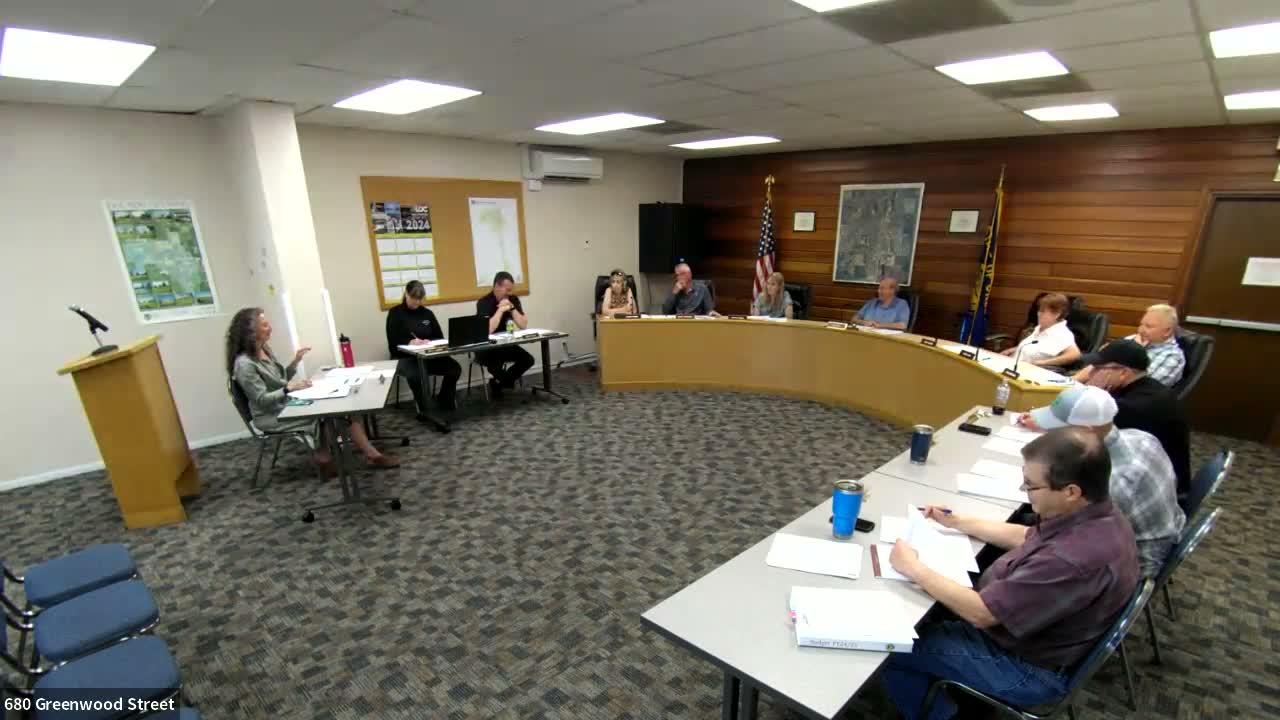
Junction City’s City Council on July 9 directed staff to begin the statutory notice and hearing process that would allow the city to adopt a moratorium on new sewer connections after the Oregon Department of Environmental Quality (DEQ) proposed a Mutual Agreement and Order (MAO) affecting the city’s treatment plant.
City attorney Attorney Connolly told the council the MAO is intended to acknowledge existing violations while setting a schedule of upgrades and milestones; as written it also allocates a limited number of new sewer connections and releases the agency from immediate penalties if the city completes the specified tasks. “The MAO actually settles violations that your system has in the environment,” Attorney Connolly said, adding that DEQ’s newer MAO language can include explicit connection limits tied to milestone completion.
That connection limit, Connolly said, can leave the city unable to refuse developer applications unless it has a local land‑use moratorium in place. She outlined the moratorium mechanics under Oregon law — a 45‑day notice to the Department of Land Conservation and Development (DLCD), a public hearing, adoption of findings and a corrective (get‑well) program, and the possibility of extensions that can carry the moratorium forward for multiple periods while the city completes upgrades or other actions required by DEQ.
Council members pressed staff on who would be affected and whether projects already in progress would be protected. Staff said applications that already have DEQ approval may be able to proceed, and that the city would attempt to prioritize projects that were in mid‑process. The attorney cautioned that adoption of a moratorium is subject to judicial review at the Land Use Board of Appeals (LUBA) if findings are insufficient.
After extended discussion of costs, equity for existing residents and developers, and the practical limitations of alternative approaches, the council coalesced around a staff recommendation. The council gave consensus authorization for staff to begin DLCD notification and to return with a draft moratorium resolution and corrective program for a future hearing, with an anticipated hearing period in late August or early September.
Next steps: staff will publish the 45‑day DLCD notice, prepare findings comparing projected growth to existing treatment capacity, draft a corrective program tied to the MAO milestones, and schedule the required public hearings. The council emphasized it intends to seek ways to minimize harm to applicants who are already far along in the permitting or construction process while protecting current residents from potentially large fines or service impacts.