Get Full Government Meeting Transcripts, Videos, & Alerts Forever!
Get email alerts on the Council Actions Petitions topic
No spam. Unsubscribe anytime.
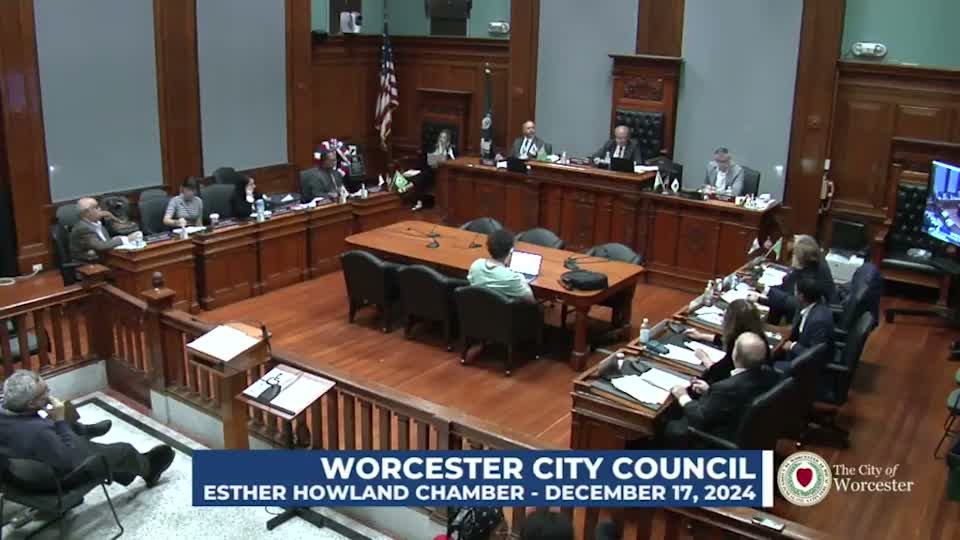
Council refers Project Priceless petitions, holds request to unmask complainants under privilege
Summary
After hours of testimony, Worcester City Council referred petitions seeking an apology, shelter and reparations to the city manager and committees, and held a police-union petition that sought the DOJ's investigatory file under privilege to protect complainants.
The Worcester City Council spent substantial meeting time processing petitions filed in response to the Department of Justice summary of alleged misconduct by Worcester Police Department officers.
Council voted to send several petitions from Project Priceless — including requests for a formal city apology, allocation of a permanent women-only shelter and funding for reparations and survivor services (identified in the agenda as 7z, 7aa, 7bb and 7cc) — to the city manager and to the public-health and public-safety committees for follow-up and implementation planning. Councilors asked the manager to report back with timelines, funding options and the data supporting recommended actions.
Council also addressed a petition (7w) filed by police union representatives that requested the Department of Justice release its full investigatory file and the names of authors and alleged officers. Several councilors argued that releasing names could breach DOJ confidentiality commitments to complainants; the council placed that petition on hold under privilege and requested legal guidance to preserve victim anonymity.
Other administrative items were referred to committees (public works, public health, and public safety) and the manager; the meeting record shows multiple roll-call approvals for committee referrals and manager reports. Councilors repeatedly asked the administration for clear timelines, cost estimates and accountability rubrics — including a proposed performance audit to review body-worn-camera footage reconciliation and disciplinary follow-up when appropriate.
No formal disciplinary actions or personnel terminations were taken at the meeting. Several councilors emphasized that future council scrutiny will focus on concrete implementation details, timelines and protections for survivors while balancing due-process rights for employees under investigation.
Next steps: the manager will meet with DOJ representatives and return to the council with a written response and implementation proposals; petitions flagged for manager action will be the subject of further committee meetings.