
Muhlenberg County school board flags TVA-related revenue risk while approving bills and a bank collateral pledge
Get AI-powered insights, summaries, and transcripts
Subscribe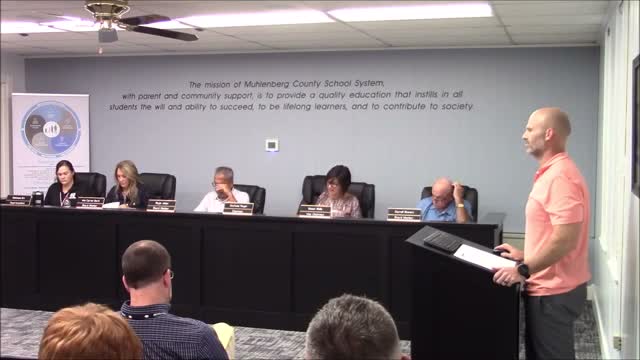
Summary
At the Muhlenberg County Board of Education meeting, officials reviewed a $64 million working budget, warned that uncertain TVA-related receipts could cut roughly 10% from district revenue, approved payment of $1.66 million in bills and a pledge-of-collateral with Farmers Bank & Trust.
The Muhlenberg County Board of Education reviewed a working fiscal plan for 2024–25 and a slate of payments and banking arrangements at its meeting. Officials reported a roughly $64 million general fund and described holding cash that has boosted interest revenue, but they warned of a substantial budget risk tied to changing payments related to TVA assets.
Finance presenter Speaker 7 gave the district—s financial snapshot, listing a $1,280,000 beginning balance and monthly receipts, then detailed major August invoices including a roofing payment to Tremco of about $934,984 and other vendor bills. The board voted to approve payment of bills and salaries for September, a motion that passed after an aye vote.
Speaker 7 emphasized the unpredictability of payments connected to TVA-related assets, recounting recent swings in state-distributed amounts and saying that TVA receipts account for "a little over 10% of our budget." He gave past figures and a worst-case email estimate of $4.4 million while cautioning the board that the district could see those amounts fall once remaining plant infrastructure is demolished.
"I challenge any other district in the state to lose 10% of their budget and not be able to do anything about it," Speaker 7 said, framing the TVA-related uncertainty as a major fiscal exposure. He added that the district—s cash balance is "buying us time to adjust and move forward," and that interest income from held cash has helped avoid immediate revenue-raising steps.
On banking, the board considered and approved a pledge-of-collateral arrangement with Farmers Bank & Trust that uses FDIC-insured sweep accounts as the mechanism. The motion to approve the pledge was moved and seconded and recorded as passed.
Presenter remarks also covered bond capacity and construction funding: the district reported a construction fund near zero because projects will be bonded once bid numbers are available; the board was told bonding capacity exceeds $20 million and that periodic state FSPK/FSAK payments help service bond obligations.
Board members asked clarifying questions about what is driving expected revenue swings, and the presenter said the state—s prior guidance about how asset removal would affect payments had changed over time. Where specific vote tallies were not read aloud in the transcript, the article notes motions and recorded "motion passed" statements exactly as they were stated during the meeting.
Next steps for the board include receiving bids to determine precise bonding plans and continuing to monitor state and TVA communications about future distributions.