Lee County Schools asks county for $3.2 million to shore up pay, mental‑health staff and capital needs
Loading...
Summary
Lee County Schools presented a 2025–26 local and capital budget requesting roughly $3.2 million in additional local funding (a 14.9% increase), prioritizing operational cost increases, full implementation of a classified pay plan, and a restructured teacher supplement. The board discussed lost grant funding for mental‑health positions and the impact of charter payments on local funds.
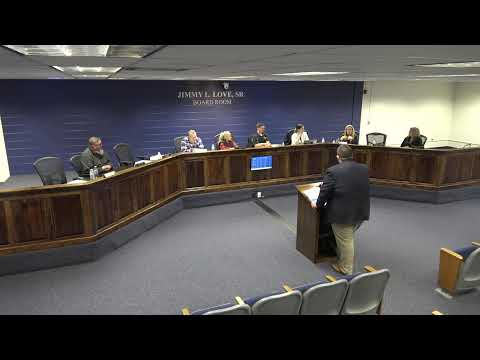
Lee County Schools presented its proposed 2025–26 local and capital budget at a board workshop, asking county commissioners for roughly $3.2 million in additional local funds and outlining priorities the district said are aimed at retaining staff, supporting students and addressing safety.
Dr. Dawsonbaugh, who led the presentation for Lee County Schools, called the district's goals "students, staff, and safety" and summarized the district's request: operational increases totaling $746,093.46; full implementation of the classified pay plan (the remaining three‑quarters) at about $2,000,000; and a proposed weighted supplement structure for certified staff estimated at roughly $450,000 a year. "Taking a look at those overall recommendations that adds up to a requested increase of just over $3,200,000," he said, and presented a total local request of $24,723,993.38 (a 14.9% increase over last year).
Why it matters: Board members and the presenter framed the request as a response to long‑running budget pressure—about 68% of current expenditures go to salaries—and to retain teachers who have been leaving for neighboring counties that pay higher supplements. The district also said it absorbed the loss of a Sandhills behavioral‑health grant that previously covered roughly 2.5 of 3 social‑work positions; Dr. Dawsonbaugh said that loss required the district to fill the gap from local funds, bringing the district's annual spending on mental‑health staff to about $360,000.
Key details and numbers: The district said local funds comprise roughly 19% of its overall budget (capital about 2%). Citing data used in an Evergreen performance audit comparison, Dr. Dawsonbaugh said Lee County received about $23.5 million last year—roughly 20.8% of the county's overall budget—below a peer average shown in the materials. He noted the district anticipates paying about $1.6 million from local funds next year for 821 students who attend charter schools and emphasized that the state portion of charter funding is separate.
On teacher pay, the presentation recommended a tiered supplement that keeps 10% for teachers with 0–15 years of experience and increases supplements by 1 percentage point for roughly every five additional years of experience; the district estimated the certified‑staff supplement change would cost about $450,000 in the first year and cover about 251 employees.
Capital and restricted funds: The district proposed capital outlays of about $2,089,000 (a 4.7% increase). Dr. Dawsonbaugh proposed a lottery spend‑down plan that would retain roughly $1 million in reserve across two lottery funds and use the remainder for building projects; he reiterated lottery proceeds (about $630,000 and $400,000 from the two pots) are restricted to building and materials and cannot be used for salaries.
Board reaction and next steps: Board members asked for clearer pie charts and a line‑item list tying the capital pie chart to last year's requests; Dr. Dawsonbaugh agreed to provide the supporting references and a per‑project line item to aid county review. A board member noted the district appears to be operating with a roughly 15% shortfall relative to what the board said the county would need to maintain; Dr. Dawsonbaugh said he would return with a refined percentage and the board discussed a joint 5‑on‑5 meeting with county officials to explore funding models.
Formal actions: At the start of the workshop the board approved the meeting agenda by voice vote; no budget vote was taken at the workshop. The meeting adjourned after the presentation.
The board asked staff to provide clearer charts, the capital line‑item list, and any updated percentage calculations to support the district's request before the formal budget submission to county commissioners.