Get Full Government Meeting Transcripts, Videos, & Alerts Forever!
Get email alerts on the Property Covenants topic
No spam. Unsubscribe anytime.
Bill would clarify Montana law to allow long-term affordability covenants; proponents say it eases development, opponents warn about property rights
Summary
House Bill 422 would add language explicitly permitting private covenants that preserve long-term affordability to run with the land; developers and cities support the change as a paperwork-reducer while building-industry representatives called it a form of inclusionary zoning and flagged resale-value concerns.
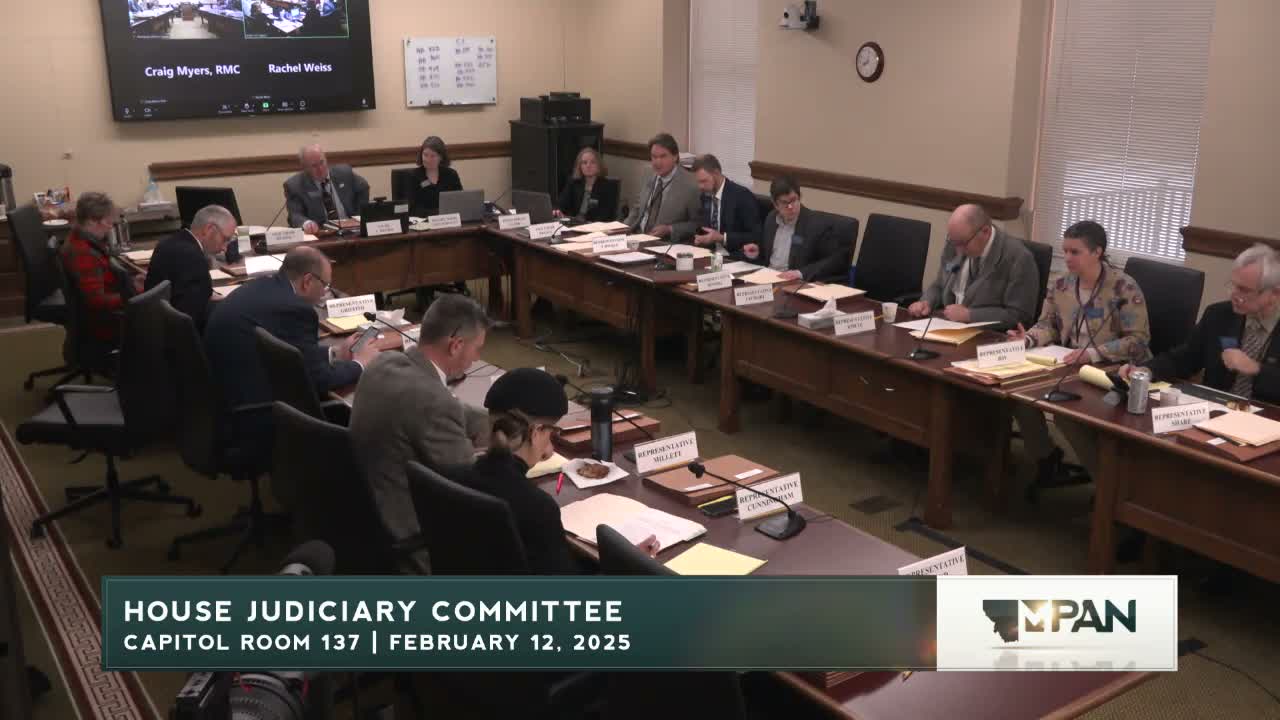
Representative Carden opened the hearing on House Bill 422, saying the bill clarifies that Montana law allows property owners to place covenants on land that provide for long-term affordability.
Ross Keogh, an attorney experienced in real-estate development, told the committee the change is a one-sentence addition to the section that already lists conservation and open-space easements; HB 422 would put affordability restrictions on the same footing and allow private parties to ‘‘contract to ensure that the deals they make…continue going forward on the projects no matter what happens.’'
Developer Kai Hochstetler described a mixed 9-acre project that combines income-restricted and market-rate units; he said the current workarounds (75-year ground leases and community land trust structures) are costly and limit lender participation. City officials and the Montana Chamber of Commerce said the bill is an optional tool that helps keep employees in the communities where they work.
Adrienne Cotton of the Montana Building Industry Association opposed the bill, arguing it resembles inclusionary zoning that could lower property values and reduce a private owner’s ability to sell. Representative Clacken raised a constitutional concern, citing the Montana Constitution’s restriction on perpetual restraints on property (Article XIV §6) and asked whether affordability covenants would violate the rule against perpetuities. Keogh acknowledged the constitutional question and offered to follow up with more analysis; he also said Montana already recognizes covenants such as conservation easements and that the proposed change would be analogous.
Committee members asked for follow-up on the constitutional interaction, on whether retail/resale equity caps or indexing provisions would be required, and on how the new language would affect foreclosure and changes in ownership. The sponsor closed by reiterating the bill’s intent to reduce paperwork and legal uncertainty for projects that include affordability components.
The hearing ended with committee members asking for additional legal detail on perpetuity questions before moving forward.