Get Full Government Meeting Transcripts, Videos, & Alerts Forever!
Get email alerts on the Roof Repair topic
No spam. Unsubscribe anytime.
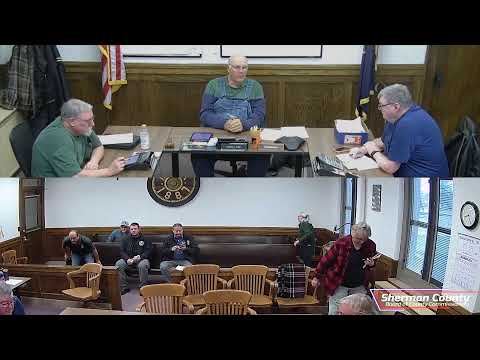
Sherman County commissioners approve $35,562.50 change order to add tapered slope on county roof
Summary
Commissioners approved a $35,562.50 change order to add an engineered eighth-inch tapered slope across a county roof to improve drainage; contractor estimated work would take two to four weeks and requested a signed change order.
Sherman County commissioners voted to approve an added, engineered tapered slope for a county roof after contractor estimates identified drainage and sediment problems.
The contractor (Speaker 3) told the commission that the original bid covered a sheet replacement — sweeping the rock, installing a new membrane and replacing edge metals — and that an engineer recommended adding an eighth-inch tapered slope across the entire roof. The contractor said the additional tapered slope would cost $35,562.50 and described the installation as a multi-piece, jigsaw-like assembly to direct flow toward existing scuppers and drains.
"It's a difference of $35,562.50 for the additional tapered slope," the contractor said. Commissioner comments raised safety concerns about accumulated dirt and risks to electrical systems; one commissioner described trenching previously required to get roof drainage working.
"I'll make a motion that we go ahead and pay the extra 35,000 to get it done right," Speaker 5 said during the meeting; Speaker 2 seconded the motion. Commissioners recorded multiple "aye" votes and approved the change order. The contractor asked for a signed document and estimated the tapered-slope work would take "anywhere from 2 to 4 weeks" given the holiday season.
Commissioners also asked whether the work would be treated as a prior-year encumbrance if the contractor did not start until after Jan. 1; Speaker 6 responded that it likely would be encumbered to the prior year. No further conditions or amendments to the change order were recorded in the minutes. The commission directed staff to proceed with signing the documents so work could be scheduled as soon as practical.
The vote recorded in the meeting followed a single substantive motion and second; no roll-call allocations of individual yes/no votes by name were recorded in the transcript beyond several "aye" responses.