Get Full Government Meeting Transcripts, Videos, & Alerts Forever!
Get email alerts on the Resource Extraction topic
No spam. Unsubscribe anytime.
Quarry expansion hearing draws strong public opposition; commission fails to approve and continues case to January
Summary
A contested application to expand quarry operations in the SW quarter of Section 1 (CUP 24‑09) generated extensive testimony about water quality, reclamation bonds, screening and grandfathering claims. The commission did not approve the application tonight and will reconvene in January after staff investigates a stop‑work order and missing documentation.
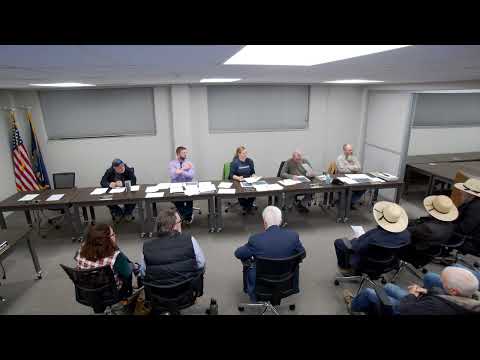
The Dickinson County Planning Commission held a lengthy hearing on CUP 24‑09, a proposed expansion of quarry operations in the southwest quarter of Section 1 requested by David Walker (and co‑applicant James McRaven). Staff and residents debated licensing, reclamation planning, water‑well impacts and whether historical operations could be considered "grandfathered." The commission did not approve the application and discussed continuing the public hearing to the January meeting so staff can investigate outstanding legal and procedural questions.
Staff summary: Planning staff described the application and the file history, noting that an administrative allowance issued during the COVID‑19 period had expired when state restrictions lifted; staff reported having sent a stop‑work notice to the landowner on Oct. 1 after a complaint and said there is no complete, current reclamation plan or recent well‑impact study for the parcel. Staff listed recommended conditions for approval if the commission were to proceed, including an updated reclamation plan that covers all parcels in use, a licensed third‑party well‑impact study paid for by the applicant, a dust‑abatement plan (because a residence lies within a quarter mile), a site plan from a licensed surveyor (not a USGS quadrangle), and a bond acceptable to the county for reclamation.
Applicant and counsel: The applicant (Walker) provided a multi‑decade history of quarrying and reclamation at the site and argued many operations date to the 1970s. His attorney, Keith Van Aran, told the commission he believed the May 2020 communication Walker received from staff provided open‑ended authority that did not contain explicit time limits and suggested the county's stop‑work notice lacked a firm legal basis. Walker and counsel warned contracts and highway projects could be affected if the operation remains restricted.
Public testimony and issues: Multiple neighbors, including Betsy Edwards and Fred Moody, testified about observed changes in well levels and water quality, perceived excessive truck traffic and concerns about blasting or vibration. Neighbors asked for contemporary hydrologic testing and seismic monitoring and raised questions about whether state mining licenses and reclamation filings were current for the parcels in question. Staff acknowledged some historic record gaps and said the county's regulations require updated documentation when a new quarter‑section is first disturbed.
Commission action: Board members debated possible conditions (hydrologist/seismologist testing, updated reclamation plan, site plan, bond set by county engineer, screening on request), but an initial motion to approve with proposed conditions failed to carry. Commissioners discussed continuing the hearing to the January meeting to give staff time to research the stop‑work order and gather missing materials; staff agreed to investigate and report back. No final approval was recorded. The matter will be on the county commission docket after the planning commission issues its recommendation.
Next steps: staff to investigate the stop‑work order and licensing documentation, and the planning commission will revisit CUP24‑09 at a future meeting (planned for January).