Get Full Government Meeting Transcripts, Videos, & Alerts Forever!
Get email alerts on the Social Services topic
No spam. Unsubscribe anytime.
Empowerhouse tells Coffey County commissioners about program growth, client needs and plans for grant‑funded expansion
Summary
Melissa Landis of Empowerhouse reported program outcomes to the Coffey County Board of Commissioners, outlining client demographics, high rates of mental‑health and substance‑use needs, program phases and the group's intent to hire a grant writer and consider a third house if board/board‑of‑directors approvals and funding permit.
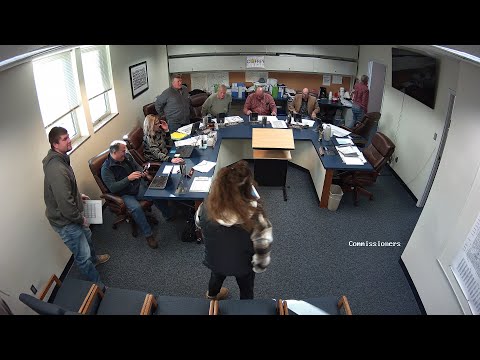
Melissa Landis, representing Empowerhouse, gave commissioners a detailed program update and requested follow‑up data for Coffey County cases and outcomes.
Landis described client demographics and needs: an average client age in the mid‑30s, many clients without steady employment, and significant behavioral‑health needs. Landis said about 75 percent of clients have mental‑health issues and that year‑end figures may be closer to 84 percent. She emphasized that many residents also have substantial criminal histories: Landis said more than half have three or more felonies, with averages she described separately for men and women.
Landis outlined program structure and outcomes: Empowerhouse operates separate women's and men's houses (the women's program has been in operation nearly three years; the men's program about one year) and uses a four‑phase progression that ties privileges to benchmarks. She said the program's minimum length of stay is 90 days and that participants who stay longer have higher success rates (Landis cited about a one‑third success rate for stays under 50 days and roughly two‑thirds for those over 50 days, using program definitions of "success" as absence of drug use).
Landis provided service‑count figures: she reported 76 women and 35 men have participated in residential programs, plus about 29 clinic attendees, which she summarized as roughly 140 individuals served to date. She said prior support included a Kansas Fights Addiction grant of about $200,000 that helped with a down payment (Landis said the down payment was about $94,000) on the men's house; operations continue to rely on mixed funding and local fundraising.
On operations, Landis said Empowerhouse has added drug‑testing capabilities (mouse swabs and a breathalyzer) and will appoint monthly house leads to provide leadership opportunities for residents. She said a grant writer has been selected to focus on expansion and sustainability.
Commissioners asked whether county cases tie to the program and requested Coffey‑specific figures; Landis agreed to assemble limited local data and email it to commissioners. She said she will return to the board in May with another update.
Quotes from the presentation were provided directly by Landis during the hearing; the board did not take formal action on the presentation.