Get Full Government Meeting Transcripts, Videos, & Alerts Forever!
Get email alerts on the Committees topic
No spam. Unsubscribe anytime.
Scappoose Council reviews committee roles, asks councilors for input before goal-setting
Summary
At a Oct. 21 work session, Scappoose City Council and City Manager Ben debated whether standing advisory committees (notably Parks & Rec and the Economic Development Commission) should remain permanent, shift to ad hoc or be staff-led, and asked councilors to send written input before annual goal-setting.
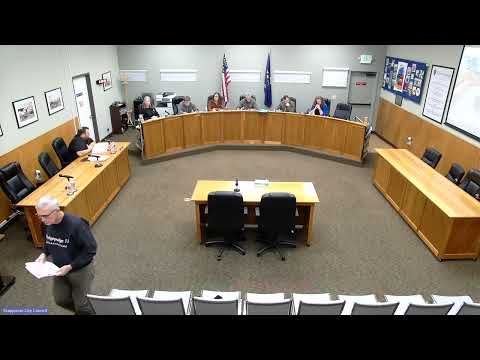
Scappoose City Council on Oct. 21 held a work session to reassess the purpose and structure of its advisory committees and asked councilors to send their recommendations to City Manager Ben ahead of the city’s annual goal-setting.
City Manager Ben framed the discussion as a 'visioning' exercise focused on the question, 'Why do we have committees, what are they for, what value we have,' and urged the council to decide whether current committees should remain standing, become ad hoc, or be run as staff advisory groups. Ben cited a model manual from the City of Florence and guidance from the League of Oregon Cities as reference material.
The council’s conversation repeatedly returned to two longstanding committees: Parks & Recreation and the Economic Development Commission (EDC). Several councilors said the Parks & Rec committee had been instrumental during the parks master plan process but has struggled to find a clear role since completing that work. 'They accomplished what they sought out to do, but it was the next step that it just wasn't as cohesive,' said Councilor Jacobs, describing a loss of momentum after the committee finished the master plan.
Council President Miller and others said committees should feed into the council’s goals rather than set them. 'I feel like everything needs to funnel back to one point and that is to city council setting the goals,' Miller said, adding that liaisons to committees should have defined duties and annual accountability so committees’ work aligns with council priorities.
Speakers discussed three common models: standing committees (ongoing bodies with recurring meetings), ad hoc council committees (time-bound groups subject to public meeting rules), and staff advisory or technical committees (staff-managed groups not required to meet under public-meeting laws). Ben warned that standing committees can become 'destructive' to staff time and volunteer engagement if not given clear direction. 'If they're not well organized, they can be more destructive than good,' he said.
Panelists also debated committees’ role in fundraising and grant seeking. Ben said small grants—citing examples in the $5,000–$10,000 range—could be appropriate for volunteer committees, while larger grants usually require staff time, environmental studies and formal project work.
Rather than adopt immediate changes, the council directed a next-step process: councilors were asked to email Ben specific feedback on each committee (examples, preferred format, and whether they should be standing, ad hoc or staff-led). Ben said he would compile responses and return a recommendation to the council before goal-setting.
No motions or votes were taken at the work session; the council left the issue open for staff-led synthesis and further deliberation at a future meeting.