Get Full Government Meeting Transcripts, Videos, & Alerts Forever!
Get email alerts on the Unified Development Ordinance topic
No spam. Unsubscribe anytime.
Fort Thomas council advances Unified Development Ordinance amid public objections over downtown density and notice
Summary
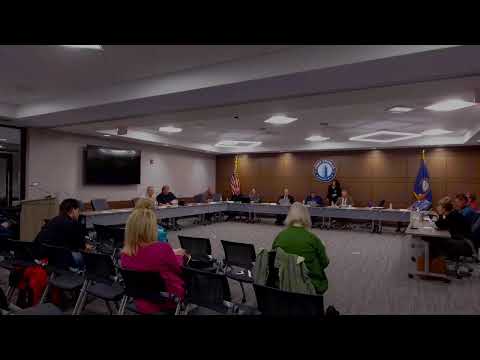
The Fort Thomas City Council completed a first reading and approved findings for a new Unified Development Ordinance (UDO) after several residents urged more legal review, greater public notice and limits on apartment development in the Central Business District.
The Fort Thomas City Council completed a first reading and approved findings for a new Unified Development Ordinance (UDO) on a motion the council recorded as "made, seconded, and approved," while dozens of residents urged the council to slow the process, seek specialized zoning counsel and restore broader public notice.
Residents at the meeting pressed several themes: preserve the city’s small‑town character, avoid adding multi‑story apartments in the Central Business District, and ensure the UDO does not override the city’s design review guidelines. Peggy Maggio (37 South Shoreline) told the council the UDO draft was "a 450‑page" document costing about $200,000 and urged that "a zoning attorney take a look" because, she said, the draft could put the city's design guidance at risk.
Other speakers raised process concerns. Joan Harris said the city curtailed public participation and that an outside consultant’s summary calling prior engagement "robust" was inaccurate because that consultant, Brandon Volker, "was not there." Peggy Maggio pressed that public notice methods (a calendar entry and a QR code) were inadequate and asked the council to reopen hearings with clearer notification.
City staff and the city administrator framed the council action as the next procedural step: the administrator listed the personnel ordinance for second reading and the unified development ordinance for first reading, and the council read findings incorporated by reference. The council also cited KRS chapter 100 in adopting the new zoning and subdivision framework for the city.
The meeting transcript records the motion to proceed with the UDO findings and a formal reading of the ordinance; the transcript does not record a roll‑call vote tally in the public record excerpted. Because speakers and residents repeatedly requested further review, several petitioners urged the council to delay final approval, consult a zoning attorney for specific legal language, and ensure any changes to mural or design rules are circulated publicly before a second reading.
The council’s next procedural step was to schedule or confirm the timing of the second reading; staff flagged that amendments could still be offered between readings. Several residents requested that any subsequent hearing include mailed or otherwise prominent notice rather than only a calendar entry or QR code references.
The council adjourned the public portion of its meeting and later moved into an executive session; no final public action on amendments was taken that evening beyond the reading and the recorded motion to adopt the ordinance findings.