Get Full Government Meeting Transcripts, Videos, & Alerts Forever!
Get email alerts on the Groundwater Monitoring And Grant Reallocation topic
No spam. Unsubscribe anytime.
Wyandotte GSA reallocates SGMA grant to expand monitoring network and feasibility studies
Summary
The Wyandotte Creek Groundwater Sustainability Agency voted to reallocate leftover SGMA grant funds to complete data‑gap work, expand a groundwater monitoring network (15 shallow wells, 3 multi‑completion wells, 5 stream gauges, 10 domestic wells) and fund a $350,000 feasibility study for regional conjunctive use projects including Palermo and Oroville recharge concepts.
The Wyandotte Creek Groundwater Sustainability Agency approved an amendment to reallocate leftover SGMA grant funds to accelerate data‑gap projects, expand an enhanced groundwater monitoring network and advance feasibility work on regional conjunctive use projects.
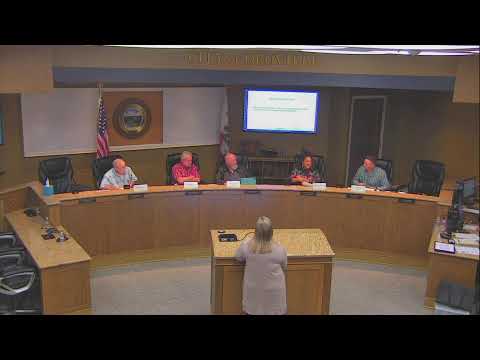
At a board meeting in late 2025, consultants and staff outlined a package that would pay to install 15 new shallow monitoring wells, three multi‑completion wells, five stream gauges and continuous monitoring equipment on 10 domestic wells; staff said the grant will cover installation costs so those capital expenses would not fall on ratepayers immediately. "The objectives of the enhanced monitoring network is to address data gaps identified in the Wyandotte Creek GSP and DWR's determination," Ryan Fulton of Larry Walker Associates told the board, describing plans to monitor beneficial uses, groundwater dependent ecosystems and to support groundwater recharge project design.
Why it matters: board members repeatedly raised concerns about long‑term operations and maintenance (O&M) costs once grant funding ends, noting annual O&M estimates range from about $1,000 to $2,500 per well and $4,000 to $8,000 per stream gauge. Several directors asked whether a smaller network would satisfy state reviewers. Fulton said the proposed network is designed to fill specific DWR‑identified data gaps and that some O&M could potentially be handed off to state programs or managed in partnership with other agencies.
What the reallocation funds: staff proposed moving $50,000 to finalize the five‑year evaluation due to DWR in 2027, $100,000 to fund a groundwater dependent‑ecosystem (GDE) biological field survey including isotope analysis, about $123,000 for outreach (mostly staff time), and $350,000 to progress a Regional Conjunctive Use Project feasibility study to 60% design. The conjunctive use work would evaluate Palermo and Oroville recharge concepts, options to divert high flows for recharge on Honcutt and Wilson creeks, and opportunities to collaborate with South Feather Water and Power Agency and other purveyors.
Board debate: some members argued for the full, "ideal" monitoring network now to produce robust evidence that Wyandotte Creek is effectively managed; others urged paring back the scope to limit future ratepayer burdens. One board member noted the Vina GSA is redoing its fee study and engaged in litigation with rangeland interests; staff said this is one reason to set aside grant funds for a potential local fee study so the agency can respond without using ratepayer funds.
Public input and next steps: a member of the WAC committee, Mister Sherwood, spoke in support of the broader program and mentioned local projects that could reduce pumping. Staff confirmed a public comment from Kay Bridal had been forwarded to the board. Following discussion, Unidentified Speaker 2 moved to approve the amendment to the SGMA grant agreement to reallocate the funds; Unidentified Speaker 7 seconded the motion. The board voted in favor with no recorded opposition. Staff noted certain grant line items (including fee‑study funds) must be expended by the grant end (March 2026) or be reassigned to allowable tasks.
The board approved the reallocation as a package but retained flexibility to prioritize or adjust individual tasks; staff will return with implementation details, outreach schedules and budget tracking to clarify O&M liabilities and any future rate impacts.