Get Full Government Meeting Transcripts, Videos, & Alerts Forever!
Get email alerts on the Urban Renewal topic
No spam. Unsubscribe anytime.
City manager briefs Parks Commission on urban renewal financing and limits for park projects
Summary
City Manager Nicole Rutherford explained how Coos Bay’s Downtown and Empire urban renewal plans use tax-increment financing (TIF), outlined remaining plan balances and legal limits on spending, and told commissioners that parks projects must be listed in a plan (or added by amendment) to be paid with urban renewal dollars.
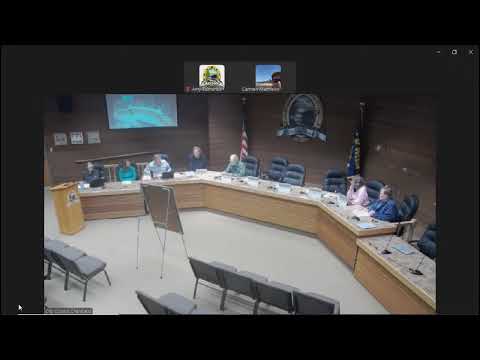
City Manager Nicole Rutherford told the Coos Bay Parks Commission on Nov. 7 that urban renewal works by freezing the taxable base in a designated district and capturing the increase in value—tax increment—to repay debt and fund projects in that district. "Everything above that now gets only given to the urban renewal district," Rutherford said during her presentation.
Rutherford said the city’s two plans—the Downtown and Empire urban renewal plans—were originally based on substantially lower frozen values and that tax increment growth has increased the taxable value to roughly $146 million across both districts. She noted the plans set a maximum indebtedness that limits how much the urban renewal agency may borrow and spend over the life of a plan, and gave the example of a recent five-block Fourth Street project that cost about $3.4 million.
Why it matters: Urban renewal/TIF can produce funds useful for public infrastructure such as streets, sidewalks and waterfront improvements, but those dollars generally cannot be used for projects that are not in an adopted plan. Rutherford said some park-related infrastructure and waterfront work is included in the plans, but other park parcels—Mingus Park and parts of John Tapitz Park were discussed—are not entirely inside the district and therefore would require plan amendments or other funding sources.
In response to commissioner questions, Rutherford described two common paths to use urban renewal funds for new project types: (1) a plan amendment to add specific park projects (which can be a minor or substantial amendment depending on the change), or (2) a larger change that increases maximum indebtedness, a move that may require outreach to and buy-in from overlapping taxing districts (for example, the school district) or a vote of the public. On prior amendments, she said the school district required an agreement because changes can affect how the state backfills school funding.
Rutherford also flagged the practical limits of urban renewal dollars. "That amount each year is not large enough to do big projects," she said, noting the remaining balances shown in the agency’s recent annual report: roughly $20 million left in the Downtown plan and $15 million in Empire. Commissioners and staff discussed whether small infrastructure items (fencing, sidewalks, boardwalk elements) could be funded under existing plan language or would need an amendment and emphasized the need for clear outreach if the city sought larger changes.
Next steps: Commissioners asked staff to continue assessing which park-related infrastructure could reasonably fit in current plans and what a plan amendment would require. Rutherford recommended careful education and early outreach to overlapping taxing districts and the public if the commission pursues plan amendments or increases to maximum indebtedness.