Get Full Government Meeting Transcripts, Videos, & Alerts Forever!
Get email alerts on the Empire Blueprint topic
No spam. Unsubscribe anytime.
Coos Bay council reviews Empire Area Blueprint; majority favors keeping Hollering Place as park
Summary
Council and residents debated the Empire Area Blueprint's bike‑route options, boat‑ramp use, and zoning changes. Staff proposed code amendments to ease development; after public comment and council discussion, the majority signaled preference to preserve the Hollering Place Lower Bench for recreation, not commercial or overnight lodging.
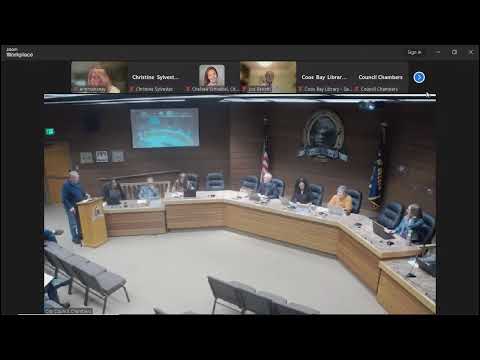
Coos Bay planning staff presented the Empire Area Blueprint and proposed municipal code amendments at a joint Council and URA work session, outlining a two‑part proposal: adopt the blueprint as a guiding document and amend the Coos Bay Municipal Code and Transportation System Plan to support the preferred alternative for the Empire area.
Chelsea, a planning staffer, said proposed changes include adding the Newmark Avenue Road Diet (TSP project CB‑14), incorporating Empire transportation projects into the street connectivity plan, aligning mobility targets, allowing residential occupancy across building floors in the study area (instead of limiting residential to upper floors and 30% of ground floor), expanding the exempt parking area with a cap, aligning Hollering Place zone uses with commercial zone allowances, and repealing the Empire Waterfront Settlement Design Review chapter to reduce perceived barriers to development.
Public commenters urged revisions and raised safety and access concerns. Steve Skinner, representing the Community Coalition of Empire, pressed for a safer bike route that uses North Cammon, Shutter and North Empire to avoid hazardous crossings by school crosswalks. Tom Greaves said a petition of local businesses showed wide support for expanding the Empire Boat Ramp and for keeping some waterfront acreage for park and event uses. Several speakers, including Dean Lundy and Patrick Momson, described trash, camping, and safety issues along the waterfront corridor and urged action.
Council discussion focused on trade‑offs between safety, business access and cost. Staff and consultants explained the Oregon Coast Bike Route remains on Newmark and cannot simply be removed, but the blueprint can recommend an alternative local route; Michigan Avenue was presented as the lower‑cost, easier alternative while Shutter would require more pavement work. Angela Rokey, a traffic engineer with David Evans & Associates, said a roundabout at the North Shoneman intersection is operationally viable but requires right‑of‑way and concept study; staff suggested flexible plan language to flag the intersection for future traffic studies and potential access‑control solutions.
Councilors and the mayor debated uses for the Hollering Place Lower Bench (the waterfront area adjacent to the existing boat ramp). Several councilors and the mayor expressed concern about allowing commercial or overnight lodging there, citing FEMA Biological Opinion (BiOp) uncertainty and tsunami/evacuation considerations. By the end of discussion the council signaled a majority preference to preserve the Hollering Place Lower Bench for park and recreational uses while allowing temporary, licensed events (for example food‑truck pop‑ups) rather than permanent commercial or overnight lodging; staff said they would return with edits and a revised draft for further review before formal hearings.
No ordinance or resolution was adopted at the work session; staff will incorporate public feedback and council direction into a revised package for a future work session and public hearing.