Get Full Government Meeting Transcripts, Videos, & Alerts Forever!
Get email alerts on the Planning And Procedure topic
No spam. Unsubscribe anytime.
DLCD trainer tells Coos Bay commissioners: base decisions on code and keep a clean record
Summary
Wei Radomski of the Department of Land Conservation and Development walked the commission through Oregon’s planning history (Senate Bill 100), statewide planning goals, quasi‑judicial hearing procedures, the importance of the administrative record and findings, ex‑parte contacts, conflicts of interest, and timing rules for leaving the record open.
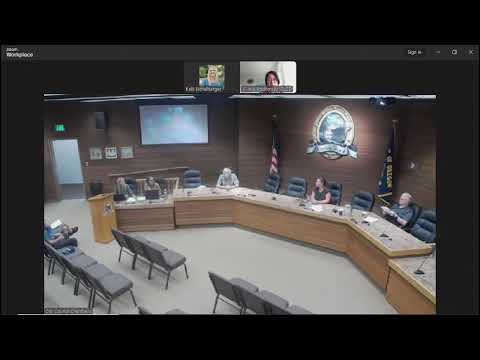
Wei Radomski, the South Coast regional representative for the Oregon Department of Land Conservation and Development, delivered a detailed land‑use training for the Planning Commission on Aug. 13 that focused on how statewide rules shape local decisions and why the administrative record matters in land‑use hearings.
Radomski reviewed the history of Oregon’s planning system, including Senate Bill 100 (1973) and the role of the Land Conservation and Development Commission (LCDC) in adopting the statewide planning goals. She stressed that local comprehensive plans and development codes must implement the applicable statewide goals and that coastal jurisdictions are also bound by coastal goals.
On hearing practice Radomski emphasized the legal distinction between quasi‑judicial (applying code to a specific property) and legislative (making or changing rules for the city) decisions. For quasi‑judicial matters she reiterated that findings must tie facts to specific approval criteria and that relevant evidence must be in the record. “The decision that you make must be based on the applicable standards or code,” Radomski told commissioners.
Radomski also explained ex‑parte contact rules, site‑visit cautions and conflicts of interest (actual vs. potential). She described the usual process sequence — staff report, testimony by applicant and opponents, opportunity for rebuttal — and procedural devices such as leaving the record open (first 7 days for new evidence, next 7 for responses, final 7 for applicant reply) to allow additional written materials without scheduling a new hearing date.
Commissioners asked for printed or digital copies of the training materials for follow‑up. Radomski suggested staff contact DLCD for technical assistance and noted DLCD is providing a grant and technical support for urban growth boundary work involving Coos Bay and Coos County.