Get Full Government Meeting Transcripts, Videos, & Alerts Forever!
Get email alerts on the Land Use Development topic
No spam. Unsubscribe anytime.
Coos Bay resident urges easier street‑improvement path for single‑lot housing
Summary
A Coos Bay resident told the Planning Commission that city and state rules requiring street upgrades are blocking a small‑scale housing project on a gravel dead‑end; staff said fire‑safety paving requirements cannot be waived but council will discuss options in September.
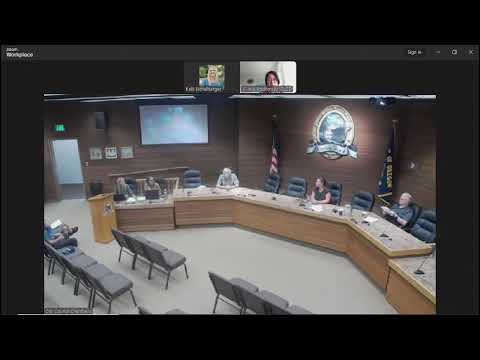
A Coos Bay resident told the Planning Commission on Aug. 13 that city requirements for street infrastructure are preventing a neighbor from building a single house on a vacant lot.
Resident Mike Powders, who said he lives at 706 South Main, described his street as “a dead end with a gravel surface” maintained by neighbors and said a recently purchased vacant lot was cleaned up by new owners who want to build. “He started going through the process, and he hit a brick wall,” Powders said while reading written comments he had submitted in advance. He said neighbors fear that forcing full street improvements on a single lot would change the character of their narrow lane and could invite parking, camping or other problems the block has previously experienced.
A city planner (unnamed in the transcript) replied that city code generally requires new development — from large subdivisions to single residential lots — to provide street infrastructure and that staff historically could vary standards case‑by‑case. “City code requires new developments to put in street infrastructure,” the planner said. The planner added the city is also guided by the statewide planning goals enforced by the Department of Land Conservation and Development.
On the narrow point that most constrains one‑lot development, the planner said the local fire code requires “a minimum 20‑foot‑wide, paved all‑weather surface” extending from the improved street and that this element cannot be waived, while other street standards (curb, gutter, sidewalk) may be eligible for variance depending on circumstances.
Powders framed his plea as a housing‑policy paradox: “I always hear we’re short… there’s a housing shortage. Somebody wants to build one, they get the run around,” he said, urging the commission to consider ways to work with individual owners rather than impose a blanket barrier.
City staff told the commission council members are discussing possible approaches to balance street standards and housing needs, but for now staff will follow existing code. The planner said the council is likely to revisit the issue at its September meeting and agreed to place Powders’ letter on the council agenda if he brings it forward.
No motion or formal action was taken at the Aug. 13 Planning Commission meeting; commissioners asked staff to pursue administrative options and to forward the resident’s written comments to the city council for further consideration.
The next procedural step identified in the meeting was for staff to include the resident’s letter on the council agenda and for council to further consider potential policy adjustments in September.