Get Full Government Meeting Transcripts, Videos, & Alerts Forever!
Get email alerts on the Economic Development topic
No spam. Unsubscribe anytime.
Monmouth Council accepts $80,000 EDA grant to fund feasibility study for year‑round market supporting BIPOC farmers
Summary
The Monmouth City Council directed staff to accept an $80,000 Economic Development Administration grant to fund a 9–12 month feasibility study for a year‑round indoor artisan and farmers market aimed at lowering participation barriers for Black, Indigenous and other farmers of color; council voted unanimously after staff explained the grant funds study only.
Monmouth City Council voted unanimously to direct staff to accept an $80,000 grant from the U.S. Economic Development Administration to fund a feasibility study for a year‑round indoor artisan and farmers market intended to support Black, Indigenous and people of color (BIPOC) farmers in the Bridal Willamette Valley.
The council made the decision following a presentation by Suzanne Deffner, the city’s community and economic development director, who said the grant will fund a market feasibility study that examines operations, space needs, potential operators, and outreach. Deffner said the grant carries a 20 percent match requirement ($20,000), split between $12,500 from the city’s urban renewal agency for professional services and roughly $7,500 in staff time as an in‑kind match. She said the study would begin in February and that staff expect a 9–12 month timeline to complete consultant selection and produce recommendations. Staff will return with a supplemental budget ordinance to account for the award.
The proposal drew public comment and council questions. Jason Ridgeway, during the public comment period, asked whether the study addressed a demonstrated marketplace need and said he was concerned programs that are “supported by BIPOC” might tilt opportunities based on immutable characteristics rather than “merit.” Deffner responded that, as framed in the grant, "supported by" means providing outreach and resources to reduce historic barriers—access to land, capital and connections—so BIPOC farmers can participate in markets; she emphasized the grant funds a study, not the construction of a market or an exclusive program.
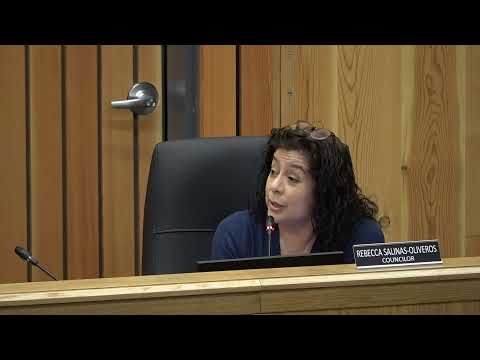
Council members asked clarifying questions about scope and eligibility. Councilor Obers confirmed the grant is strictly for a feasibility study and not for acquisition or construction. Councilor Lopez framed the award as an opportunity to leverage federal funds and to advance the council’s stated values on equity; Lopez moved to direct staff to accept the award and execute the agreement, a motion seconded by Councilor Salinas Olivaveros and passed unanimously after an initial reconsideration and re‑vote.
Next steps: staff will complete the request for proposals and select a consultant using a competitive process, perform community outreach with partners (including the Cultural Harvest Collective and Mid‑Valley BIPOC Farmers Co‑op), and return with a supplemental budget and project agreement. The council set a Jan. 7 acceptance deadline noted by staff as the EDA timeline for the award.