Get Full Government Meeting Transcripts, Videos, & Alerts Forever!
Get email alerts on the Homelessness Policy topic
No spam. Unsubscribe anytime.
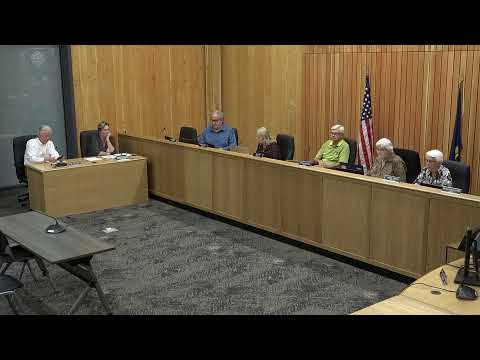
Council hears update on Supreme Court Grants Pass ruling; Oregon statute still governs local enforcement
Summary
City legal counsel briefed council on the U.S. Supreme Court Grants Pass ruling and explained that Oregon House Bill 3115 codifies the Boise/Grants Pass reasonableness standard in state law; counsel said short‑term enforcement practices in Monmouth are unchanged and the city remains focused on connecting people to services.
City legal counsel Lane Shutter gave a work session update on the recent U.S. Supreme Court decision in the Grants Pass litigation and its implications for local enforcement of camping and public‑space rules.
Shutter explained the Supreme Court reversed lower courts’ holdings that tied enforcement to shelter bed availability, but he emphasized Oregon’s 2021 House Bill 3115—which requires local rules governing sitting, lying, sleeping or keeping warm on public property to be objectively reasonable with regard to persons experiencing homelessness—remains in force. Until the legislature amends that statute or courts provide further guidance, Shutter said the city’s practices will continue to follow the state standard.
Chief Isaiah Haynes told the council the police department’s operational approach will not change in the short term: officers will focus on safety, responding to unlawful behavior and connecting people to resources. “Our response is the same,” he said, noting officers often attempt to link people to services rather than pursue enforcement when the conduct does not involve criminal or unsafe actions.
Councilors discussed whether a local shelter would affect enforcement and were told additional shelter capacity would help reduce unsheltered presence, but numerical shelter counts alone may not resolve every enforcement question under state law.
No formal action was required; council members were advised to follow legislative updates through the League of Oregon Cities and other channels for possible statutory changes.