Get Full Government Meeting Transcripts, Videos, & Alerts Forever!
Get email alerts on the Land Use Training topic
No spam. Unsubscribe anytime.
Utah property-rights ombudsman trains Bluffdale planning commissioners on ADUs, vested rights and evidence standards
Summary
Jordan, the state Property Rights Ombudsman, briefed the Bluffdale Planning Commission on how to distinguish legislative recommendations from administrative decisions, when state law preempts local rules (notably ADUs), how to treat short-term rentals and the pending-ordinance exception to vested rights; commissioners discussed notice, evidence standards and upcoming code updates.
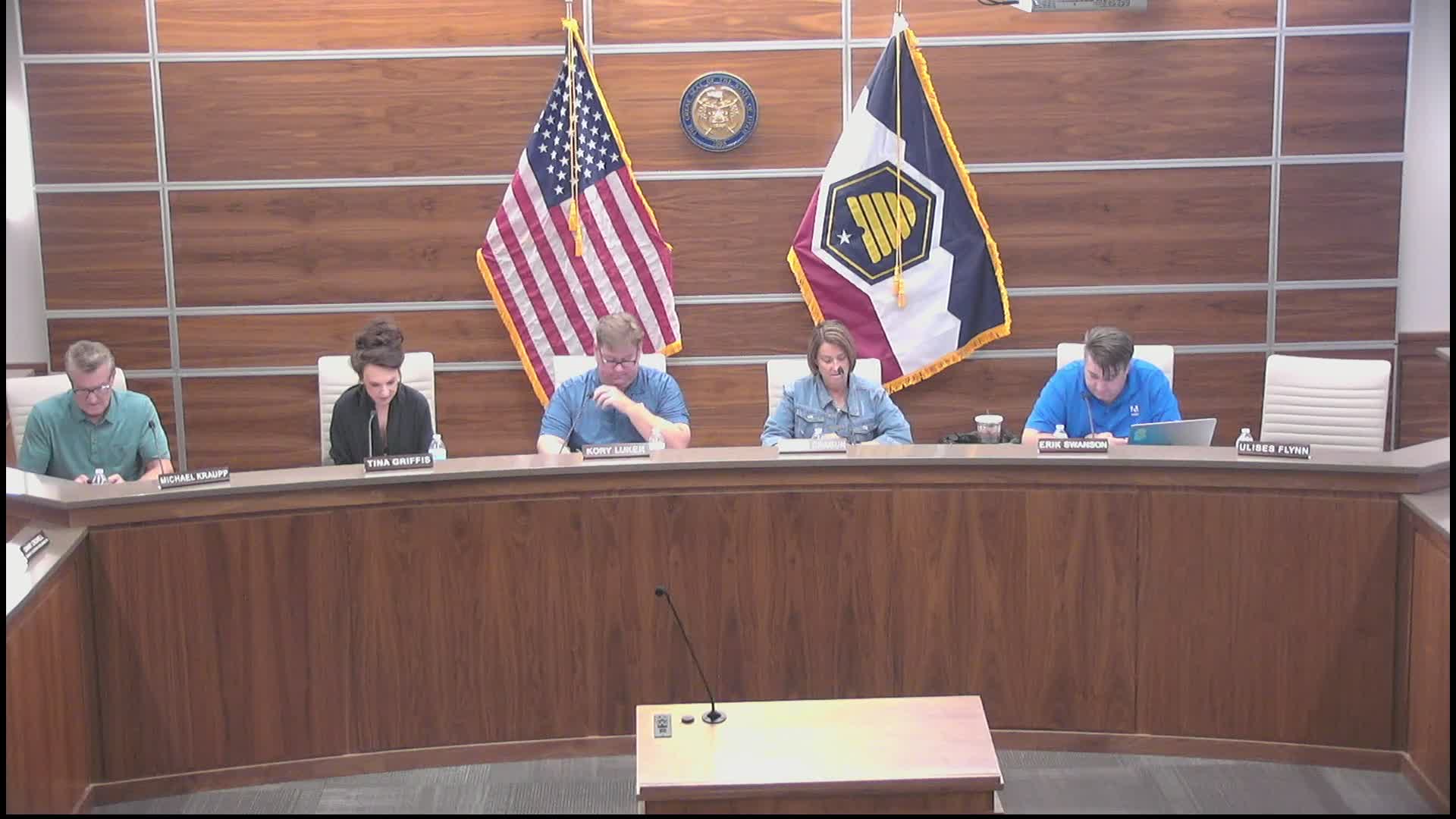
Jordan, the Utah Property Rights Ombudsman, told the Bluffdale Planning Commission on a summer evening that his office is "an independent neutral state agency" and exists to help both property owners and local governments resolve land-use disputes.
The presentation framed three core services the office provides — mediation in eminent-domain matters, advisory opinions about code interpretation and training for local officials — and emphasized the importance of basing administrative decisions on substantial evidence rather than public sentiment. "One of the best ways to prevent dispute… is education," Jordan said, urging commissioners to document technical studies that support any discretionary conditions.
Why it matters: Jordan said planning commissioners make legislative recommendations to the city council, which sets land-use rules, while administrative decisions must strictly assess whether an application complies with existing code and the evidence in the record. That distinction matters for what testimony and arguments commissioners may properly consider at different points in the process.
State preemption and ADUs: Jordan reviewed recent state intervention on accessory dwelling units (ADUs), noting that state law requires cities to allow certain ADU forms and that local governments can only exempt a limited share of residential zones (presenter cited 25% as an illustrative limit). He warned that ambiguous code language typically favors property owners in court and advised clear, specific ordinance language if Bluffdale wants to restrict or define ADUs.
Short-term rentals: On enforcement of short-term rentals, Jordan said municipalities cannot rely solely on online listings (Airbnb/VRBO) as proof of a prohibited short-term rental. He recommended a precise local definition (the presentation cited residency under 30 days as a common threshold) and described case law that has favored property owners where municipal codes were ambiguous.
Vested rights and pending ordinances: Jordan explained Utah’s early-vesting approach: a complete administrative application locks in the rules in effect when the application is filed, preventing midstream rule changes except in limited cases. Two exceptions he named were a documented compelling countervailing public interest and a properly initiated pending ordinance. He advised the commission to define in local code what constitutes initiation of a pending ordinance and to be as specific as possible about which rule changes are under consideration to give fair notice to applicants.
Evidence and public comment: Commissioners raised frequent traffic concerns from neighbors. Jordan told the commission to prioritize technical studies (traffic, engineering, geotechnical) as the evidentiary basis for conditions and to treat audience concern and speculation as distinct from admissible evidence. "If you’re saying a traffic study shows the level of service will not drop… make sure that is all in your decision and identify the data," he said.
Practical recommendations: Jordan suggested (1) drafting explicit local initiation language for pending ordinances, (2) clarifying short-term rental and ADU definitions to avoid ambiguity, and (3) framing public hearings so the public understands what evidence is most helpful for administrative determinations.
Votes at a glance: The commission approved the meeting minutes at the meeting start. Motion to approve minutes: made by the meeting’s initiating speaker (identified in the record as Speaker 1), seconded by Speaker 2; recorded votes were Eric (aye), Corey (aye), Tina (aye), Michael (aye) and the chair (aye). The chair announced the motion approved.
Next steps: Commissioners signaled interest in updated training resources and in returning to code-text amendments for temporary signs, front-yard fencing rules and other zoning adjustments; staff said a grocery-store building permit/billing print is expected to be issued shortly.
The training concluded with Jordan offering slide materials and noting ongoing Luau (Land Use Academy of Utah) updates and toolkits for topics such as missing-middle housing.