Get Full Government Meeting Transcripts, Videos, & Alerts Forever!
Get email alerts on the Land Use Zoning topic
No spam. Unsubscribe anytime.
Planning commission continues review of proposal to allow satellite communication stations in SDX Gateway Zone
Summary
The Bluffdale Planning Commission continued a proposed Zoning Text Amendment (Application 2024-36) that would permit satellite communication stations in the SDX Gateway Zone after commissioners requested FCC documentation, limits on size or duration and design/screening standards; the applicant (InRange/Starlink) said the installation would likely remain 10 years or more and could later move to a rooftop.
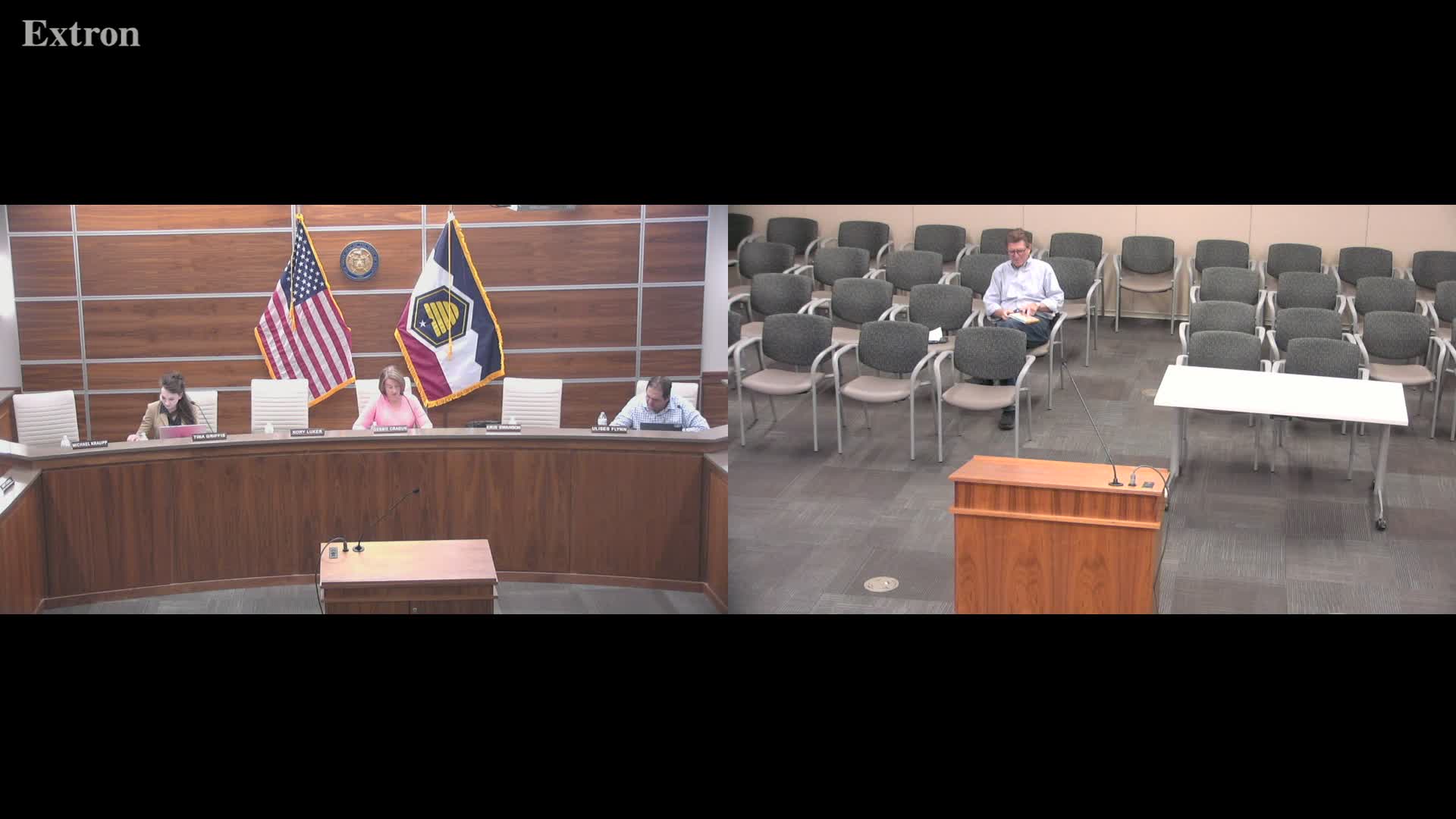
The Bluffdale Planning Commission on Oct. 2, 2024 continued consideration of a text amendment that would create a land‑use definition and allow satellite communication stations in the SDX Gateway Zone. Staff presented the request (Application 2024‑36) and said the concept-plan shows roughly a half-acre ground compound with about 40 dish antennas roughly 2 meters in diameter located at the southern tip of a 6.78‑acre special development property near Pony Expressway and SR‑146.
Caitlin Tubbs, planning staff, told the commission the SDX Gateway Zone currently anticipates a full‑service hotel, conference space and up to 500 residential units in towers, and the zone’s adopted concept plan is part of the ordinance. Tubbs said staff’s primary questions were whether the satellite station is consistent with the special‑district purpose and whether the commission wanted additional design standards, setbacks, landscaping or an explicit limit on the size or duration of the use.
John Fazio, project manager for InRange Solutions (the applicant), participated by phone and said the site was selected for line‑of‑sight and coverage reasons and that the installation would be integrated into the Starlink network. Fazio said similar installations are licensed and governed by the Federal Communications Commission and offered to provide FCC license information and call signs for comparable facilities. He said the compound would be a locked, unmanned enclosure with periodic maintenance visits and that the company expects a minimum deployment of roughly 10 years; he added that a long‑term plan could relocate equipment to the hotel rooftop once structures are built to reduce visual impacts.
Commissioners pressed staff and the applicant on several points: whether the ordinance as written would allow the use to expand across the site without additional review; whether utilities, generators or noise sources would be present; how the facility would affect underground parking and driveways shown on the existing concept plan; and whether RF emissions could interfere with other communications or pose health concerns. Staff and the applicant said utility connections and construction details would be part of a future site‑plan submittal and that FCC rules govern emissions and coordination with other licensed systems. The applicant said no gas generators were proposed and that noise at the site would be minimal.
Several commissioners expressed concern that the draft text amendment contains no quantitative caps (for number of antennas or area) and could allow the use to become a de facto primary land use for the SDX site. Commissioners discussed several regulatory tools: (1) adopt the submitted concept/site plan by reference in the ordinance so any expansion would require a new hearing; (2) place a maximum area or unit limit (for example, 'up to one half‑acre as shown on the concept'); (3) set a duration or review clause (for example, a multi‑year term with reassessment); and (4) add design and screening standards (masonry wall or high‑quality landscaping rather than chain‑link).
After discussion, a commissioner moved to continue the item and directed staff to draft specific ordinance language to limit the size or otherwise constrain the use, and to request FCC documentation from the applicant. Ulysses Flynn seconded; the motion carried on a voice vote with ayes recorded from Ulysses Flynn, Eric (recorded on the roll), Tina Griffiths and the presiding commissioner. Staff said it would return to the commission with the requested draft language and the applicant said it would provide the FCC materials via email.
Next steps: the commission will review staff’s draft ordinance language and the applicant’s FCC documentation at a future meeting before deciding whether to forward a recommendation to the City Council.