Get Full Government Meeting Transcripts, Videos, & Alerts Forever!
Get email alerts on the Calcasieu Bridge topic
No spam. Unsubscribe anytime.
Electoral Harbor Terminal District declines to approve letter on Calcasieu Bridge after debate over traffic and toll impacts
Summary
The board considered Submission 2023-056, a proposed letter to Louisiana DOTD stating the Calcasieu Bridge Project would not restrict port operations. Board members split over whether the letter should proceed without a traffic analysis of toll-driven diversion to I-210; the motion failed for lack of required votes.
LAKE CHARLES, La. — The Electoral Harbor Terminal District on Oct. 20 declined to approve a letter to the Louisiana Department of Transportation and Development (DOTD) saying the proposed Calcasieu Bridge Project would not limit the port’s ability to operate or expand.
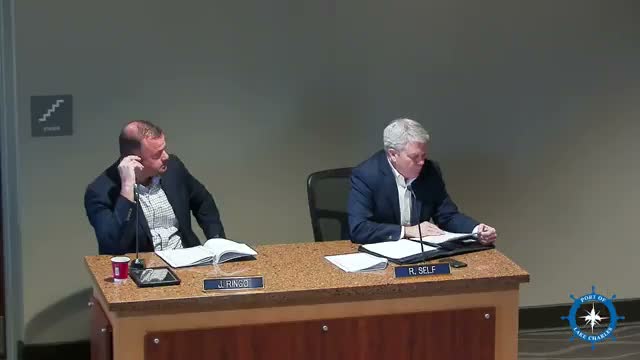
Board action hinged on Submission 2023-056, a draft mutual-agreement letter prepared for DOTD. Mr. Self presented the draft and told members the letter responds to a Louisiana statute that requires a port to comment when a DOTD project lies within its jurisdiction. The draft, Mr. Self said, states the project "does not limit, restrict, or prevent" the port’s ability to construct, maintain, operate, expand, or create facilities within its territorial boundaries.
The central dispute at the meeting was scope: several board members and attendees urged that the board consider not only the bridge’s geometric or navigation effects but also how tolling could shift truck traffic from I-10 to I-210, which they said could increase travel time and costs for port tenants. Multiple speakers said no traffic analysis specific to I-210 and the port’s truck flows had been presented and called it "hasty" to send the letter without that information.
DOTD representatives and others countered that the statute requires the board to evaluate whether the physical facility would adversely affect the port’s operations or ability to expand — a question they framed as geometric/operational, not a toll policy decision. A DOTD official present said the federal navigation channel ends before the I-10 bridge and that, operationally, the proposed bridge would not prevent port terminals north of the structure from functioning. The DOTD representative also stated the project has received federal approval and cited long-term traffic forecasts driving the need for a larger-capacity alignment.
The DOTD representative was quoted in the meeting as saying the draft letter’s only geometric change referenced was a change in vertical clearance, expressed in the meeting as "lowering of the height from a 35 feet clearance to 73 feet" in the draft language. Board members raised that phrasing and numeric detail during discussion; some members questioned that description and asked for authoritative engineering or traffic data.
Mr. Creel moved to adopt Submission 2023-056 and the board called the question. Several members voted "aye" and at least one member voted "nay." The chair announced the motion failed because it did not receive the required four votes.
With no action taken to send the mutual-agreement letter, board members discussed next steps but took no further formal action. The special meeting was then adjourned.
The Joint Transportation Committee in Baton Rouge is scheduled to consider tolling and project approvals next week; board members at the meeting said that committee ultimately decides toll policy for the project.