Get Full Government Meeting Transcripts, Videos, & Alerts Forever!
Get email alerts on the Insurance Fraud Detection topic
No spam. Unsubscribe anytime.
State regulator details AI, Verisk and data tools to detect collusive claims and 'tech‑enabled' solicitation
Summary
LDI fraud staff described use of the ISO claims database, a planned AF‑1 deployment and in‑house AI to surface collusive patterns in digital lead generation and SEO‑driven advertising that the department says can push uncontested claims into litigation. The package is still in early rollout and its impact is being assessed.
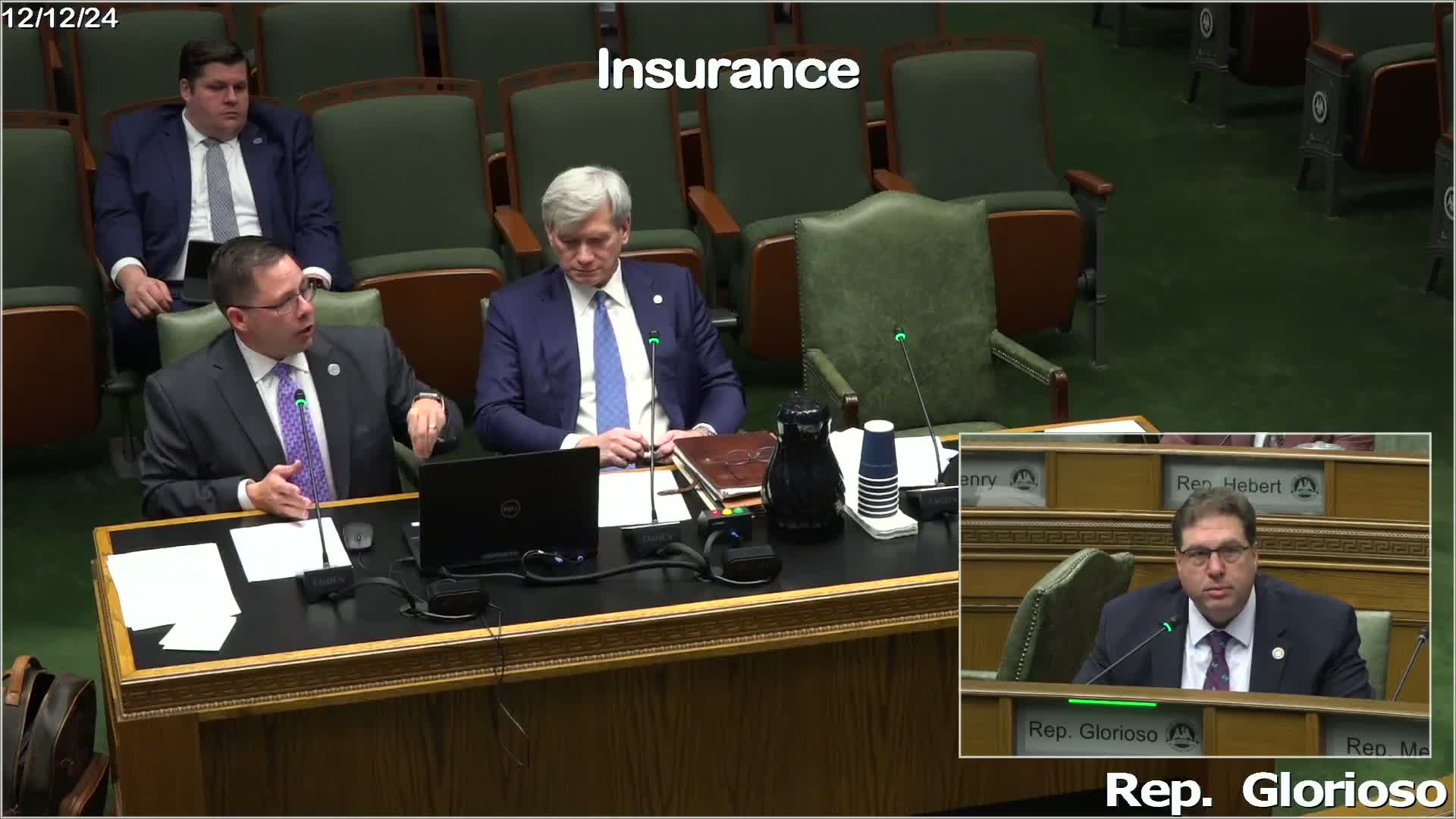
At a joint House hearing Dec. 12, Louisiana Department of Insurance fraud staff laid out how the department plans to use data and technology to identify what they termed “tech‑enabled claim instigation” — targeted online advertising and digital lead generation that department analysts say can funnel potential claimants to lawyers, public adjusters or other third parties before insurers can investigate.
Deputy Commissioner Nathan Scribe described three main lines of work: prevention, investigative triage and data analytics. He said LDI has expanded the fraud unit, has reorganized which cases the unit handles, and is working closely with Louisiana State Police and the attorney general’s office so criminal, civil and administrative efforts are coordinated.
Scribe said the department has been negotiating a contract with Verisk to deploy an industry product known as AF‑1 (Anti‑Fraud 1 for Government), which sits on top of a large claims repository (the ISO claim search database) and can help map connections among claimants, medical providers and law firms. He said AF‑1 deployment is expected in Q1 2025, and that LDI has purchased a GPU to develop in‑house AI models to prioritize cases for scarce investigators.
On targeted advertising, Scribe and a referenced technology partner described techniques that use search‑engine optimization (SEO) and pay‑per‑click advertising to appear in front of people actively seeking claims information. He described an experiment in which telephone numbers tied to ad placements connected to firms or sites that were not necessarily the carrier’s claim number, and cited an actuary’s congressional testimony that attributed as much as 40% of increased claims costs to tech‑enabled instigation — a statistic Scribe described as striking and in need of further study.
Members pressed for details about who pays for the ads and whether advertisers are in‑state or out‑of‑state. Griffin Carlson, who runs PPC advertising, testified that per‑click costs in Louisiana can be many times higher than nearby states (he cited typical PPC prices of $2.50 per click in some markets versus hundreds for highly targeted keywords in New Orleans and Baton Rouge), making Louisiana a profitable target for lead aggregators and some out‑of‑state law firms.
Scribe said AF‑1 and the department’s analytics will not be a panacea, but that the combination of data‑driven detection and coordinated law‑enforcement response can help identify collusive activity, prioritize cases and reduce the burden on investigators.