Get Full Government Meeting Transcripts, Videos, & Alerts Forever!
Get email alerts on the Tree Removal Enforcement topic
No spam. Unsubscribe anytime.
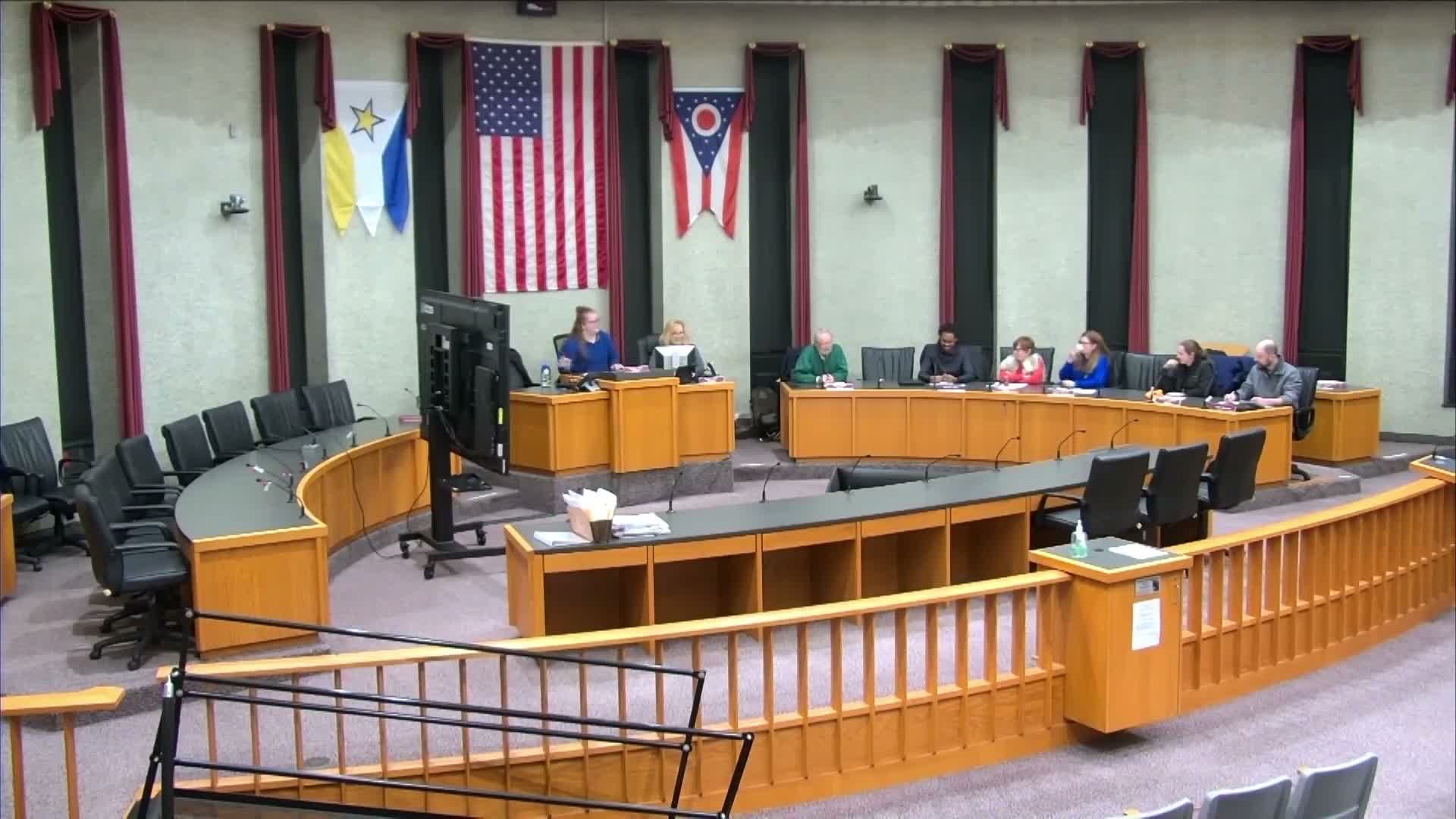
Euclid Shade Tree Commission raises enforcement questions after apartment complex removes multiple trees
Summary
Commissioners discussed recent removals of about a dozen silver maples at an apartment complex, noting canopy loss, limits on enforcement for private-property removals, and possible policy tools such as valuation guides, permitting changes and outreach to encourage replanting.
Roy, a Shade Tree commissioner, told the commission that Lakeside Cove Apartments on Lakeshore Boulevard removed most of the trees on the apartment grounds this week, saying "they have managed to take down the majority of their trees and the majority, by far, is silver maples." Commissioners said the removals — which Roy estimated at about a dozen trees — have produced a noticeable canopy loss and prompted questions about code enforcement and private-property limits.
Why it matters: The commission framed the episode as both a local loss of tree canopy and an example of a policy gap. Commissioner Roy and others said individual removals can reduce long-term ecological services — shade, habitat and stormwater benefits — that are difficult to replace quickly. One commissioner summarized that "the expense of losing a tree is the services that go along with it," noting replacement saplings can take decades to restore lost functions.
Several commissioners pressed planning and enforcement questions. Linda, who provided earlier Planning & Zoning updates, told the commission that current city practice offers little review of private-property removals. "There is no involvement with planning and development when it comes to private property…There really is — the only review they do is if there's any architectural or significant new landscape plan," she said, adding that "there's no permitting process" for private removals under the existing code.
What commissioners proposed or discussed: Members and the consultants from Davie/Davey (the firm reviewing ordinances) described a suite of possible responses: 1) a publicly maintained tree-value guide that documents species and replacement/repair costs to support restitution claims; 2) higher fines or "trouble charges" for destruction of public trees; 3) stronger permitting or thresholds tied to parcel-level canopy goals so that removal below a set canopy percentage could trigger mitigation requirements; and 4) outreach or pooled contracting to reduce costs for property owners who would replant or perform hazard mitigation work.
Commissioner 6 (committee member involved in outreach) suggested bulk contracting could lower per-tree removal or maintenance costs and might be easier to offer to apartment complexes than to many individual homeowners. The group also discussed using i-Tree or similar appraisal tools to quantify lost services and to inform any valuation guide.
Limits and next steps: Commissioners repeatedly noted the legal and practical limits on action: private-property rights and the current code mean the commission often learns about removals only after they happen. Linda said changes can be considered as part of the ongoing urban-forest comprehensive plan and code-review work already underway, and the commission agreed to participate in code revision discussions. The commission did not take a formal vote on new enforcement language at the meeting.
The commission set committee and meeting dates to continue work: the outreach/education committee will meet Jan. 9 and the full Shade Tree Commission will meet Jan. 16.