Get Full Government Meeting Transcripts, Videos, & Alerts Forever!
Get email alerts on the Community Health Needs Assessment topic
No spam. Unsubscribe anytime.
Addison County health agencies present 2024 community health needs assessment, outline three-year priorities
Summary
Health officials presented findings from the 2024 Addison County Community Health Needs Assessment, citing survey and focus-group evidence that health-care access, housing and mental health/substance-use services are top priorities and proposing a Community Health Improvement Plan to address them.
Amanda Freshley, identified herself as a senior community health liaison with the Health Network and Porter, and presented the 2024 Addison County Community Health Needs Assessment (CHNA) to the Addison County Regional Planning Commission on Nov. 13.
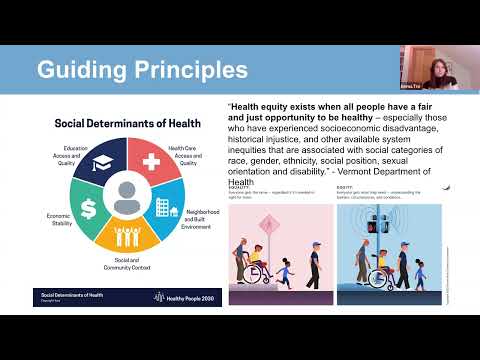
The CHNA, which Amanda said is an IRS requirement under the Affordable Care Act hospitals must complete every three years, used a mixed-methods approach: a community survey (more than 1,000 completed responses), secondary data (more than 50 health indicators from local to national sources including Census data) and focus groups with community leaders, providers and priority populations. Emma Cho of the Vermont Department of Health’s Middlebury Local Health Office said the assessment was guided by social-determinants and health-equity principles and by a steering committee of partner organizations.
Presenters listed six priorities identified across methods—cost of living, cultural humility and inclusivity, health-care access, housing, mental health and substance use, and transportation—and said the Community Health Improvement Plan (CHIP) will concentrate on three top priorities for the next three years: health-care access, housing, and mental health/substance use. Amanda said those three were chosen to be both feasible and likely to produce measurable improvements in equity over the CHIP timeframe.
On health-care access, Amanda said respondents asked for more primary-care availability, appointments outside standard business hours, more services that are free or fully covered by insurance, and shorter wait times. Secondary data showed declines in some preventive screenings and lower rates of certain childhood services; presenters highlighted transportation as a barrier when specialty care is located outside Addison County.
On housing, the CHNA noted that over 43% of survey respondents disagreed that affordable housing was available, and Vermont housing data show widespread renter cost burden (26% of renters paying more than half of income). Presenters said the county needs a range of housing types, including sober living, respite care, housing for older adults and affordable units with support services.
On mental health and substance use, presenters reported that more than one in five respondents disagreed that they could access mental-health services and more than one in four disagreed they could access substance-use treatment. Emma Cho shared recent emergency-department placement data, saying 17 patients statewide were waiting in EDs for mental-health placement (13 less than 24 hours, three for 1–6 days and one more than a week), underscoring inpatient-bed shortages.
Amanda emphasized county strengths—high neighborhood trust and social connectedness—and described next steps: distributing the CHNA report (print and online), sharing results with community partners to support grant applications and programming, and beginning CHIP planning with local organizations to identify short- and long-term actions. She invited commissioners to contact her or Emma for the report or follow-up.