Get Full Government Meeting Transcripts, Videos, & Alerts Forever!
Get email alerts on the Djj Detention Consolidation topic
No spam. Unsubscribe anytime.
DJJ outlines overcrowding, community programs and a $200 million capital proposal to consolidate detention facilities
Summary
The Department of Juvenile Justice reported falling referrals but severe overcrowding in detention, requested $200 million for facility consolidation and $15 million to modernize IT, and said statutory county-payment caps leave a large per-day funding gap.
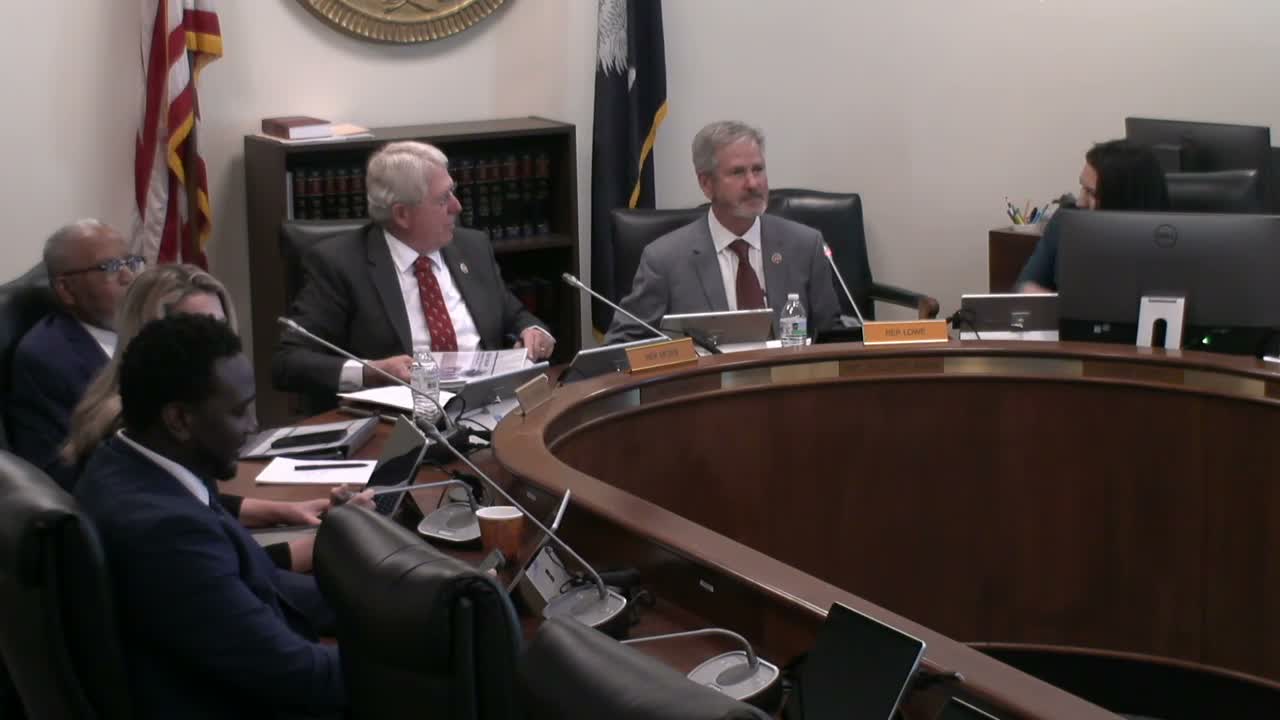
Department of Juvenile Justice (DJJ) Director Hendrick presented the agency's budget priorities to the Criminal Justice Budget Subcommittee, focusing on detention overcrowding, community-based alternatives, capital consolidation and IT modernization.
Hendrick said referrals to DJJ fell from about 14,589 in 2023 to 13,389 in 2024, and that the agency typically has roughly 500 youth in custody or secure or alternative placements at any one time. Still, he said overcrowding in detention facilities remains acute and described a multi-year master plan recommending consolidation of secure, evaluation and long-term facilities onto a single campus to improve efficiency and reduce staffing burdens. Hendrick asked for $200,000,000 in nonrecurring funds to begin detention facility replacement and consolidation on the Browder River/Campus (BRC) footprint.
Hendrick told lawmakers DJJ's operating reality is affected by a statutory cap on county payments for daily detention costs. "Since 02/2007 the limit for detention that we can seek from the counties that they pay us to house youth at the juvenile detention facility is statutorily capped at $50 a day," Hendrick said. "That is nowhere near the actual cost... the actual cost is closer to $420 to $500." He said the Greenville contract for the operating vendor is likely about $430 per day and that DJJ covers the difference through carryforward funds and agency resources.
DJJ also requested $15,000,000 nonrecurring to modernize IT (replace legacy Access databases, reduce more than 50 separate applications and many SharePoint sites), plus recurring funds to migrate to shared services. Hendrick asked funding to expand front-end services such as day-treatment pilots, youth arbitration/pretrial diversion (increased since the line item has not been raised since 2007), and teen after-school centers to reduce reliance on detention.
The director described operational pressures: increased health-care needs among youth (mental and physical), high workers' compensation costs, and difficulty contracting with alternative-placement providers that must compete with agencies that receive federal dollars. Committee questioning covered consolidation options for surplus campuses, the status of the Greenville lease, youth behavior incidents, and the need for more placements and mental-health resources.
Hendrick closed by recounting a recent severe case in which private hospitals refused placement for a youth with acute mental-health needs, underscoring the system's limits and the need for both capital and service investments. No formal appropriations action or vote was taken at the session.