Get Full Government Meeting Transcripts, Videos, & Alerts Forever!
Get email alerts on the Dps Budget Sro topic
No spam. Unsubscribe anytime.
DPS seeks $21 million to sustain and expand school resource officer program, requests pay and staffing to bolster highway patrol
Summary
The Department of Public Safety told the subcommittee it needs $21 million in recurring funds to fully support current state-funded school resource officers and expand coverage, plus investments in pay, vehicles, IT and a new NG911 migration to address staffing and technology shortfalls.
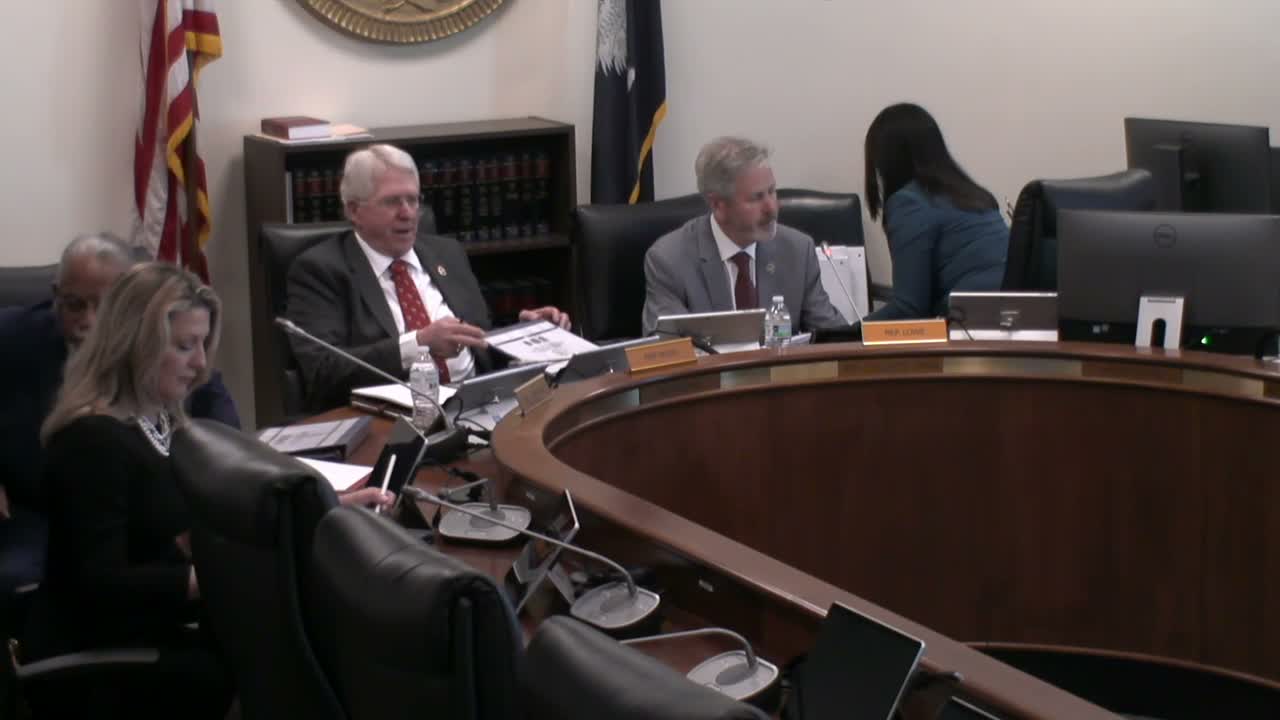
At a Criminal Justice Budget Subcommittee hearing, Department of Public Safety (DPS) Director Dwight Woods outlined a package of recurring and nonrecurring requests to sustain the agency's law-enforcement, highway safety and school-safety programs.
Woods asked the committee for $21,000,000 in recurring funding to continue and expand the state School Resource Officer (SRO) program. "What we're asking for is for $21,000,000 in recurring dollars to continue to fund that program," Woods told the subcommittee, explaining that $3,000,000 of the current need covers a shortfall to fund the existing 430 officers and that $16,000,000 would fund about 177 additional positions to extend coverage to more schools. He also asked for $8,000,000 nonrecurring for training and equipment to train and equip 88 additional officers next year.
Woods described other major requests tied to recruitment and readiness: nearly $1,700,000 in step increases to retain experienced staff; $3,400,000 to fund 30 additional highway patrol positions; $3,900,000 to cover rising fuel costs; and $2,000,000 recurring for vehicle maintenance for a fleet of about 1,300 vehicles. He also outlined $1,200,000 for licensing and security testing (including Microsoft 365 subscriptions), $2,800,000 for vehicle replacement to preserve a six-year rotation, and $1,900,000 for vehicle upfits, body armor rotation and taser program sustainment.
On technology and public safety communications, Woods asked for $1,000,000 nonrecurring and $500,000 recurring to migrate DPS telecommunication centers to the statewide next-generation 9-1-1 system, which he said would speed triage and improve GIS-based location services. He also highlighted virtual weigh-station technology that uses DOT weigh-in-motion sensors and data integration to screen commercial vehicles cheaper and faster than brick-and-mortar stations.
Recruitment and pay were a focal point of questioning. Committee members pressed on historic staffing shortfalls, starting pay, and the impact of 12-hour shifts on retention and morale. Woods said the department has been moving pay upward and suggested a hypothetical $75,000 starting salary to improve recruitment; he emphasized non-salary actions (scheduling, leadership training, morale work) as part of a retention strategy.
No votes or formal actions were taken; the committee heard testimony and asked clarifying questions on SRO program administration, local-government roles, and trooper staffing strategies.