Get Full Government Meeting Transcripts, Videos, & Alerts Forever!
Get email alerts on the Forensics And Sled Budget topic
No spam. Unsubscribe anytime.
SLED asks for staffing, IT and recurring authority to shrink lab backlogs; reintroduces criminal-history bill
Summary
SLED leaders told the Criminal Justice Budget Subcommittee they need recurring pay/rank changes, new forensic hires, IT upgrades and federal-spending authority to reduce a DNA and digital evidence backlog, and noted they will reintroduce a state bill to allow possession of criminal histories.
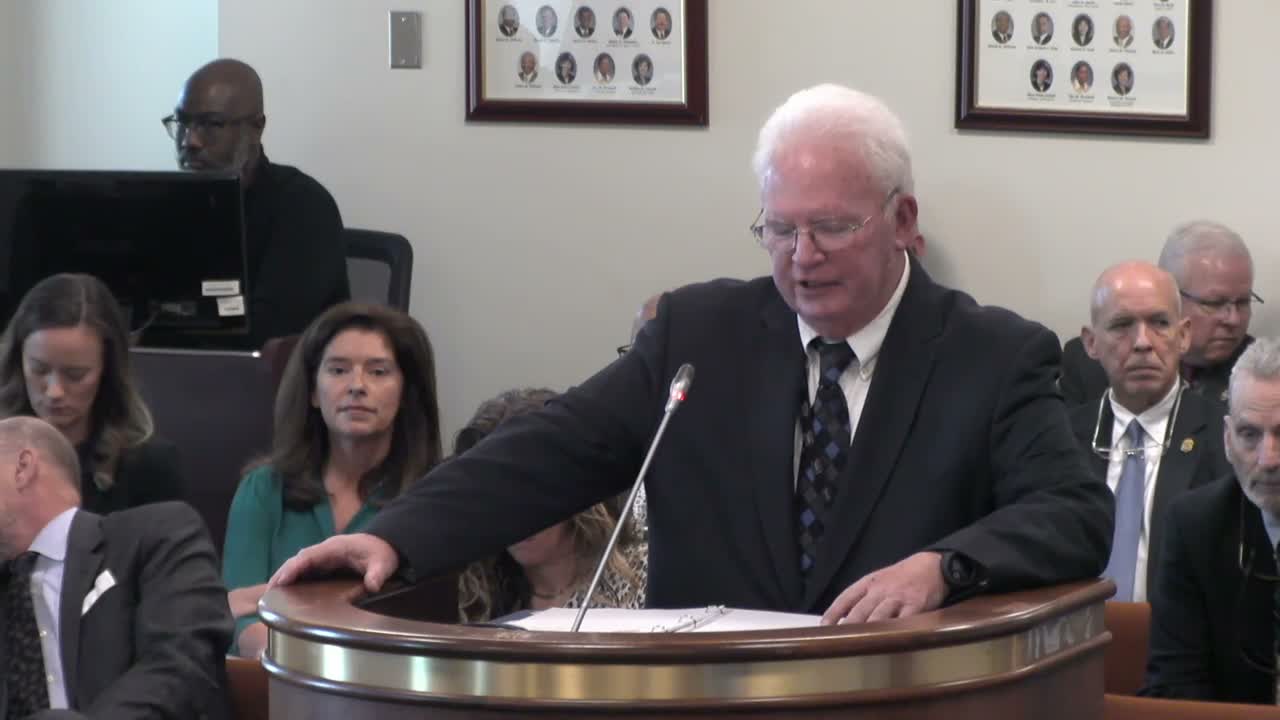
Members of the Criminal Justice Budget Subcommittee heard a budget presentation from the State Law Enforcement Division (SLED) in which agency leaders requested recurring pay and staffing increases, expanded IT funding and federal spending authority to address forensic backlogs and operational needs.
SLED Director Jackie Swindler and Chief Keel credited recent General Assembly support for recruiting and retention improvements but urged more. "We're asking for $5,000,000 in federal funds authority," Chief Keel said, adding the authority would let SLED expend growing federal grants. Keel put SLED's top recurring priority as rank-change and step increases for agents and criminalists to retain experienced staff.
Why it matters: Keel said SLED has increased DNA casework capacity by hiring additional analysts — from eight to 17, with three more in final stages — and aims to reach about 20 analysts to attack a substantial backlog. He told the committee completed cases rose 30.8% (from 19,341 in FY23 to 25,298 in FY24) but maintained that hemp-related quantitative testing and new delta-8/10 products have increased workload and complexity.
SLED detailed line items and programmatic needs: a law enforcement rank-change package (listed in the presentation as approximately $709,240 plus fringe for pay adjustments), funding for roughly 29 FTEs (25 of them new state FTEs), one full-time position to manage a statewide sexual-assault-kit tracking system, recurring CJIS (criminal justice information system) support (about $3,500,000), and nonrecurring IT and server replacements. Keel described daily message volume through SLED's CJIS switch as an operational lifeline — "about 600,000 messages a day" — and flagged end-of-life servers, disaster recovery and bandwidth upgrades as priorities.
The presentation also covered operational costs tied to new missions: helicopter insurance and maintenance, counterterrorism and K9 veterinary services (SLED operates roughly 25 K9s), and care for animals seized in investigations. Keel told lawmakers SLED seized about 174 fighting dogs last year, creating recurrent boarding and veterinary costs; the agency seeks recurring veterinarian and storage funds to manage that burden.
On legislation: Swindler said SLED will reintroduce a state bill that previously passed the House but never reached a Senate committee. "We introduced a state bill is what the FBI told us to do," Swindler said, describing the measure as necessary to permit the agency to possess criminal-history information for misconduct and investigative purposes; he characterized the bill as carrying no direct state fiscal cost.
Questions from committee members focused on whether SLED or local agencies caused trial delays, animal-care costs, and the effect of hemp-law testing requirements on lab throughput. Keel said SLED prioritizes violent-crime work and will expedite casework when solicitors notify the lab, and reiterated that new quantitative hemp testing and complex products such as gummies have significantly increased laboratory processing time.
What's next: SLED concluded by offering to answer follow-up questions and provide tours of the new lab facilities; presenters left the committee with multiple line items to review. There was no formal vote or motion in the hearing.