Get Full Government Meeting Transcripts, Videos, & Alerts Forever!
Get email alerts on the Blind Services topic
No spam. Unsubscribe anytime.
Commission for the Blind outlines vocational and prevention services, reports business enterprise growth
Summary
Darlene Graham presented the South Carolina Commission for the Blind's mission, vocational and prevention services, and an expanding business enterprise program that manages contracts including a more‑than‑$60 million Fort Jackson arrangement; the agency said it currently does not seek new state funding this year.
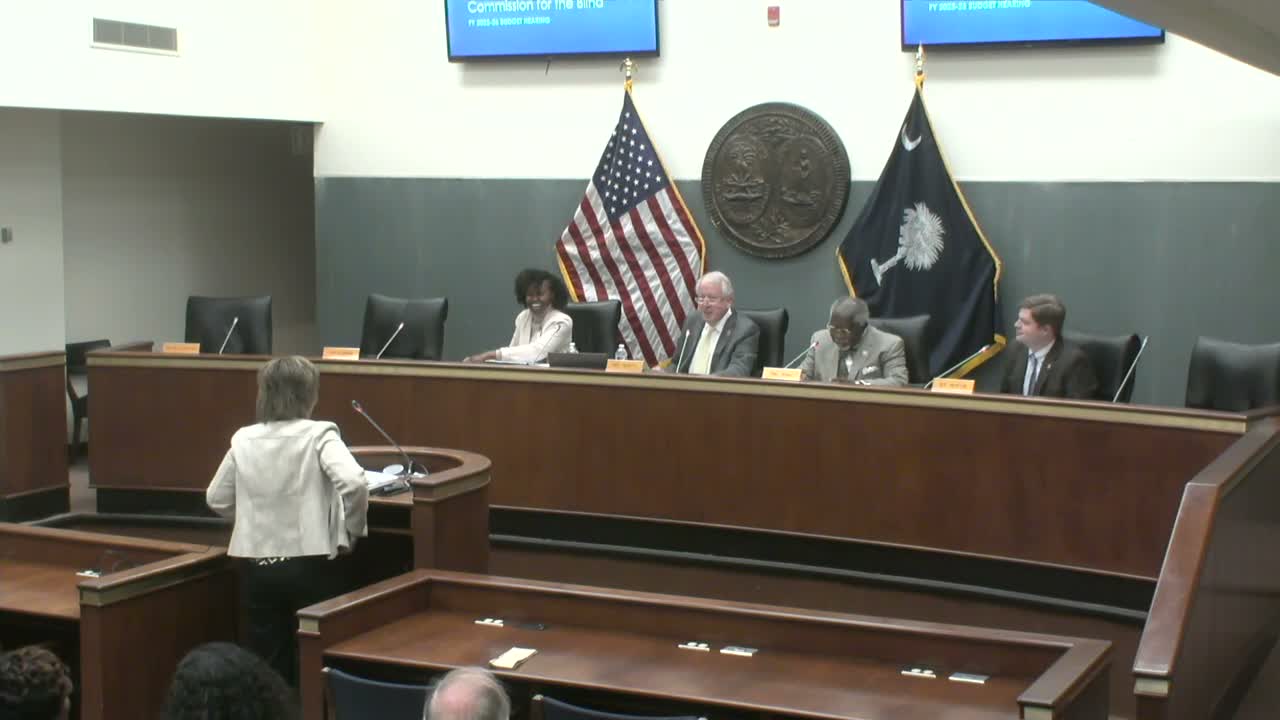
Darlene Graham, representing the South Carolina Commission for the Blind, told the House Ways and Means Committee that the agency focuses on vocational rehabilitation, independent living and prevention of blindness services aimed at helping blind and visually impaired South Carolinians secure competitive employment and independence.
"Our largest program, our vocational rehabilitation program, is primarily focused on helping our consumers find or maintain employment," Graham said, describing individualized counseling, vocational training and assistive technology services. She said the agency also operates a residential component in Columbia for intensive training and can house participants Monday through Friday for multi‑week programs.
Graham highlighted the agency's business enterprise program (BEP), a 16‑week training track that prepares participants to become licensed vending or food‑service operators. She said BEP vendors operate 83 facilities statewide, including 28 rest stops and welcome centers and 10 restaurants at Fort Jackson, where the agency manages what Graham described as a more‑than‑$60,000,000 contract with the U.S. Army.
"We're also doing some exciting things with students aged 13 to 21," Graham said, describing campus camps for more than 30 students that included work‑readiness skills and mobility training; she said success stories in committee packets include graduates who moved into higher‑paying positions.
Graham gave performance figures: the agency exceeded an older‑blind enrollment projection (served more than 1,400 people after projecting just over 1,000) and observed a trend that could push enrollment toward 2,000 this year. She said program outcomes have raised average consumer wages from about $25,000 in FY21 to just over $34,000 annually, a 34% increase.
On financing, Graham said the agency currently does not have a request for additional state funds in this budget cycle but thanked the committee for prior positions received. She described prevention services that can fund cataract and retinal procedures for financially eligible individuals, and said uninsured or under‑insured people who meet eligibility requirements can be served.
Committee members asked about outreach to other military branches beyond Fort Jackson; Graham said the BEP has joined multi‑state bids that cover East Coast military contracts and that the agency is pursuing opportunities to expand vendor access. On eligibility for financial assistance in prevention programs, Graham said the agency uses an income formula tied to federal poverty guidelines and can serve those who meet financial need criteria.
The committee recorded no formal motions or votes on the presentation. The agency closed by thanking members for their support and noting it may return next year with additional requests.