Get Full Government Meeting Transcripts, Videos, & Alerts Forever!
Get email alerts on the Animal Shelter topic
No spam. Unsubscribe anytime.
Madison County fiscal court defends shelter operations after weeks of public criticism; outlines staffing, data and plans for a new facility
Summary
At a lengthy presentation Tuesday, county officials and the new animal‑care director disputed social‑media claims about rising euthanasia and missing funds, detailed process changes and data showing fewer euthanasias this year, and said a feasibility study and infrastructure upgrades are planned.
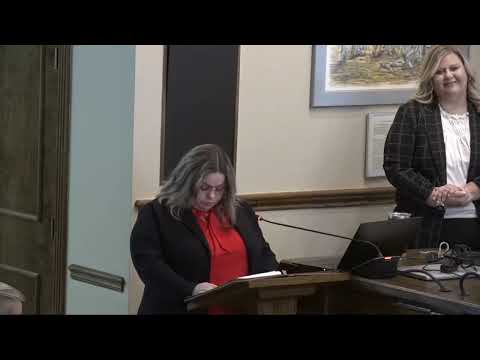
Madison County Judge Executive Judge Taylor and county staff used Tuesday’s fiscal court meeting in Berea to respond to public concerns about the Madison County Animal Shelter and to outline operational changes and next steps.
Jill (county staff) and Maggie Ratliff, the county’s new animal care and control director, presented a multi‑point review of shelter operations, saying the county has moved from paper intakes to immediate electronic intake, added daily staff huddles and training, pursued grants and donations, and introduced new cleaning products and procedures.
The county said general fund dollars still cover most shelter costs but cited a nearly 41% increase in funding over four years as the result of grant awards, donations and operational efficiencies. Officials also described a legacy gift from the late Tony Bennett that they said was placed in a designated investment account (reported as $190,897.27) and remained allocated to shelter purposes.
Officials addressed a series of social‑media allegations. Jill said claims of a year‑to‑date increase in euthanasia were incorrect and offered a March 1–Aug. 31 comparison showing 263 euthanasias in the prior year versus 64 in the same period this year. She also said many early‑year deaths were associated with animals taken in under previous leadership and that the shelter’s current pace would annualize to the lowest four‑year total.
The presentation included detail on in‑shelter deaths: county staff reported 30 in‑shelter deaths to date for 2024 (which would annualize to roughly 50), and said a large share involved highly vulnerable puppies (19 of the reported 30 were eight weeks old or younger). Staff attributed these deaths in part to the health risks young puppies face on intake and to occasional disease outbreaks.
The county laid out changes intended to improve outcomes and transparency: instituting weight and vaccination on intake, creating better phone‑system routing and voicemail transcripts to speed callbacks, recruiting more kennel technicians and animal control officers, standardizing records fields in the shelter database, and negotiating a memorandum of agreement with the city of Richmond for regional sheltering support.
Staff also described existing rescue partnerships and transfer activity. They said rescues received dozens to hundreds of animals annually (examples cited: roughly 221 in 2022 and 250 in 2023) and noted that rescues sometimes charge fees to cover transport and veterinary costs; the county said it does not charge rescues for animals pulled from the shelter.
Several residents used the meeting’s public‑comment period to press the court further. Speakers complained about shelter odors, recordkeeping, animals listed as pending rescue for months, dogs they said were kept on hold for long periods and, in one case, a rumor that a new dog pound location would be sited adjacent to a longtime family business. County leaders said no decision on a new site had been finalized and offered to meet with concerned neighbors.
The court acknowledged areas for improvement. Judge Taylor and other members said they would work with shelter staff to refine reports, follow up on records requests and pursue design and feasibility work for a new shelter that would allow better separation of spaces (for puppies, sick animals and administrative functions). Jill said staff have already added a category to track in‑shelter deaths in the database and will continue to adjust reporting so external reviewers can reproduce the county’s figures.
The county also recognized limits to its authority: several speakers raised questions about calls routed to Richmond’s code enforcement and the separate governance of municipal police departments; county officials said those are separate agencies and encouraged residents to use the appropriate city contacts when relevant.
The fiscal court invited residents with unresolved evidence of wrongdoing or missing records to file open records requests and to meet with staff so the county could provide the raw data it used in its analyses. Officials said they would continue to publish meeting materials, work with local veterinarians and rescues, and pursue the feasibility study and site planning steps necessary to improve shelter infrastructure.
The court left the matter open for ongoing oversight; public comment and additional follow‑up were encouraged before the next fiscal court meeting.