Get Full Government Meeting Transcripts, Videos, & Alerts Forever!
Get email alerts on the Tax Budget topic
No spam. Unsubscribe anytime.
House Appropriations panel advances budget work on Tax Commissioner while deferring some primary‑residence increases
Summary
Committee members signaled they will preserve funding to cover recently accepted primary‑residence credit applications and keep a $3.255 million disabled‑veterans tax credit adjustment in the worksheet, but they discussed removing primary‑residence increases from the division budget and reconciling them in pending tax bills.
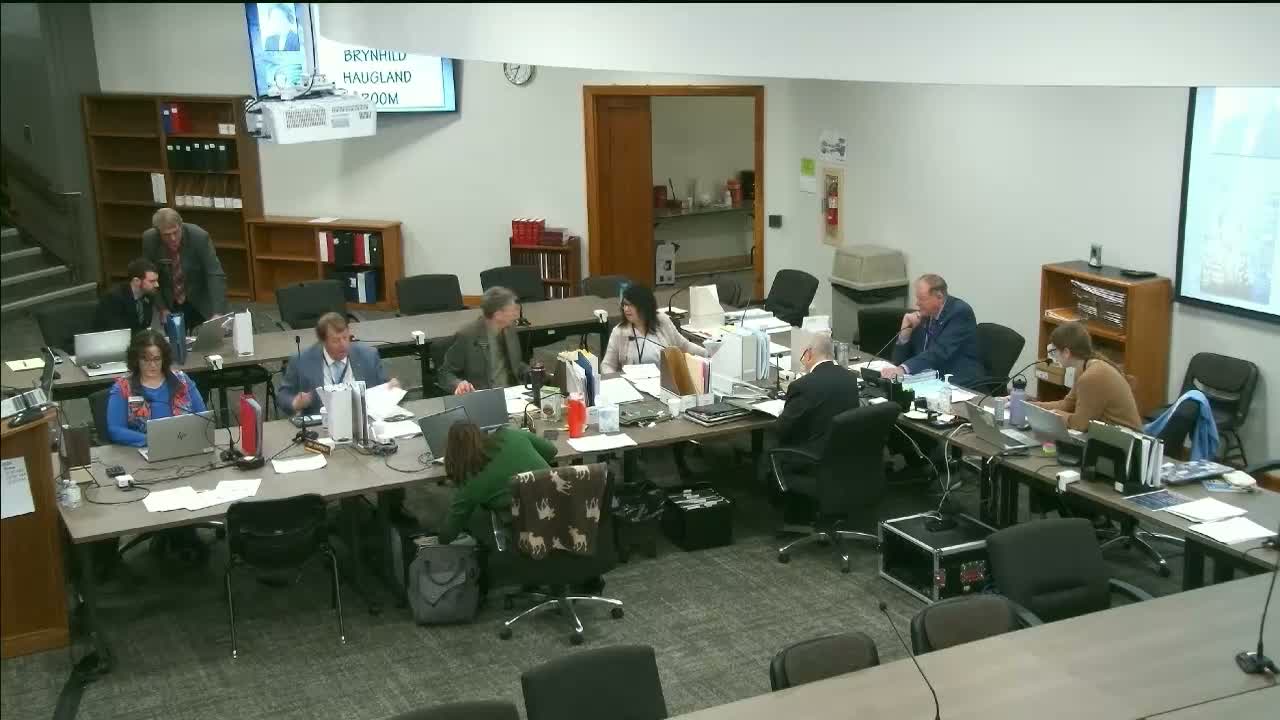
Chairman Munson opened committee discussion on the Tax Commissioner’s budget bill (1,006) and supplied an updated long‑sheet worksheet for members to compare to previously approved items. “We are going to take up the discussion on the tax commissioner’s budget bill,” he said at the start of the review.
Why it matters: The committee reviewed whether to include new or increased tax credits in the division budget or leave those changes to standalone tax legislation. The choices affect the state general fund, legacy fund transfers and whether the Legislature risks double‑appropriating money that pending bills might also allocate.
Committee staff told members the only additional agency request the panel had already approved on the worksheet was $362,000 in ongoing salary funding grouped with other salaries and wages changes. The staff recommended removing any proposed increases for the primary‑residence credit from the division budget because multiple pending tax bills could change the funding source or amount, and including both could result in double‑appropriation.
Staff urged the committee to keep the requested disabled‑veterans tax credit adjustment of about $3,255,000 in the worksheet so the program can continue at its current level. Members discussed several dollar figures during the review: the worksheet contains a $103,000,000 general‑fund baseline for the primary‑residence credit, staff estimated roughly $77.5 million would be needed to continue the program as written for the applications being taken now, and agency analysis suggested that if a separate trust fix (referred to in committee as Senate Bill 2201) passes, the total requirement could rise to about $79.5 million.
Tax department staff briefed the panel on timing and mechanics: the $500 primary‑residence credit was structured as a two‑year program that applies to the prior tax year; applications received now would require appropriations in the next biennium, so the committee would need to ensure funding is available to make counties whole at disbursement time. Staff also said their analysis modeled inflation and housing growth assumptions and estimated that roughly 37,000 homes currently have no property‑tax obligation, meaning many homeowners would not benefit fully from a $500 credit.
What the committee decided and next steps: Members agreed to keep the disabled‑veterans adjustment in the worksheet and directed staff to draft an amendment for committee review; the chair said they would not move the budget out of division until the amendment text had been prepared and reviewed. Members discussed options for reconciling primary‑residence funding on the floor or in tax committee if pending bills change the program’s funding structure.
The committee paused final action pending the written amendment and further reconciliation with tax‑committee work and pending bills. The Tax Commissioner’s budget remained under active committee consideration and will return to the panel when the amendment language and any late fiscal notes are available.