Get Full Government Meeting Transcripts, Videos, & Alerts Forever!
Get email alerts on the School Finance topic
No spam. Unsubscribe anytime.
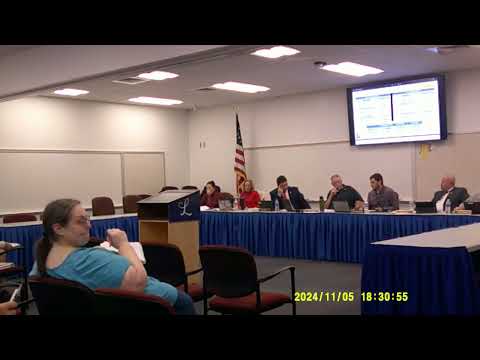
Littlestown Area SD weighs scaled capital plan after state trims facility grant
Summary
District staff said a state facility grant award fell to $1 million from an expected $4.7 million, prompting a proposal to prioritize high-school HVAC and pneumatic upgrades, pause ACES for a year, and seek further clarification from the state before finalizing capital allocations.
Speaker 1, a district staff member, told the committee the district’s expected state share of a facility grant has been reduced and urged the board to indicate how much local commitment it would accept. "So the grant runs from right now until 20 20 June 30 20 27," Speaker 1 said, and later asked, "So tonight, I just wanna ask the community kinda get a feel of where is the comfortable level of commitment?" Speaker 1 said the district once expected the state to provide 75% of project costs but that now the state award is smaller.
Why it matters: The change in state funding affects which work the district can proceed with and how much local money will be required. Speaker 1 presented preliminary audit numbers and a proposed reallocation of reserves that would allow the district to advance prioritized work while preserving a buffer for unexpected audit adjustments.
District proposal and rationale: Speaker 1 proposed prioritizing HVAC and pneumatic upgrades at the high school and completing middle/high-school improvements while the current construction project is underway to avoid program disruption. They also proposed pausing the ACES work for one year to look for additional funding or to redesign the scope to reduce costs. "We can always try again," Speaker 1 said about reapplying for grants next year.
Grant mechanics and constraints: Board members pressed staff about how the grant award and program rules affect local spending. Speaker 2 asked how the district would use the current $1,000,000 award and whether that sum could advance a minimum set of projects despite falling short of earlier expectations: "It's not the $4,700,000 that we expected, but it's still a million dollars. How about can we use that million dollars to move forward so we can look at that funding and they accomplish that minimum?"
Staff clarified the grant is reimbursable, meaning the district must spend up front and then seek reimbursement from the state, creating a spending threshold to access funds. As Speaker 1 put it, "We it is a reimbursable grant, so we have to spend." Committee members discussed project-specific minimums (discussed in the meeting around $500,000 per project) and whether separate projects could be consolidated to meet thresholds; staff said the grant’s application structure and award terms limit consolidation.
Budget context: Speaker 1 presented preliminary audit figures that show roughly $3.7 million in surplus for the 2023–24 year and outlined proposed allocations: retaining about $6.1 million as previously committed toward middle/high-school capital; adding $600,000 for a transportation rotation; and modest increases to technology and health-care reserves. Committing $2.9 million toward high-school facility work plus another $2.4 million for ACES, Speaker 1 said, would reduce capital reserves below the district’s target levels and requires board approval in the audit filing.
Next steps and timeline: The committee asked staff to seek clarification from the state about grant terms and the award amount; Speaker 1 said they would email the state the next day. The group agreed to gather additional information and revisit the decision at a follow-up meeting, with staff noting design and bidding lead times and setting a practical decision window tied to ongoing construction schedules. The audit remains preliminary and numbers may change with final audit adjustments.
What was not decided: No formal motion or vote was recorded during the discussion. The board did not finalize commitments for ACES or other projects; instead, staff were directed to pursue state clarification and return with more information for the board’s consideration.
Ending: The committee paused further commitments pending clarification from the state and additional cost and timing information; staff will report back to the board at the next scheduled meeting so the audit and capital project allocations can be finalized.