Get Full Government Meeting Transcripts, Videos, & Alerts Forever!
Get email alerts on the Utilities topic
No spam. Unsubscribe anytime.
City presents water and sewer rate increases and new service fees; residents urge delayed billing and annual review
Summary
Finance and utilities staff presented proposed increases to water and sewer user rates, a larger sewer increase tied to major capital projects, and changes to service fees (including a $65/hour service work fee); residents asked the council to set an effective date aligned with June billing and require annual rate reviews to ease household impacts.
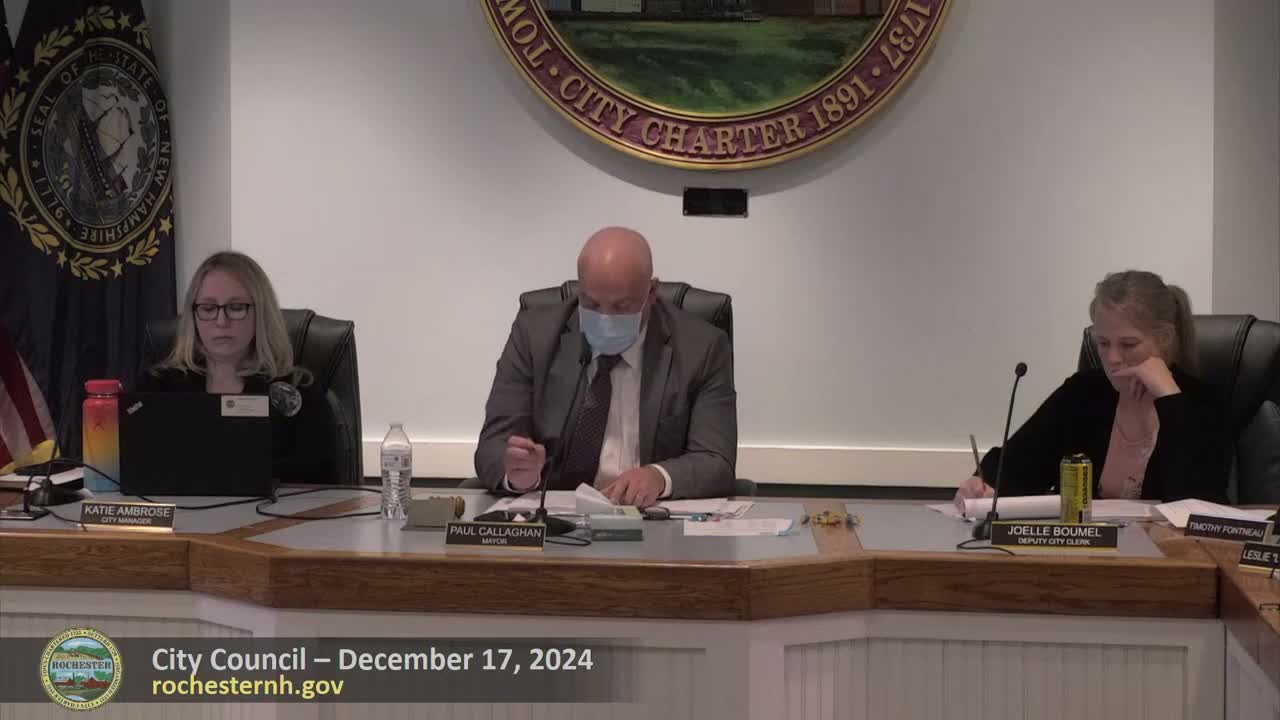
Rochester officials presented a package of rate and fee changes for the city's water and sewer systems at the Dec. 17 council meeting. Director Sullivan told the council the water and sewer rate schedules and related service fees have not been updated in many years and recommended changes to bring fees in line with the cost of service.
On the water side, staff discussed a possible effective date of March 1 so the first customer bills reflecting the change would appear in the June billing cycle because Rochester bills in arrears. For ancillary water services, staff proposed moving to an hourly service charge (the largest item being a $65/hour service work fee) to reflect actual labor costs rather than longstanding flat, low fees.
Sewer rates drew stronger emphasis: Sullivan recommended a 15% adjustment for sewer (compared with 10% for water) to address capital needs, citing a $9 million FY25 sewer capital budget and approximately $28 million in authorized but not yet issued bonded sewer projects and an upcoming new treatment plant. Sullivan warned that if enterprise funds cannot support capital needs, the general fund and property taxpayers would ultimately shoulder the burden.
Residents urged caution. Christopher Rice and Carol Petrasavage asked that the council specify a delayed billing effective date so households would first see increases on the June bill and proposed adding an annual review requirement for user rates to prevent large, infrequent jumps. Sullivan confirmed the council has latitude to set the effective date and reiterated the 90‑day arrears billing lag that produces the June billing timing if rates are set to take effect March 1.
Councilors posed follow‑up questions about grandfathering for projects already under planning board approvals, implementation for meter installations mid‑construction, and whether special classes of users would be treated differently; staff said those implementation details could be clarified in ordinance language.