Get Full Government Meeting Transcripts, Videos, & Alerts Forever!
Get email alerts on the Education Choice topic
No spam. Unsubscribe anytime.
Senate advances $1 billion education savings‑account plan after daylong debate
Summary
The Texas Senate moved Senate Bill 2 to engrossment after hours of debate and recorded votes, approving multiple technical amendments while rejecting others that would have added broader accountability or funding protections for school districts. Supporters say it will serve 100,000 students; opponents warned of risks to public schools and special‑education safeguards.
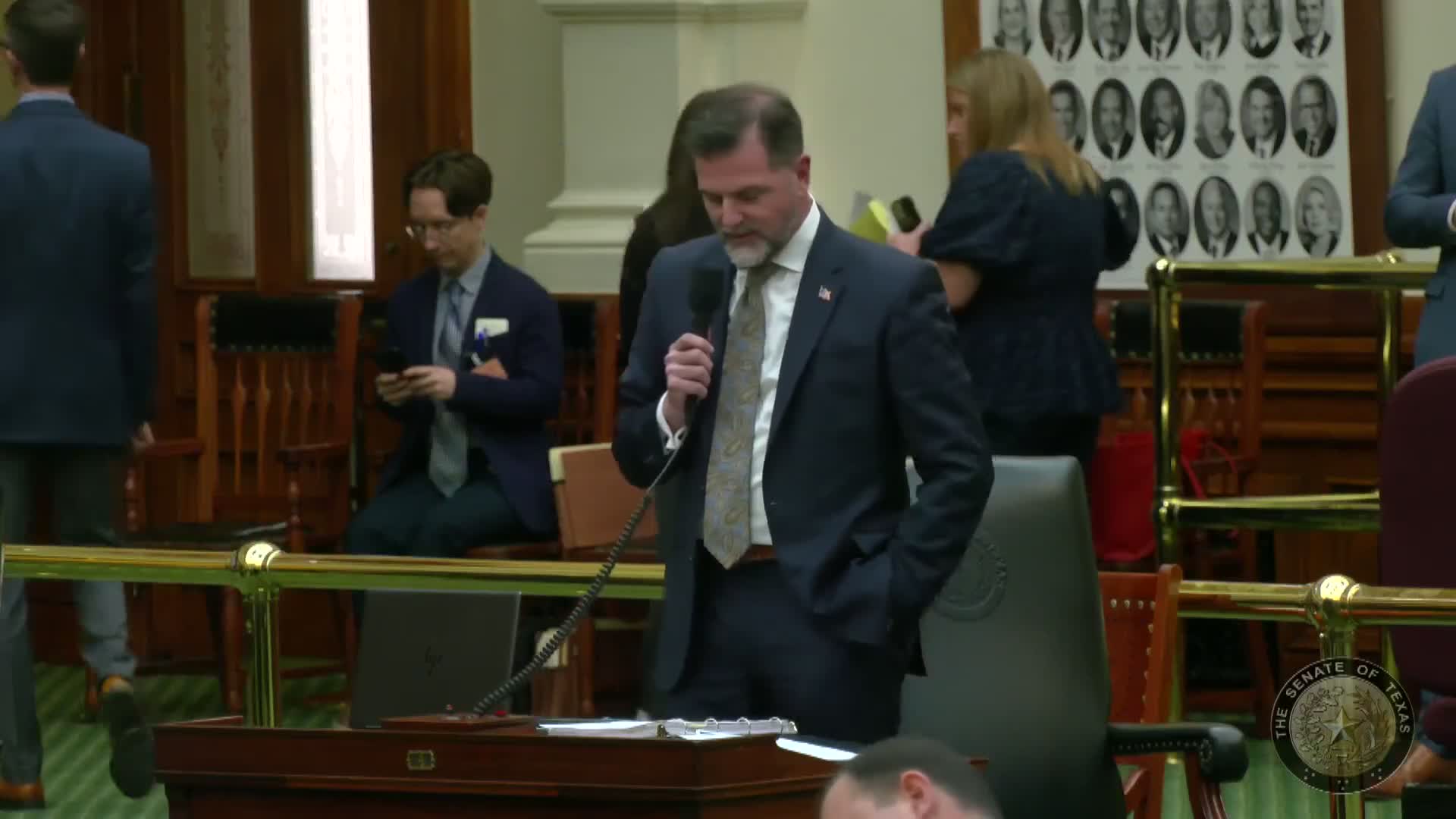
The Texas Senate on Feb. 5 took up and advanced Senate Bill 2, a $1 billion education savings account (ESA) program designed to serve up to 100,000 students, after a daylong floor debate in which sponsors and critics repeatedly sparred over funding, equity and protections for vulnerable students.
Senator Bryan Creighton, the bill’s author, told colleagues the proposal would offer families more educational options and would be funded from surplus dollars rather than recurring public‑school operations: “This program will serve 100,000 students,” he said while describing anti‑fraud protections, mandatory criminal background checks for vendors and reporting requirements. The Senate voted to suspend the regular order of business and take up the bill; that procedural motion passed 20‑11.
Supporters emphasized a prioritization scheme the bill enshrines: 80% of available seats would be reserved for low‑income and students with disabilities, while 20% would be open universally. Creighton and other proponents argued those weighting rules and limits in the bill — plus a stated $1 billion cap tied to appropriations — would prevent runaway enrollment or open‑ended fiscal obligations.
Opponents repeatedly pressed the author on details they said were unclear or risky. Senator Royce West called attention to the program’s historical context and asked whether vouchers in general had roots in segregationist policies; Creighton acknowledged the history as ‘‘one of the origins’’ but pointed to national data he said show ESA programs have served high shares of Hispanic and Black students in other states. Senator Judith Menendez and others warned about budget and local impacts, predicting enrollment shifts could leave some districts with fixed costs and less revenue.
Questions and amendments fell into recurring themes: fiscal mechanics and the comptroller’s authority; how many private‑school seats exist and whether the program could primarily benefit wealthier families; whether private schools participating must meet credentials or safety standards; how the program treats students with disabilities; and what safeguards will prevent fraud and improper vendor fees. Creighton and other supporters repeatedly said the bill includes some of the nation’s strongest anti‑fraud language and authorizes the comptroller to run the program and preapprove vendors subject to registration and background checks.
On special‑education issues, senators asked whether families who accept ESAs will lose IDEA protections they have in public schools and whether private institutions that receive program funds must comply with the same nondiscrimination or safety rules as public districts. Senator Carol Alvarado and others sought clarity on which services ESA funds could pay for; the floor adopted several targeted amendments addressing allowable expenses, technology and uniform purchases, and cybersecurity standards for grant processors.
The amendment process was extensive. The chamber approved a series of author amendments that clarified the comptroller’s contracting and oversight authorities, capped individual ESA account rollovers at $20,000, raised homeschool awards from the prior level to $2,000 (with an additional $500 for homeschooled students with disabilities), and specified requirements for education‑service providers and vendor registrations. The Senate rejected multiple amendments that would have imposed additional strings on private providers (for example, requiring private schools accepting state ESA funds to follow all public‑school safety, certification or curriculum mandates) or would have required the Legislature to approve any additional funding outside the bill’s appropriation language.
On procedural outcomes, the chamber recorded the suspension vote (20‑11) that let members consider SB 2 immediately, and later voted to pass the measure to engrossment with a recorded tally reported as 19‑12 in the transcript. Moving the bill to engrossment advances it in the legislative process but does not enact the program into law; it indicates the Senate’s next procedural step toward final passage.
What’s next: Senate members and the author said this session would continue to see related work in committees and in the appropriations process. Creighton told colleagues he would hold hearings and continue to work amendments to address lingering concerns about oversight, special‑education services and the comptroller’s implementation rules. Critics said they will press for additional statutory guardrails and for separate budget language assuring no diversion of recurring public‑school dollars.
The transcript shows the debate focused as much on the program’s design details and likely real‑world effects as on competing philosophies about public support for private education. With SB 2 sent to engrossment, the fight over the state’s largest proposed ESA rollout in the nation’s history — and its practical impact on public districts, private providers and students with special needs — is set to continue.
"If you look across the nation, these ESA plans help the most income vulnerable students," Creighton said during the debate. "We're launching a program to see exactly this in Texas, who needs these opportunities the most and who will come forward and apply." Senator West countered: "We've got to be able to see transparency in the information ... to make certain that we're not propping up and providing state dollars to a system that will be segregated."