Get Full Government Meeting Transcripts, Videos, & Alerts Forever!
Get email alerts on the Reproductive Policy topic
No spam. Unsubscribe anytime.
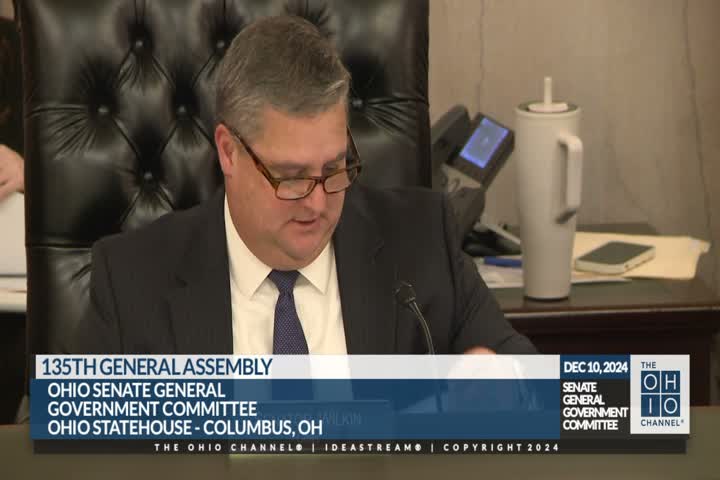
Ohio senators present dueling proposals to mark Jan. 22 as 'Day of Tears' or 'Reproductive Freedom Day'
Summary
At a Senate General Government Committee meeting, sponsors offered competing first hearings: Sen. Steve Huffman proposed SB 220 to recognize Jan. 22 as a 'day of tears' mourning lives lost after Roe v. Wade; Sen. DeMora offered SB 222 to mark Jan. 22 as 'Reproductive Freedom Day' celebrating bodily autonomy. Both bills received only sponsor testimony and no committee questions.
Senators in the Senate General Government Committee offered competing visions for marking Jan. 22 in Ohio.
Senator Dr. Steve Huffman introduced Senate Bill 220, saying the bill “recognized January 22 of each year as the day of tears to mourn the lives lost as a result of abortion and the 01/22/1973 Supreme Court decision of Roe versus Wade.” Huffman cited an estimate that “more than 64,000,000 lives [have been] terminated” since the decision and called for lowering flags to half-staff to “pay respect to the millions of lives brought to an end.” He described himself as “an unapologetic pro life individual” and said he would answer questions; the committee had none at the hearing.
Minutes later, Senator DeMora presented sponsor testimony on Senate Bill 222, a separate proposal that would recognize January 22 as “Reproductive Freedom Day.” DeMora framed reproductive freedom broadly: “It celebrates the choice to have kids, the choice to not have kids, the ability to have another carrier child for you,” and said marking the date would help “de-stigmatize women and pregnant people seeking reproductive care.” DeMora also said Ohio voters had enshrined reproductive freedoms in the state constitution by an “overwhelming vote” (as stated in testimony).
Neither bill advanced at the hearing. Both received only sponsor testimony and no committee questions; each hearing was closed by the chair with no further action announced.
What’s next: The committee record shows both bills received initial hearings; no votes, amendments or additional testimony were recorded on either measure during this session.