Get Full Government Meeting Transcripts, Videos, & Alerts Forever!
Get email alerts on the Lake Asbury Moratorium topic
No spam. Unsubscribe anytime.
Commission extends moratorium on density increases in Lake Asbury, directs staff to explore stronger growth controls
Summary
The board voted 5–0 to extend an existing moratorium through Dec. 31, 2023 on land‑use or rezoning applications that would increase residential density in the Lake Asbury master plan area, citing infrastructure and public safety concerns; commissioners asked staff to explore alternatives such as a rate‑of‑growth ordinance.
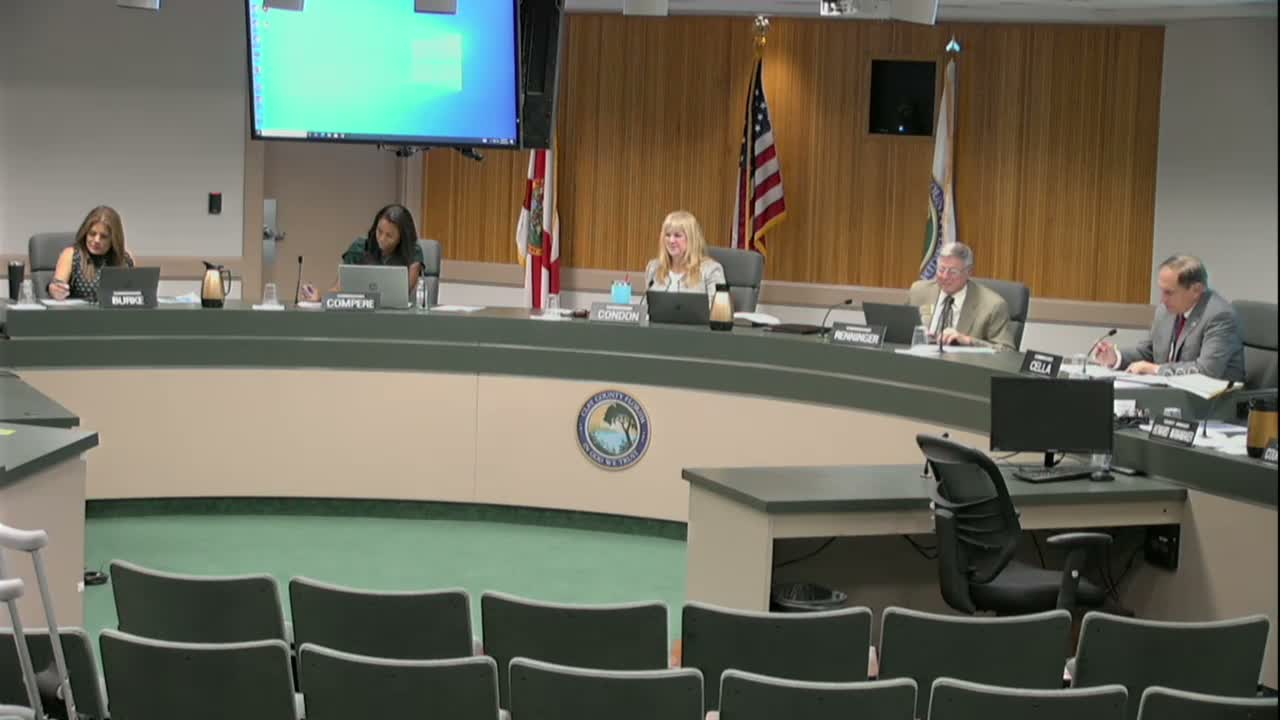
The Clay County Board of County Commissioners voted unanimously on Nov. 22 to extend a moratorium—originally adopted Nov. 2021—that bars applications to change land use or rezone properties in ways that would increase residential density within the Lake Asbury master plan area. The extension runs through Dec. 31, 2023.
Staff and multiple residents urged continuation of the temporary restriction while transportation, stormwater and public‑safety projects planned for the area remain under construction. Speakers emphasized congested and hazardous traffic conditions on State Road 209 and internal access points in the Lake Asbury area, and urged the board not to allow density increases that could outpace capital improvements.
Commissioners debated whether a short extension of the moratorium would produce meaningful effect, since many development approvals already in hand still permit construction. Commissioner Sella and others recommended pursuing more substantive options that would directly control growth or tie approvals to public‑safety metrics; Commissioner Sella mentioned a rate‑of‑growth (ROGO) approach used in other Florida jurisdictions as an example to study.
Staff indicated that approvals themselves take time to process and that, realistically, construction tied to any newly approved density changes is unlikely to begin much earlier than six months to a year. The board asked the county manager and relevant departments to research alternatives focused on public safety and evacuation capacity and return with options.
"Our job, our main job, is the safety of our constituents," Commissioner Burke said during debate. The moratorium extension passed 5–0, and commissioners directed staff to draft possible regulatory alternatives that could more directly address public‑safety and evacuation capacity rather than relying solely on the moratorium.