Get Full Government Meeting Transcripts, Videos, & Alerts Forever!
Get email alerts on the Solid Waste Transition topic
No spam. Unsubscribe anytime.
County auditor flags FCC transition delays; contractor outlines contingencies ahead of Oct. 1 start
Summary
Clay County auditors reported three exceptions in the FCC garbage‑service transition plan—late safety plan delivery, delayed equipment orders, and incomplete vehicle deliveries—while FCC representatives described contingency rentals, active route testing and a public outreach plan intended to avoid service gaps when the contract begins Oct. 1.
County auditors reported three exceptions in the transition plan for FCC—s new solid‑waste contract but said FCC provided documentation and contingency measures that largely addressed the concerns.
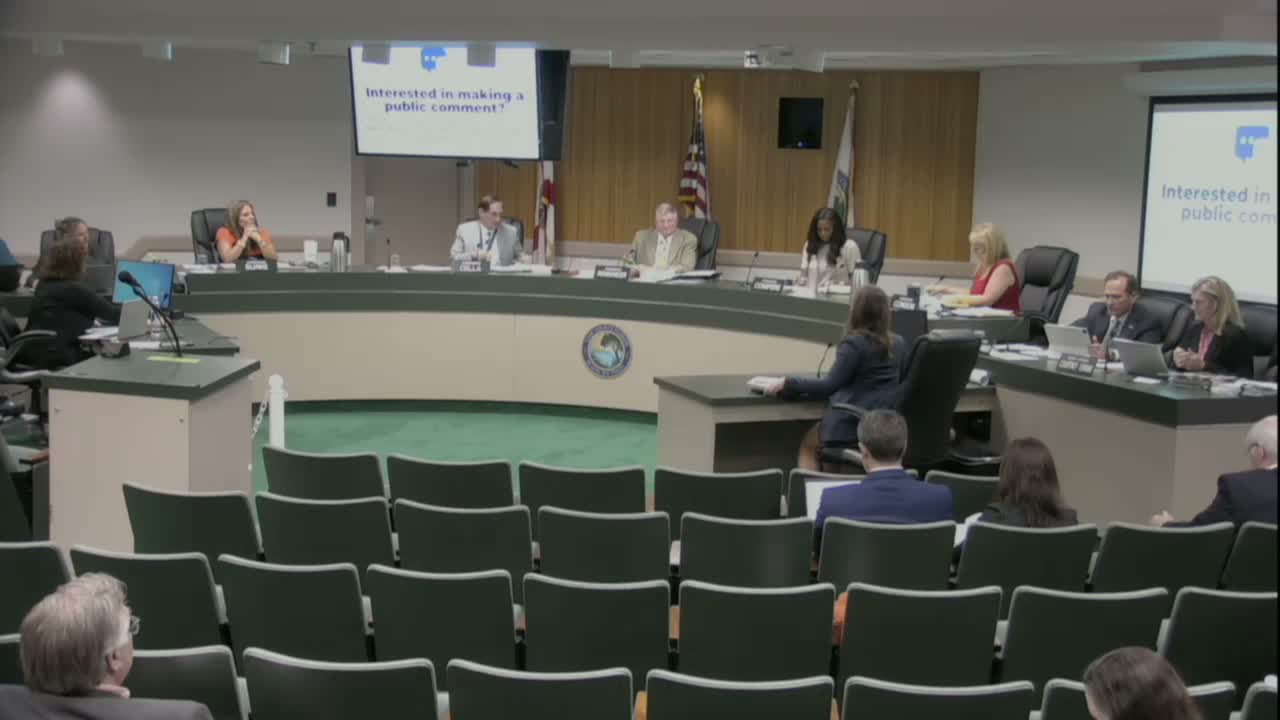
Heather Voucher, Clay County—s commission auditor, told the Board of County Commissioners that about half of the audit field work is complete and listed three findings: FCC provided a required written safety plan 10 days late (Sept. 12, versus a Sept. 2 deadline); many collection vehicles and containers were ordered after the March 1 deadline, though orders exist and deliveries were underway; and as of Sept. 16 only 23 of 48 trucks had been delivered. Voucher said the county had requested a written contingency plan from FCC and had reviewed the safety plan with county staff; she described the plan as “substantially satisfactory.”
SEC/FCC representatives Charles Merkley and Mitch Dahlstrom briefed commissioners on staffing, equipment deliveries and contingency steps. Dahlstrom said 26 trucks were on site at the contractor—s Clay County facility, that additional side‑loader (ASL) vehicles were in transit, and that the contractor had secured rental rear loaders and stake bodies as backups to maintain service if a portion of the fleet arrives late.
Dahlstrom said FCC is using the Third Eye on‑vehicle camera system and TrackEZ routing/complaint software to run practice routes and enable county staff to monitor service. He also described a public outreach packet (mailers) and the county—s new overflow sticker sales at libraries and hardware stores as part of the launch plan.
Commissioners asked about route assignments and why some neighborhoods have multiple pickup days. Dahlstrom said rural areas require smaller, four‑wheel‑drive trucks with less capacity, which can result in different pickup days for logistical reasons; he said FCC routing staff will continue to work with county staff to refine routes before full rollout.
Voucher said that, given FCC—s written responses and evidence of orders and deliveries, the auditor is not requesting additional corrective action beyond continued monitoring and verification that contingency vehicles are available and the Third Eye/TrackEZ systems are fully operational.
The board and staff acknowledged lingering public concerns—privacy around vehicle cameras, timetables for remaining deliveries, and the potential for early mistakes during a system change—but expressed optimism that rentals and on‑site testing reduced the risk of a widespread service disruption on Oct. 1.
What happens next: county staff will continue verifying deliveries and functionality of Third Eye and TrackEZ; the contractor said it will supply contingency vehicles if new tractors/ASLs do not arrive in time.