Get Full Government Meeting Transcripts, Videos, & Alerts Forever!
Get email alerts on the Solid Waste topic
No spam. Unsubscribe anytime.
Residents and commissioners spar over FCC trash rollout as county audit flags late notices
Summary
After the county’s switch to FCC for curbside collection, residents reported missed pickups, late deliveries and extra fees; an auditor found resident flyers were delivered late and county and FCC officials said they are addressing missed routes and increasing call‑center staffing.
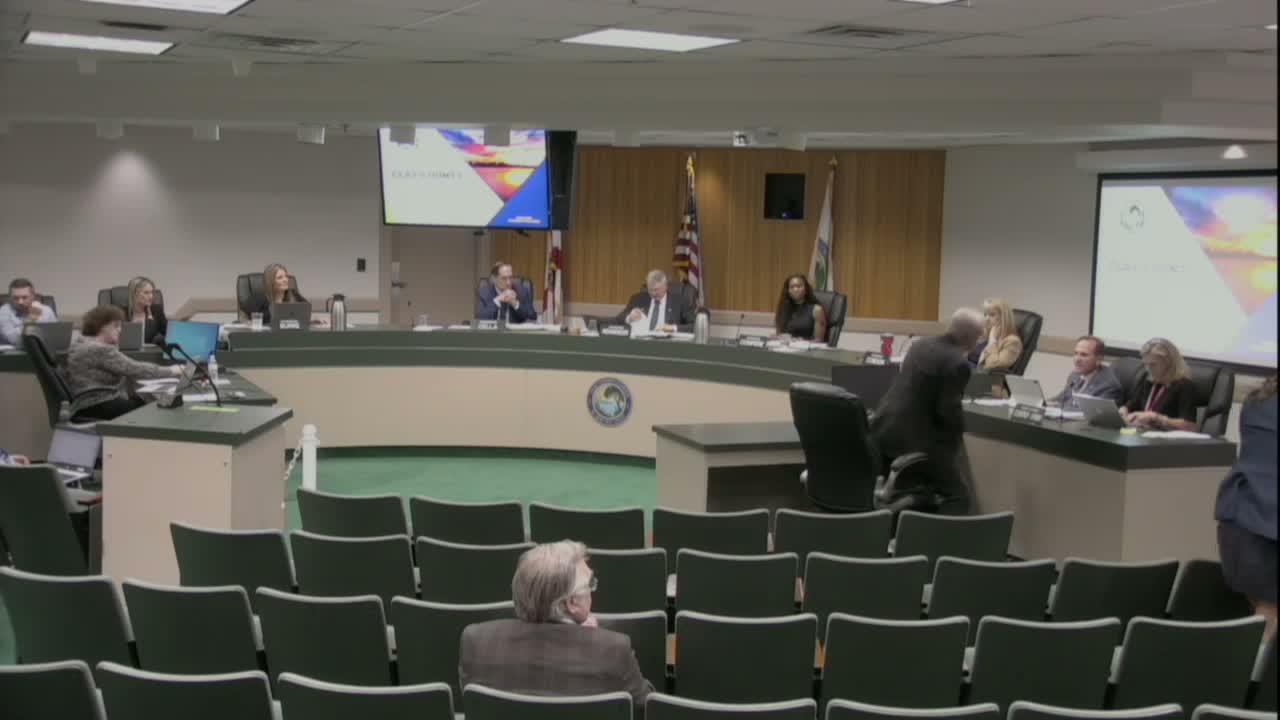
Clay County residents and commissioners spent more than an hour on Oct. 8 pressing the county and new contractor FCC to fix problems stemming from a recently implemented curbside collection contract.
At a public‑comment podium, resident Jonathan Glassnap said the new service has been “unreliable,” criticized mandatory FCC carts and extra fees for additional containers, and alleged impropriety in the procurement process. "How much money did the commissioners accept in backroom deals to think that this was a good idea," he asked, drawing an immediate rebuke from the chair, who offered to meet with Glassnap and the undersheriff to review any evidence.
The concerns came as Commission Auditor Heather Voucher reported on an audit of the transition that found most requirements met but one breach: public information flyers that should have been delivered by Sept. 2 did not reach residents until Oct. 1. "Those flyers were late to our citizens," Voucher told the board.
County environmental services and FCC officials presented first‑week operational data and took questions. Environmental Services Director Milton Towns said FCC served 73,713 households, delivered 74,679 carts and completed an estimated 149,204 collection services in the first week; reported missed‑pickup calls totaled 771, under 1% of scheduled services, Towns said. He added FCC ran extra trucks and weekend routes to recover missed service.
FCC General Manager Demetrius Burgess acknowledged early setbacks linked to route changes and staffing and said the company was correcting problems: "We are addressing the missed pickup issues," he told commissioners. FCC and county staff described steps already taken: a dedicated FCC call center and a service‑day lookup posted to the county website, auditing of route maps, extra trucks and same‑day or next‑day courtesy pickups for reported misses.
Commissioners pressed for specifics after residents reported cases in which the county’s TrackEZ or vehicle‑tracking logs showed a truck on a street while a resident said their house was not serviced. FCC staff described two technical signals the company uses—vehicle‑stop tracking and a PSV (payload/arm actuation) that registers when automated arms operate—and said they are increasing photo‑and‑note documentation in the tracking system to reduce unresolved disputes. County staff said they will continue nightly reports matching missing‑cart requests with cart‑delivery efforts.
The board did not take new votes on FCC’s contract at the meeting but directed staff to press FCC for improved communication and to continue daily coordination during the transition. County officials reminded residents the joint call center number and a county hotline would remain available because the ongoing hurricane response has temporarily consolidated some phone resources.
What happens next: County auditors will continue testing the FCC transition plan; staff said they will seek tightened documentation of closure times for missed pickups and additional call‑center staffing while the company completes route stabilization.