Get Full Government Meeting Transcripts, Videos, & Alerts Forever!
Get email alerts on the Moratorium Lake Asbury topic
No spam. Unsubscribe anytime.
Clay County extends Lake Asbury moratorium for another year amid resident concerns
Summary
Following hours of public testimony from residents who said roads and schools are overburdened, the board voted to extend the Lake Asbury land‑use moratorium for one year to keep density bonuses off the table while infrastructure projects continue.
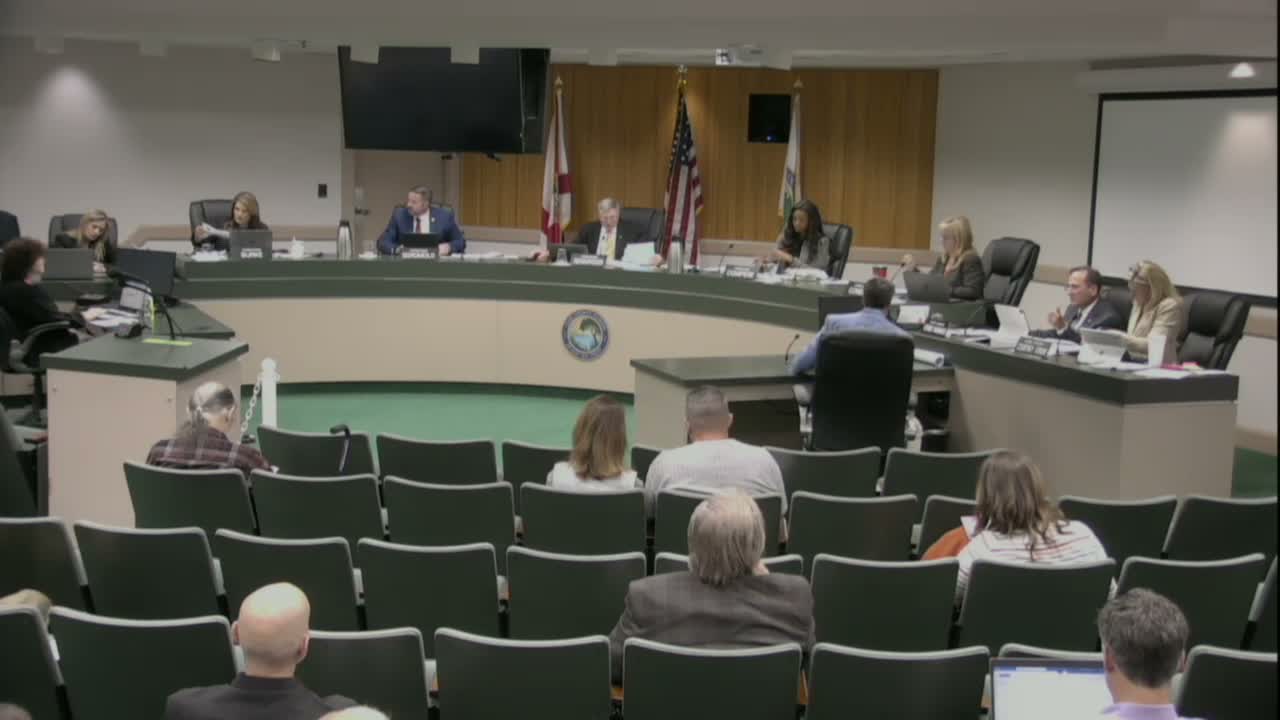
Clay County commissioners voted to extend a moratorium on land‑use amendments in the Lake Asbury master‑plan area for one year after lengthy public testimony from residents who said existing infrastructure cannot sustain additional density.
Multiple residents described traffic backups, ongoing road construction and overcrowded schools. Jason Clark, a long‑time Watkins Road resident, told the board, “The growth is un— I can't stand it,” and urged the commission to continue not allowing new developments until roads and other infrastructure are complete.
The Northeast Florida Builders Association opposed a blanket extension, proposing a six‑month moratorium instead and urging case‑by‑case review of rezoning requests. “We would respectfully offer a compromise to do a 6‑month moratorium,” said Austin Nicholas of the builders association.
Commissioners debated the appropriate duration and legal implications of a moratorium, with staff and the county attorney noting the original moratorium was enacted because key bonded transportation program (BTP) projects are still incomplete. County staff outlined a timeline for critical road openings—Cathedral Oaks Parkway in mid‑2025 and other BTP elements through 2026—as milestones that would change the board’s calculus on density.
After discussion and public input, the board approved a one‑year extension to keep density‑increasing land‑use amendments from moving forward while infrastructure projects proceed. Commissioners asked staff to identify clear ‘‘trigger’’ milestones—specific road openings and project completions—that would be used to reassess the moratorium before it expires.
The moratorium continues to allow ordinary development rights under current zoning but prevents applications that would increase residential density through land‑use amendments and density bonuses in Lake Asbury. Staff said the extension preserves the board’s ability to control where and when density increases occur until transportation and related projects reach agreed milestones.
The extension was presented as a public‑safety and community‑character decision intended to give residents relief from rapid rezoning and to align future approvals with completed infrastructure.