Get Full Government Meeting Transcripts, Videos, & Alerts Forever!
Get email alerts on the Statute Of Limitations topic
No spam. Unsubscribe anytime.
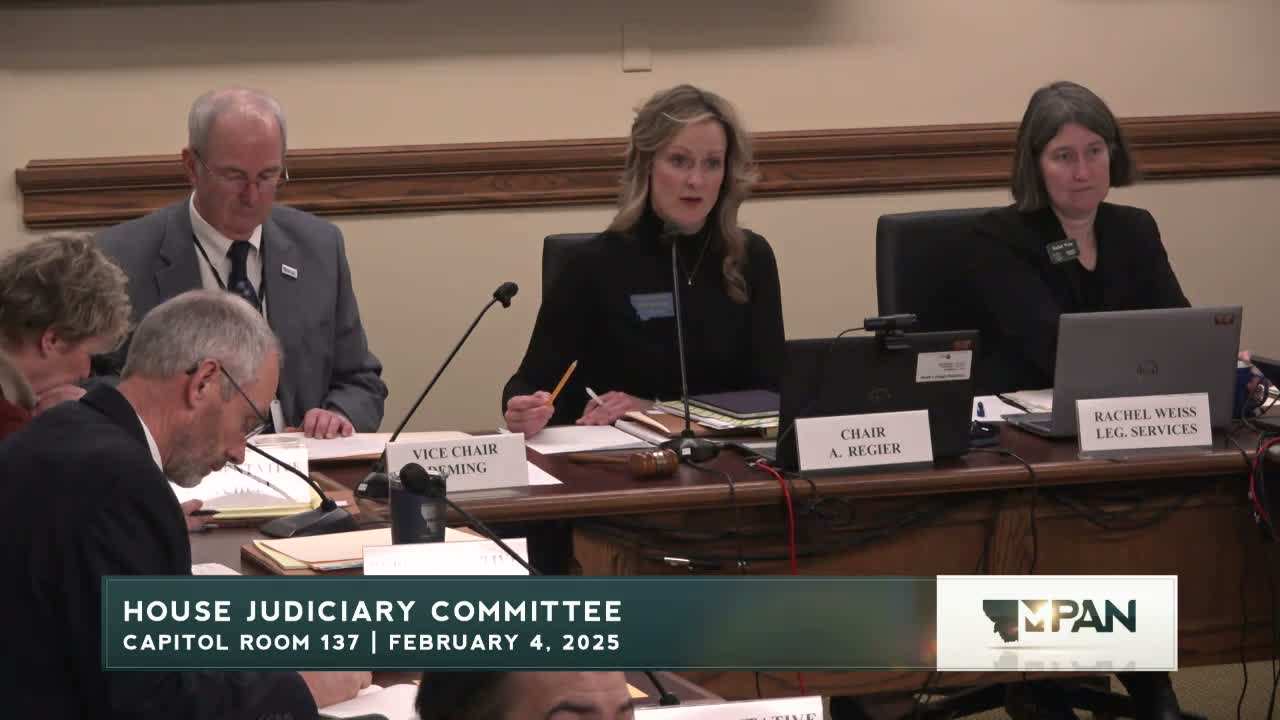
House Judiciary hears debate over bill clarifying 2‑year limit for real‑property damage claims
Summary
Supporters say HB 301 would clarify that property‑damage claims accrue when the injurious act is complete and preserve a two‑year statute of limitations; opponents warn the change could bar groundwater and other contamination claims that are ``self‑concealing.''
Representative Carrie Seekins Crow, sponsor of House Bill 301, told the House Judiciary Committee the bill "clarifies the statute of limitations for damage to real property" and preserves a two‑year limit to encourage prompt claims.
Supporters — including Brian Thompson of the Montana Chamber of Commerce and Adrienne Cotton of the Montana Building Industry Association — said the bill prevents successive suits by subsequent owners and reduces uncertainty for builders and insurers. "When property is damaged, the owner has a right to file a lawsuit," Thompson said in testimony explaining that the bill would make clear "the clock begins to tick when the injury first occurs and when the owner knows or reasonably should have known that that injury was present." Thompson cited Montana Code sections governing accrual and limitations.
Opponents, including attorney Roger Sullivan and representatives of the Montana Trial Lawyers Association, countered that some harms — notably groundwater contamination and certain soil pollutants — are often concealed and discovered only after extensive testing. Sullivan said the bill could force private owners to "foot the bill for the cleanup or live with the polluters' toxins on your property forever," and argued that hydrogeologic plumes and other continuing harms do not fit a strict two‑year cutoff.
Committee members pressed witnesses on where accrual should occur and whether the bill would interfere with federal remedies. Representative Overstreet asked whether CERCLA (the federal Superfund law) provides an environmental claim; Thompson and others said CERCLA remains unchanged and its separate limitations apply. Witnesses also discussed the Libby Superfund litigation and the high cost and technical complexity of proving when contamination began, with Sullivan describing expensive test drilling and hydrogeologic analysis.
Throughout the hearing lawmakers questioned how the proposed language would interact with existing accrual rules and the "reason to know" standard judges apply. Sponsor Seekins Crow closed by saying the bill will protect both owners and businesses by preserving the ability to sue while setting an end point for claims and urged members to "vote green." The committee closed the hearing without a recorded vote; no formal action was taken in the committee during the session recorded in the transcript.
The committee will consider amendments and a recommendation at a later executive session.