Get Full Government Meeting Transcripts, Videos, & Alerts Forever!
Get email alerts on the Student Device Policy topic
No spam. Unsubscribe anytime.
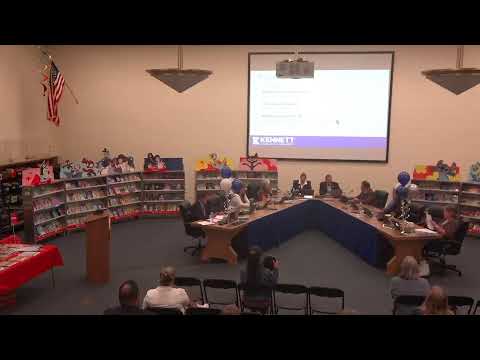
Kennett school board approves advisory timeline for district cell-phone policy after debate over scope
Summary
The Kennett Consolidated School District on Sept. 9 reviewed a multi-stage advisory timeline for a student cell-phone/personal device policy, with administration proposing stakeholder groups and the board debating how much public input should shape disciplinary policy.
The Kennett Consolidated School District board reviewed and endorsed an administrative timeline on Sept. 9 for developing a districtwide cell-phone and personal-device guideline, while stopping short of adopting a formal policy. Superintendent Dr. Kimberly Rizzo Saunders presented the schedule and turned the discussion over to Mr. McGuire, who outlined advisory group work beginning in early October and culminating in draft recommendations in April for possible board action in June 2025.
Why it matters: Board members disagreed about process and authority. One board member argued that decisions about disciplinary consequences belong to the elected nine-member board and warned that extensive public outreach could raise expectations that might not change the substantive policy outcomes. Other members urged broad community surveys and focus groups to ensure equitable, enforceable rules that are consistent districtwide.
Administration described the timeline as including representation from district leadership, technology, parents, students, principals and administrators to produce “reasonable, realistic, and enforceable guidelines.” Mr. McGuire said the advisory process would run through most of the school year with a finalization phase in April and anticipated board consideration in June 2025.
Opponents of an expansive outreach effort cautioned that soliciting deep feedback and then making a technical or disciplinary decision that departs from that input could send a poor message. Supporters replied that input from teachers, families and students would produce a more implementable districtwide approach rather than leaving enforcement to individual teachers.
Board next steps: The board did not vote on a final policy. Members agreed to continue with the administration’s timeline and to discuss the process at the October meeting; the superintendent’s entry-plan materials and the cell-phone timeline links are appended to the board packet for public review.
Quotes: “We created a timeline made up of advisory groups, stakeholder involvement… culminating with a finalization in April with recommendations… and anticipated school board adoption in June of 2025,” Mr. McGuire said. A board member warned that “if we reach out and say we want to hear from [stakeholders], but then the decision is essentially one of policy and conscience, that sends a bad message.”
What’s next: Administration will conduct the scheduled advisory work and expanded focus groups; the board expects a discussion at its October meeting and formal consideration of any draft policy in 2025.