Get Full Government Meeting Transcripts, Videos, & Alerts Forever!
Get email alerts on the Assessment And Literacy topic
No spam. Unsubscribe anytime.
Kennett board reviews preliminary PSSA/Keystone, approves K–12 literacy framework and intervention plans
Summary
Dr. Heather Collins presented preliminary spring assessment data and district diagnostic results, highlighting gains for special education and English‑learner subgroups and plans for cohort reporting in September. The board approved a K–12 literacy framework, an ATSI plan for Kennett Middle School, and agreements to continue academic research and interventions.
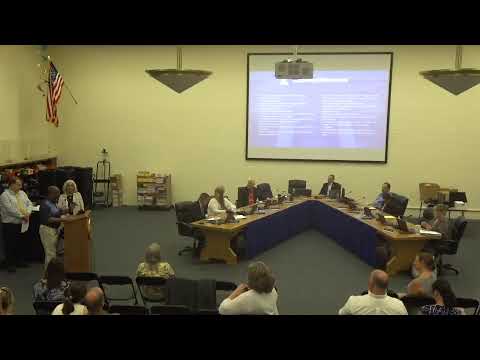
Dr. Heather Collins presented the Kennett Consolidated School District’s preliminary assessment results on July 8, saying the district will share full cohort and subgroup PSSA and Keystone data at a September curriculum meeting and is already ramping up local diagnostic and instructional changes.
“This is preliminary data,” Dr. Collins said, noting state data are not yet disaggregated and some cleanup is still under way. She told the board the state’s planned shift to online PSSAs and Keystones promises much faster turnaround next year — roughly a week — and the district will change assessment practice so building‑level results are available earlier in the fall.
Collins reviewed kindergarten through grade‑10 results from district diagnostics and the MAP and I‑Ready platforms. She highlighted strong gains at the district’s K Center and said special education students and English learners made notable progress in several grades, while the overall “all‑student” proficiency rate fell slightly in some areas. The presentation stressed that cohort analysis — tracking the same group of students across grades — will give better insight into long‑term progress when the state releases cleaned data.
Board members pressed staff on measurement details and next steps. On assessments for students whose home language is Spanish, Collins said the district measures reading in English but will use Spanish screening tools in AIMSweb to support targeted instruction and better identify phonological gaps.
The presentation also summarized diagnostic findings for mathematics: after one year of I‑Ready implementation, typical growth met or exceeded year‑one expectations (Collins described typical year‑one targets as roughly 30–40 percent). She said some grades — notably parts of upper elementary and early high school — still require more intensive foundational work and curricular alignment. Collins cited schedule adjustments, new algebra materials and professional development (including a ‘‘building‑thinking‑classrooms’’ initiative for secondary math) as district responses.
Miss Jones outlined a planned K–12 early warning system under the district’s MTSS framework that will proactively monitor attendance, behavior and course performance (the ‘‘ABCs’’). “Monitoring those three indicators and responding appropriately in a proactive manner ensures we’re getting kids to the finish line,” Miss Jones said, describing tiered responses ranging from automated parent notifications after unexcused absences to individualized attendance improvement conferences and targeted tutoring during school‑scheduled intervention periods.
The board voted to approve a completed K–12 literacy framework presented by Collins. The framework aligns instruction to the science of reading and commits the district to supplying supplemental ELA materials so all five components of reading (phonemic awareness, phonics, fluency, vocabulary and comprehension) are consistently taught. Collins said monitoring of common assessment data will guide adjustments in instruction.
Separately, the board approved the Kennett Middle School ATSI (Additional Targeted Support and Improvement) plan — a federally defined improvement plan focused on subgroups identified as underperforming — and authorized continued participation in an I‑Ready implementation study via an IRCL data‑sharing agreement. Collins said the study will refine year‑one implementation findings and inform year‑two supports.
The board and administration set a September curriculum meeting agenda to include cohort PSSA/Keystone reports, Keystone-focused data, and a deeper dive on ELD access. Collins said the district will present school‑level and subgroup breakdowns once the state finishes its data cleanup.
The board’s next steps include monitoring implementation of the literacy framework, tracking early warning outcomes, continuing teacher professional development in the science of reading and reviewing cohort assessment data at the September meeting.