Get Full Government Meeting Transcripts, Videos, & Alerts Forever!
Get email alerts on the Tax Policy topic
No spam. Unsubscribe anytime.
Nebraska senators advance bill to expand transferability of state affordable housing and childcare tax credits
Summary
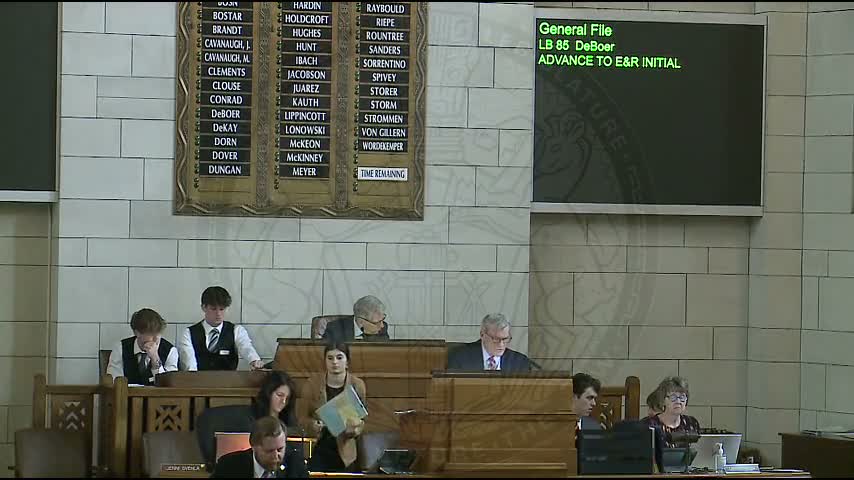
The Legislature advanced LB182 to E & R initial after extended floor debate about how allowing certificated (transferable) credits and widening eligible purchasers to insurers and financial institutions would attract more private investment into affordable housing and childcare without increasing the cap on credits.
The Nebraska Legislature on the 16th day advanced LB182, a bill that would allow state affordable housing tax credits to be issued as certificated (transferable) credits and expand eligibility for the child‑care tax credit so insurers and financial institutions may participate. Sponsor Senator Mike Bostar said the change will draw more private capital into projects and ‘‘drive further investment into child care and affordable housing in our state.’’
The bill’s key change is structural: it does not increase the number of state tax credits the state awards but creates a secondary market by allowing credits to be certificated, sold or assigned independent of ownership stakes in a development. ‘‘What this is doing is it isn’t expanding the number of credits that we issue,’’ Bostar said. ‘‘What this is doing is it’s making the credits usable by more people.’’ He and others pointed to an estimate from the Nebraska Investment Finance Authority (NIFA) that the change could unlock roughly $8–$10 million a year in additional investment in affordable housing.
Opponents and skeptical colleagues pressed the sponsor on the fiscal implications and mechanics. Senator Curt Clemens asked why the fiscal note shows no net state revenue effect; Bostar and other supporters explained the bill leaves statutory caps unchanged and instead increases market value for the same credits by broadening the buyer pool. ‘‘We are able to extract more resources out of the marketplace effectively and drive it into child care investment and affordable housing investment by utilizing the exact same number of credits that we are today,’’ Bostar said.
Several senators sought practical details: which entities typically buy credits, whether the change could empower out‑of‑state investors or create perverse incentives, and what administrative capacity NIFA will need. Senator Jessica Spivey pressed for examples of how investments materialize; Bostar said he would provide granular recipient data from the Department of Revenue and NIFA. Senator Jacobson summarized the sponsor’s explanation: expanding buyers increases bidding and raises the price developers can receive for credits, moving sales closer to the credits’ face value.
The bill also broadens the child‑care credit by explicitly covering franchise, premium and retaliatory taxes so that financial institutions and insurers can use the nonrefundable credit types; Bostar said adding those tax types increases demand and therefore the market value of credits.
After extended floor discussion and several technical clarifications, the chamber voted to advance LB182 to E & R initial (37 ayes, no nays on the recorded advancement). LB182 will proceed to select file for further amendment and debate.
Next steps: LB182 is advanced to enrollment and review initial; supporters said they plan at least one select‑file amendment addressing OPPD/authority concerns for related electric bills and to provide additional implementation details.