Get Full Government Meeting Transcripts, Videos, & Alerts Forever!
Get email alerts on the School Budget topic
No spam. Unsubscribe anytime.
Woburn leaders outline a 14.53% school budget increase as council weighs trade-offs
Summary
Mayor Concannon and school officials presented a proposed Woburn School Department FY2025 budget of $90,366,621.40 — a 14.53% increase driven by contractual salary obligations, special-education and transportation costs, rising enrollment and debt-service related to school construction. Councilors pressed for offsets, reserve use and program impacts before a scheduled vote.
WOBURN — Mayor Concannon and school leaders told the City Council finance committee on Thursday that the Woburn School Department needs $90,366,621.40 for FY2025, a 14.53% increase driven primarily by contractual salary obligations, higher special-education tuition and transportation costs, and recent enrollment growth.
The proposal, presented in the public hearing, reflects what Mayor Concannon described as three main buckets of offsets and risks: projected savings from redistricting that will not occur this year ($375,000), a potential early-retirement offset ($750,000) that remains a placeholder, and a conservative projection of newly arrived student reimbursement by the state reduced from $950,000 to $600,000. "What you see before you tonight is me putting the budget forward in good conscience," Mayor Concannon said when he described the revised working proposal and the reasons for restoring some of the earlier projected offsets to the council's view of the bottom line.
Why it matters: School officials said the increase responds to legally binding obligations and growing student needs that, they argued, leave little discretionary spending to cut without affecting services. "We are in a historic moment for the Woburn Public Schools," Cheryl Lipsett of the school committee said, adding that the district sought to present the "most transparent budget we have ever presented." Superintendent Crowley told the committee that the district's high-needs population has risen to 56.3%, with special-education, English-learner and economically disadvantaged students driving many of the new positions and program costs.
Key figures and drivers - Total proposed school budget: $90,366,621.40 (14.53% increase). Mayor Concannon provided the figure on request from Council President Dillon. - District high-needs share: Superintendent Crowley reported 56.3% of students classified as high-needs in 2024. - Newly arrived/migrant reimbursement: Mayor Concannon said he reduced the projected offset from $950,000 to $600,000 as a conservative estimate for FY2025. - Contractual and mandatory increases: the mayor and school officials listed settled contracts, step-and-lane salary obligations (estimated in the millions), increased out-of-district special-education tuition, higher special-education transportation, and utility costs (electricity) among the largest single-year cost drivers.
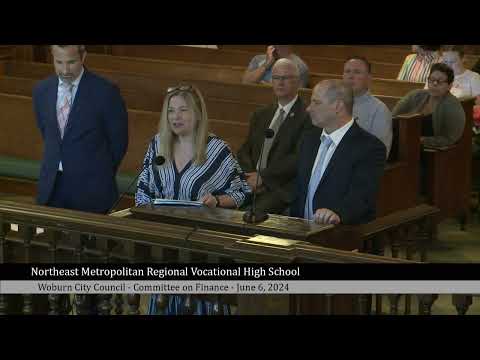
Presentations from Northeast Metropolitan Regional Vocational High School preceded the city-side budget review. Tracy O'Brien, assistant superintendent at Northeast, reported more than 1,200 applications to the vocational school this year, 122 current Woburn students enrolled at Northeast, and an MSBA reimbursement that returned about $23,000,000 to reduce city and town shares for the district's new building project. Jay Picone, Northeast’s finance director, described a Chapter 70 state funding shortfall the district faced (projected at roughly $2.2 million but received closer to $1.1 million), and debt-service increases stemming from recent bond tranches (the May bond tranche was reported at a 4.07% rate). Picone warned those factors combined to drive higher assessments for member communities.
Council questions and councilors' concerns Council members repeatedly pressed the mayor and school officials for line-item clarity and options to soften the tax impact on residents. Several councilors suggested examining free-cash usage, greater transparency via a WUSTAT-like process, and steps to shield vulnerable taxpayers such as seniors and low-income households.
Council President Dillon urged clarity for residents watching at home: "This number that we're looking at here today is not the result of that [migrant students]," he said, citing Superintendent Crowley's estimate of roughly 80 newly arrived students currently being reimbursed by the state.
Operational constraints and timing School leaders warned that large, late cuts could create immediate operational problems. Superintendent Crowley noted contractual timelines for notifying staff of employment status and said deep reductions on short notice could force staff notifications and disrupt service. Officials also said some one-time federal relief funds (ESSER) have expired and cannot be relied on for FY2025 recurring costs.
Procedural notes and actions taken - The committee received the Northeast presentation materials into the permanent record by voice vote. The committee also received a revised cover page and a revised page 30 for the school department budget into the record earlier in the meeting. - No final vote on the school budget occurred at this meeting; the council indicated a formal vote was scheduled for Monday.
What happens next Councilors said they will continue to scrutinize line items and offsets over the next days ahead of the scheduled vote. Several members urged continued collaboration between the council, the mayor's office and the school department, including monthly budget review meetings, to monitor spending and identify potential savings without cutting required services.
"Our job is to advocate for the students and staff," Superintendent Crowley said. "But we're also aware of the impact on taxpayers."