Get Full Government Meeting Transcripts, Videos, & Alerts Forever!
Get email alerts on the Fire Stations topic
No spam. Unsubscribe anytime.
Woburn finance committee advances $30 million borrowing to rebuild three fire stations
Summary
The Finance Committee voted to advance a $30 million borrowing authorization to reconstruct two aging west-side and north/northeast fire stations and to use leftover prior bond funds to rehab a south-end station. Officials cited response-time needs, new decontamination rooms and long-term staffing capacity.
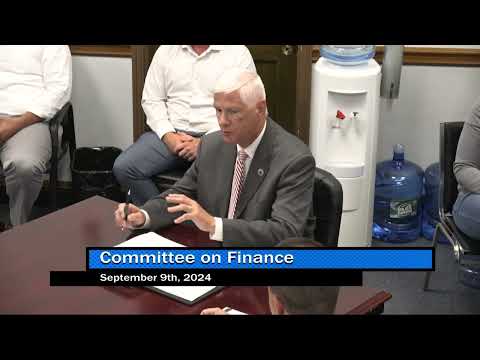
WOBURN — The City of Woburn’s Finance Committee voted Sept. 9 to advance a $30 million bond authorization to reconstruct two aging fire substations and fund upgrades at a third.
The mayor told the committee the request would fund a new three-bay Station 4 on Central Street (estimated about $14.5 million), a similarly sized Station 5 at a west-side site, and use roughly $6.5 million from a prior authorization to renovate Station 1 on the south end. "We are asking for 30 to accommodate the new 4 and the 5," the mayor said in presenting the plan and described the design as intended to meet the city’s needs for 20–40 years.
Officials said programmatic needs — not aesthetics — drove the rebuild recommendation. Fire leadership and consultants said the current two-bay stations lack space for modern decontamination facilities and the new aerial apparatus the department purchased. "When you add a decon component, you're taking half of a bay space wise," the chief told the committee, explaining the move to three-bay stations that can house a ladder truck, an engine and potentially an ambulance.
City finance staff presented borrowing options and sample debt-service scenarios. Consultants estimated market rates near 3.25% for a 20-year note, 3.5% for 25 years and 3.75% for a 30-year bond; sample annual principal-and-interest costs ranged from about $2.0 million (20-year projection) to roughly $1.6 million (30-year projection), with longer terms increasing lifetime interest costs. Staff said expiring debt payments from prior projects make a new bond feasible without creating a new annual spike in payments.
Councilors pressed for comparative costs for renovation versus new construction, site constraints (including wetlands and culverts at Station 5) and a clear timeline. City staff projected a design and bidding phase followed by roughly 11–14 months of construction per station; total elapsed time from notice to final completion could extend to about three years, depending on schedule and procurement choices.
Committee members asked specifically about occupational health improvements. The chief described decontamination rooms, on-site gear extraction and separation of 'hot zone' areas from living quarters to reduce cross-contamination, noting these features are used daily for medical and fire responses.
After questions and discussion, the committee voted by voice to advance the appropriation to the full council for final action.