
Emmaus brownfield redevelopment pitched to East Penn board; developers seek five‑year LERTA
Get AI-powered insights, summaries, and transcripts
Subscribe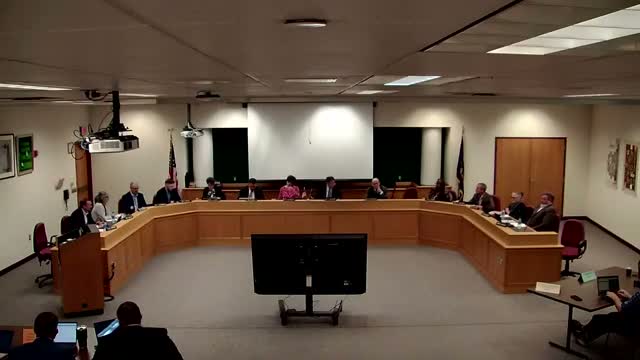
Summary
Developers presented a plan to convert an 8.5‑acre contaminated site at 300 Furnace Street into 144 apartments and requested feedback on joining a five‑year Local Economic Revitalization Tax Assistance (LERTA) schedule. Board members pressed for data on projected school‑age children, per‑pupil costs and cleanup assurances.
Developers asked the East Penn School District board on Monday to consider participating in a five‑year Local Economic Revitalization Tax Assistance schedule for a proposed 144‑unit redevelopment at 300 Furnace Street in the borough of Emmaus.
Michael Mayer of Westrom Development described the property as “about 8 and a half acres” that has been functionally obsolete for decades, with historic contamination from fuel‑oil distribution, a foundry and petroleum tank work. Mayer said Westrom is pursuing PA DEP’s Act 2 voluntary cleanup program and plans soil removal, an engineered environmental cap, removal of underground tanks and asbestos abatement before residential occupancy. “Our promise is they’ll give that developer protection from any lawsuits or liability down the road so long as that developer meets the DEP regulations,” Mayer said of Act 2.
Why it matters: The district must weigh short‑term education costs tied to new students against long‑term increases to the tax base and other municipal revenues. Mayer told the board the site’s current total assessment is roughly $13,289, of which the school district receives about $8,432. If developed and fully assessed, the school‑district share could rise to about $281,000 under the firm’s projection, or roughly 32 times today’s contribution.
Fiscal and enrollment assumptions: Westrom presented a fiscal‑impact analysis using unit‑mix multipliers for one‑ and two‑bedroom apartments. It modeled a baseline scenario of about 10 school‑age children (0.05 children per one‑bed unit, 0.09 per two‑bed unit) and a conservative doubled scenario of about 20 children. Mayer said the district’s current per‑pupil figure used in the model is $14,493; Erick Hetzel, the land‑planner on the team, explained that figure “is netting out those pass throughs, things like federal funds, state funds, utility realty taxes,” and does not represent the statewide average instructional cost.
Board concerns and data requests: Several board members questioned the district impact under early‑year occupancy and the sensitivity to students who require high‑cost special education services. Board member Mr. Smith noted that a small number of high‑cost students could erase early gains; Mayer and Hetzel acknowledged the risk and emphasized that the firm had shared its full fiscal analysis with borough and county officials and district staff and offered to provide detailed comparables and data to the board.
District demography: Doctor Campbell said the district’s demographer previously included the development in enrollment projections and estimated roughly 40 students, a number that the administration said stems from broader multifamily multipliers rather than a unit‑mix specific calculation. Mayer said his team used local comparables and third‑party multipliers and offered two scenarios to illustrate a range of outcomes.
Public‑policy mechanics: Mayer explained the borough approved a 5‑year LERTA that phases in taxes on incremental assessment (first year 0% on the increment and then steps up by 20 percentage points each year until fully taxed), and said the early years of abatement help cash flow during lease‑up and remediation. He emphasized the project’s intent to reclaim a long‑vacant brownfield and to create market‑rate housing near downtown Emmaus.
Health and monitoring: On liability and long‑term safety, Mayer said the goal is a residential‑quality cleanup under DEP oversight and that post‑construction groundwater monitoring and wetland reconstruction are typical requirements; he confirmed there is not a legal requirement to notify potential renters once DEP issues residential cleanup approval, though monitoring and deed restrictions would remain in place.
Next steps: No action was taken. Board members were split in sentiment during a de‑facto straw poll: some worried about near‑term costs borne by current taxpayers and asked for more community input and refined comparisons, while others emphasized blight remediation and long‑term tax‑base growth. Mayer and his team offered to provide the district with the underlying comparables and full fiscal documentation for further review by administration and the board.
The board moved on without a vote on the LERTA participation; the developers left the meeting and said they would continue discussions with district staff.
Ending note: The presentation was informational; the district indicated it will review the models, request additional data, and discuss how or whether to participate in the abatement schedule in future sessions.