Get Full Government Meeting Transcripts, Videos, & Alerts Forever!
Get email alerts on the Curriculum topic
No spam. Unsubscribe anytime.
East Penn board approves K–8 curriculum changes and greenlights a middle‑school math pilot
Summary
The board approved K–8 math and K–5 English/ELA curriculum updates and a pilot that offers an alternate accelerated pathway (1–2 then Algebra I) for middle‑school math; trustees asked about detracking, PSSA/Keystone impacts and cohort size.
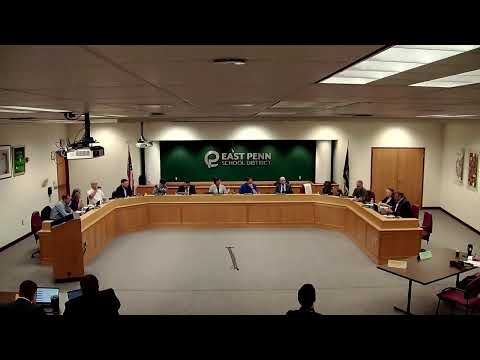
The East Penn School District board approved multiple curriculum revisions Aug. 26, including K–8 math, K–5 English/ELA and a 7th‑grade ELA reading update. Administrators described a pilot intended to offer an alternate math pathway for some middle‑school students.
Administration said the pilot would begin with a 1–2 sequence (math course 1 then course 2) for qualifying students entering sixth grade this year, with the intent that the cohort would later take course 2–3 and then Algebra I. A district staff speaker explained: "So the 1 2 pilot is for the students who are going into 6th grade this year, who started 6th grade today. So next year in 7th grade those students ... would go take 2, 3 as a 7th grader and then Algebra 1 as an 8th grader." Board members pressed for clarity on who would be in the pilot, cohort size (administration said initial capacity is one class), and whether accelerated students would miss grade‑level PSSA geometry content.
Administrators said they monitor both Algebra I Keystone and grade‑level PSSA results and that some students can be proficient on Algebra I while not meeting grade‑level PSSA standards. The board voted to approve the curriculum changes and pilot pathway; administrators said they will track outcomes and return with data on efficacy.
The board’s discussion included concerns about detracking’s effects on student equity and options for advanced students; administrators and board members described the pilot as an additional pathway rather than a wholesale replacement of existing options.