Get Full Government Meeting Transcripts, Videos, & Alerts Forever!
Get email alerts on the Education Funding topic
No spam. Unsubscribe anytime.
Scranton School District launches Fair Funding Committee to press Harrisburg for $85 million a year
Summary
The Scranton School District convened its inaugural Fair Funding Committee to coordinate advocacy and public education after decades of underfunding; board members outlined outreach, legal review and community workshops and said a proposed $19.5 million state appropriation falls far short of an estimated $85 million annual gap.
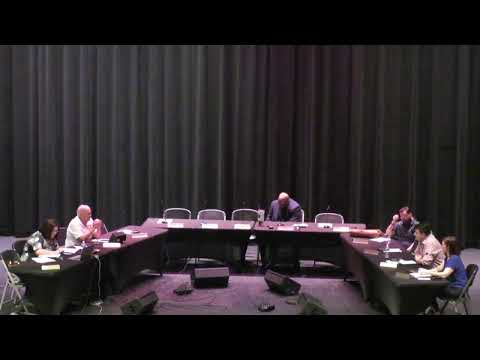
The Scranton School District on Monday launched a Fair Funding Committee charged with coordinating advocacy, community education and a legal review aimed at closing what board members described as a large, longstanding state funding gap.
At the introductory meeting, committee leaders said the district is the state’s most underfunded urban system and faces a yearly adequacy gap they placed at about $85,000,000. "We need the full $85,000,000 per year," a committee member said while summarizing the district’s budget context, noting the district had just adopted a $212,000,000 budget. They contrasted that figure with a state budget proposal the district described as offering roughly $19,500,000 toward closing the shortfall.
The committee’s membership — announced at the meeting — includes Thomas (Tom) Borthwick (chair), Sean McAndrews, Danielle Cheswick and Bob Casey, with community advisors PJ Duffy and Greg Popel. The panel framed its work as a combination of public education, grassroots pressure and targeted meetings with legislators in Harrisburg and federal lawmakers in Washington.
"Everything that President Holmes touched on is very serious, and the implications ... are far reaching for our city and, in particular, our children," Tom Borthwick said as he reviewed the history of funding inequities and a state Supreme Court ruling that, committee members said, affirmed that funding disparities exist for some districts.
Director Danielle Cheswick outlined community-facing tactics she said the committee should begin immediately: regular social media posts explaining the funding gap, sample letter templates for residents to send to legislators, local informational workshops and rallies aimed at raising public pressure without large district expenditures. "Make it easy for everybody to get involved," Cheswick said.
Superintendent (Doctor) Keating described programmatic priorities the district would pursue if additional funding arrives: expanding STEM and career-readiness programs to earlier grades, restoring related-arts offerings, investing in mental and behavioral health supports and addressing aging building systems such as roofs, boilers and HVAC.
Board members also discussed low-cost publicity options — including untapped billboard time in existing vendor contracts — and the value of face-to-face meetings with members of Congress and state lawmakers. One director urged a delegation to visit federal staff and representatives as a tactic that in the past had yielded multi-million dollar appropriations.
The committee asked district legal staff to review the recent state Supreme Court ruling and identify any timelines, remedies or legal options tied to the decision. Directors said they want legal guidance before deciding whether litigation or other formal routes are appropriate.
The introductory meeting concluded with a list of next steps: compile contact lists of elected officials, plan a retreat with legislators, develop public-facing materials and set follow-up meetings to work through advocacy strategy and a plan for how to allocate additional funds while mitigating the local tax burden. The board moved to adjourn and members voted unanimously in favor.
The Fair Funding Committee did not make any formal policy changes at the meeting; members described the night as an organizing and planning session and said more detailed meetings will follow.