Get Full Government Meeting Transcripts, Videos, & Alerts Forever!
Get email alerts on the Governance topic
No spam. Unsubscribe anytime.
Board debate over PSBA‑recommended 'solicitor' language turns heated, prompts recess
Summary
A proposed revision to a public comment/board‑meeting policy that would add PSBA‑recommended language referencing the board solicitor drew sharp disagreement among directors on June 3; the exchange escalated into accusations about process and political tactics and the board briefly recessed before continuing votes.
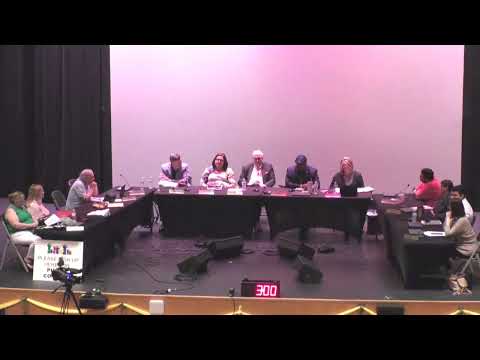
The Scranton School District board's second‑read policy session on June 3 turned into a contentious exchange over language recommended by the Pennsylvania School Boards Association (PSBA).
Director Cheswick and others raised concerns about removing or altering references to the district solicitor in a revised public‑comment/board‑meeting policy. Director Casey said two board members had attempted to change policy language without the full board, a claim other directors disputed, saying work‑session discussions are the appropriate place for first‑read revisions. Director Gilmartin said the suggested language originated with PSBA in response to legislative and legal developments and was intended to protect the board.
The conversation became personal at times, with members accusing one another of political maneuvering and misinformation. President Holmes called a five‑minute recess to de‑escalate the discussion and preserve order. After the break the board reconvened and proceeded to vote on several policies and grouped items; some policy revisions advanced on second read while others were taken up in consent for later action.
Board members emphasized that adopting PSBA guidance is discretionary and that the board retains final authority. Administrators and counsel confirmed that first‑read work sessions permit discussion and that any formal policy change requires a board vote at second read. The meeting record shows several split roll‑call results on policy items, reflecting differing views on the recommended language and the board’s governance approach.
The board did not take disciplinary action; rather, members agreed to continue committee work on policies, and the policy chair recommended moving remaining policy items through the consent process where appropriate.