Get Full Government Meeting Transcripts, Videos, & Alerts Forever!
Get email alerts on the Education Eld topic
No spam. Unsubscribe anytime.
Hazleton Area board hears expansion plans as multilingual enrollments rise to 29%
Summary
District ELD staff told the Hazleton Area School District board enrollment of multilingual learners climbed from 2,691 (21%) in 2021 to 3,750 (29%) today, and described expanded newcomer programming, bilingual paras, family classes and mental-health supports to meet growing demand.
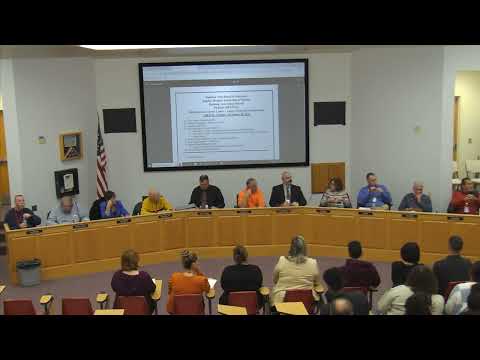
At a Nov. board meeting, the Hazleton Area School District’s English language development team told the board the district’s population of multilingual learners has risen substantially and outlined program expansions aimed at supporting rapid growth. The department reported that multilingual learners increased from 2,691 students (21% of the district) in 2021 to 3,750 students (29%) as of the morning of the meeting, including roughly 600 newcomers who arrived this year.
The department’s leader, identified in the transcript as Mrs. Biden, said the district has expanded services with a K–6 Newcomer Center, evening English classes for parents (with free childcare), Spanish classes for staff, an ESL summer program, career days, bilingual paraprofessionals and an ESL credit‑recovery option. She said the district now employs 53 ELD teachers, 15 bilingual liaisons/translators and 24 bilingual paraprofessionals.
Diane Zacker, the ELD testing coordinator, described the screening and placement process. Families complete a home-language survey at enrollment; students who screen positive are assessed with the WIDA screener. Students who take the WIDA ACCESS test and reach a 4.5 proficiency level are eligible to exit the program, Zacker said. She also noted the district uses the WIDA Access test (administered in January–February) to measure yearly growth.
Ryan Elmi, a Newcomer Center teacher, described eligibility for the newcomer program (students scoring about 1–1.5 on the WIDA screener and in the country less than one year) and the expansion this year to include a kindergarten newcomer class at Arthur Street and a middle‑school newcomer section at Heights Terrace/Maple Manor. Elmi said roughly 300 newcomer students across those buildings are supported by teachers and 10 bilingual paraprofessionals and that the district has started providing food through the Child Hunger Outreach Program.
Other presenters described family‑engagement classes (the “Speak With Me” program), clinic supports and social‑skills groups for newcomers, and how world‑language offerings at the high school (native‑speaker Spanish, dual enrollment, AP Spanish) connect to ELD students’ academic pathways. Emily Brown and Dr. Lauren Constant cited examples of increased enrollment of ELD students in honors, dual‑enrollment and AP courses and noted scholarship offers reported by students.
Three student speakers—Paul Martinez, Lucila Sanchez Dominguez and Josephine Castillo—gave personal accounts of arriving as multilingual learners and progressing through the district’s programs. Martinez, a senior, said he expected to finish the year with roughly 15–18 college credits through dual‑enrollment; other students described rapid progress out of ESL classes and plans for college or trade education.
Board members commended staff and students, asked follow‑up questions about bilingual paraprofessional coverage and the classroom supports that allow ELD students to access content courses, and invited the department to return with updates on implementation and needs. The board did not take formal action on the presentation itself; members approved unrelated consent‑agenda items after the presentation.
The district’s ELD leaders requested continued attention to staffing—particularly bilingual mental‑health professionals and paraprofessionals—to sustain the program as enrollment grows. The board asked for periodic updates during upcoming budget and staffing discussions.